
Cross-Training
Personalize This
Get insights for your role
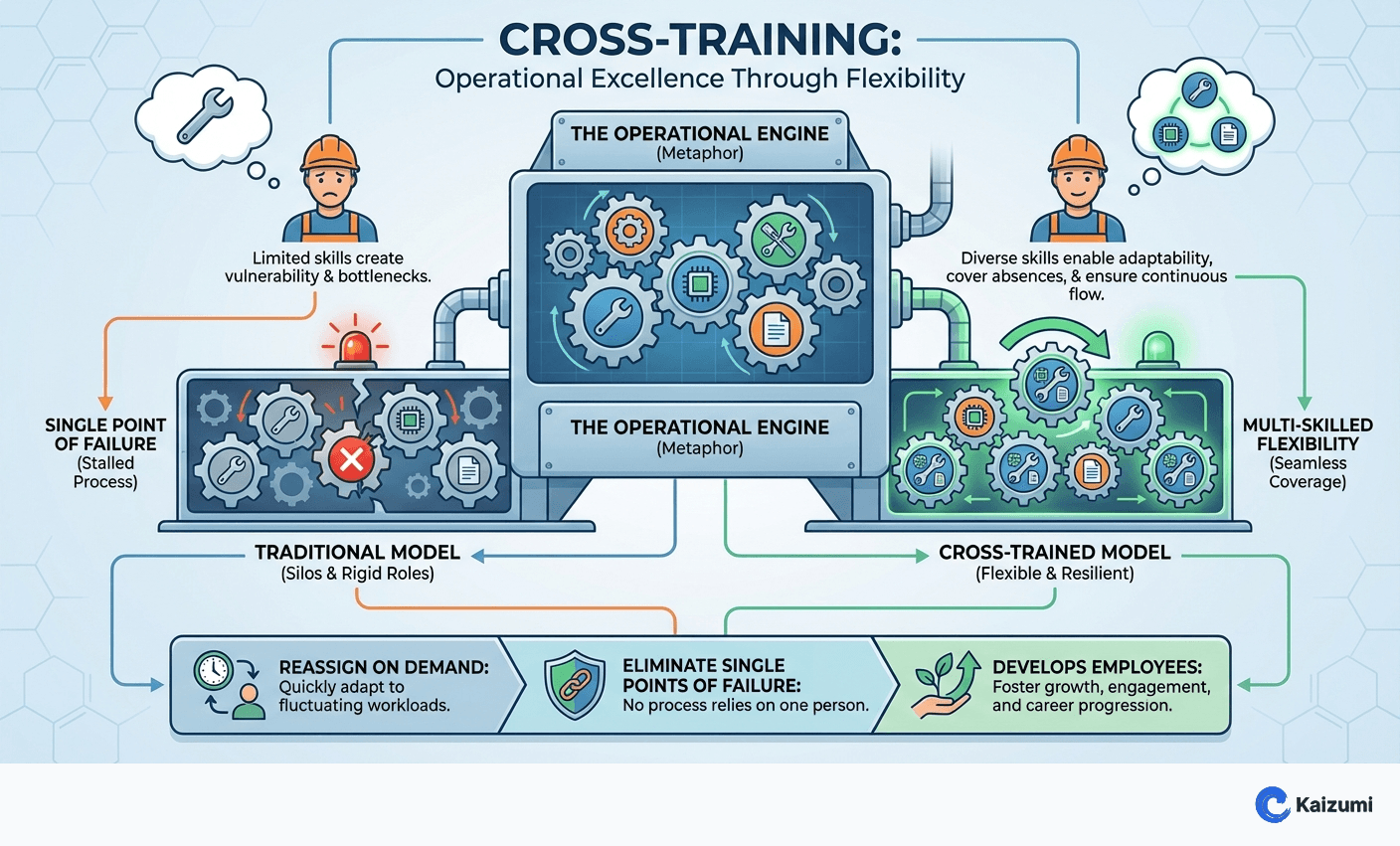
Cross-training develops employees in multiple skills or job functions to increase workforce flexibility and eliminate single points of failure.
Definition
Cross-training is the practice of developing employees in multiple skills, tasks, or job functions beyond their primary role. It creates workforce flexibility—the ability to reassign people based on demand, cover absences, and eliminate single points of failure. Cross-training also develops employees, increases engagement through variety, and improves process understanding as people learn connected work. A skill matrix typically guides cross-training priorities, identifying gaps and tracking development.
Examples
A cell with 8 operations cross-trained all team members to at least 3 operations each. When demand shifted or someone was absent, the team flexed without management intervention. Single points of failure were eliminated; every critical skill had at least two qualified people.
Key Points
- Develops employees in skills beyond their primary role
- Creates flexibility to handle demand variation and absences
- Eliminates single points of failure (only one person with a skill)
- Skill matrix guides priorities and tracks development
Common Misconceptions
Cross-training means everyone does everything. Complete cross-training is rarely practical. The goal is sufficient coverage: 2-3 people qualified for critical skills, enough flexibility for normal variation. 100% coverage is overkill.
Cross-training dilutes expertise. People maintain primary expertise while adding secondary skills. Cross-training typically improves understanding of connected processes, making primary work better through context. Depth and breadth can coexist.