
True North
Personalize This
Get insights for your role
True North is the ideal state or perfect vision that guides continuous improvement direction, even if never fully achieved.
Definition
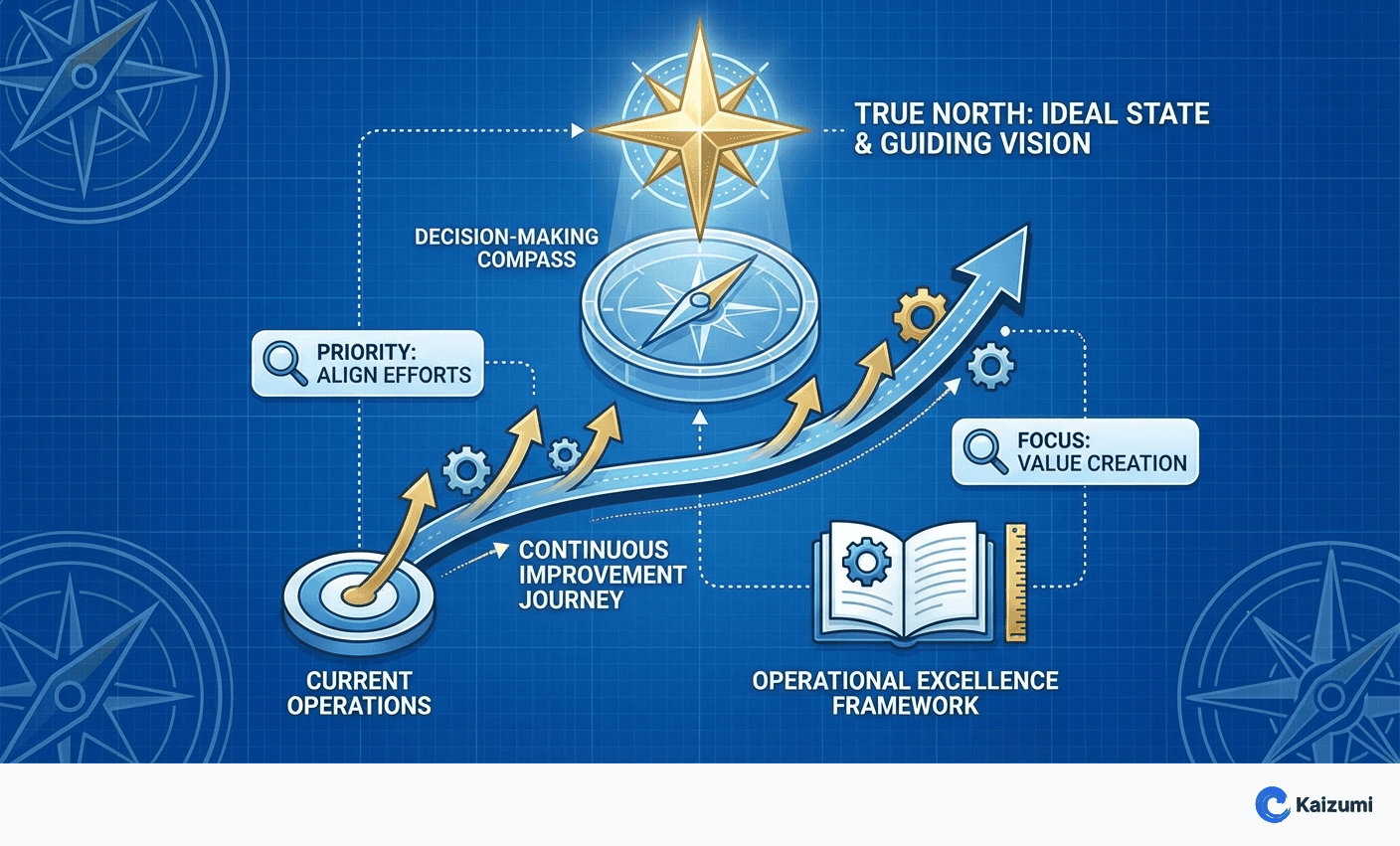
True North represents the ideal state or perfect vision that guides all improvement efforts—the direction an organization continuously moves toward even if the destination is never fully reached. True North provides a compass for decision-making and prioritization: improvements that move toward True North are prioritized; improvements that don't align are questioned. Common True North elements include zero defects, one-piece flow, 100% value-adding work, complete safety, and immediate response to customer need. True North prevents settling into comfortable mediocrity by maintaining a clear view of the gap between current state and ideal state.
Examples
A company's True North includes "zero defects escaping to customers." They're currently at 50 defects per million. While perfect zero may never be achieved, True North keeps them from celebrating 50 ppm as "good enough" and drives continuous improvement toward even lower levels.
Key Points
- True North describes ideal state, not realistic targets—it's meant to be aspirational
- The gap between current state and True North reveals improvement opportunity
- True North prevents "good enough" thinking that stops improvement prematurely
- Progress toward True North is measured, even if True North itself is never reached
Common Misconceptions
True North must be achievable to be useful. The power of True North comes precisely from its idealized nature. Achievable targets become ceilings; True North prevents that by always showing remaining opportunity.
True North is just vision or mission statement. True North is more specific and operational than typical vision statements. It describes ideal process performance and guides daily improvement decisions, not just long-term strategy.
See Also
- Hoshin Kanri - Strategic planning aligned toward True North