
Audit
Personalize This
Get insights for your role
An audit is a systematic, independent examination of processes, systems, or results to verify conformance and identify improvement opportunities.
Definition
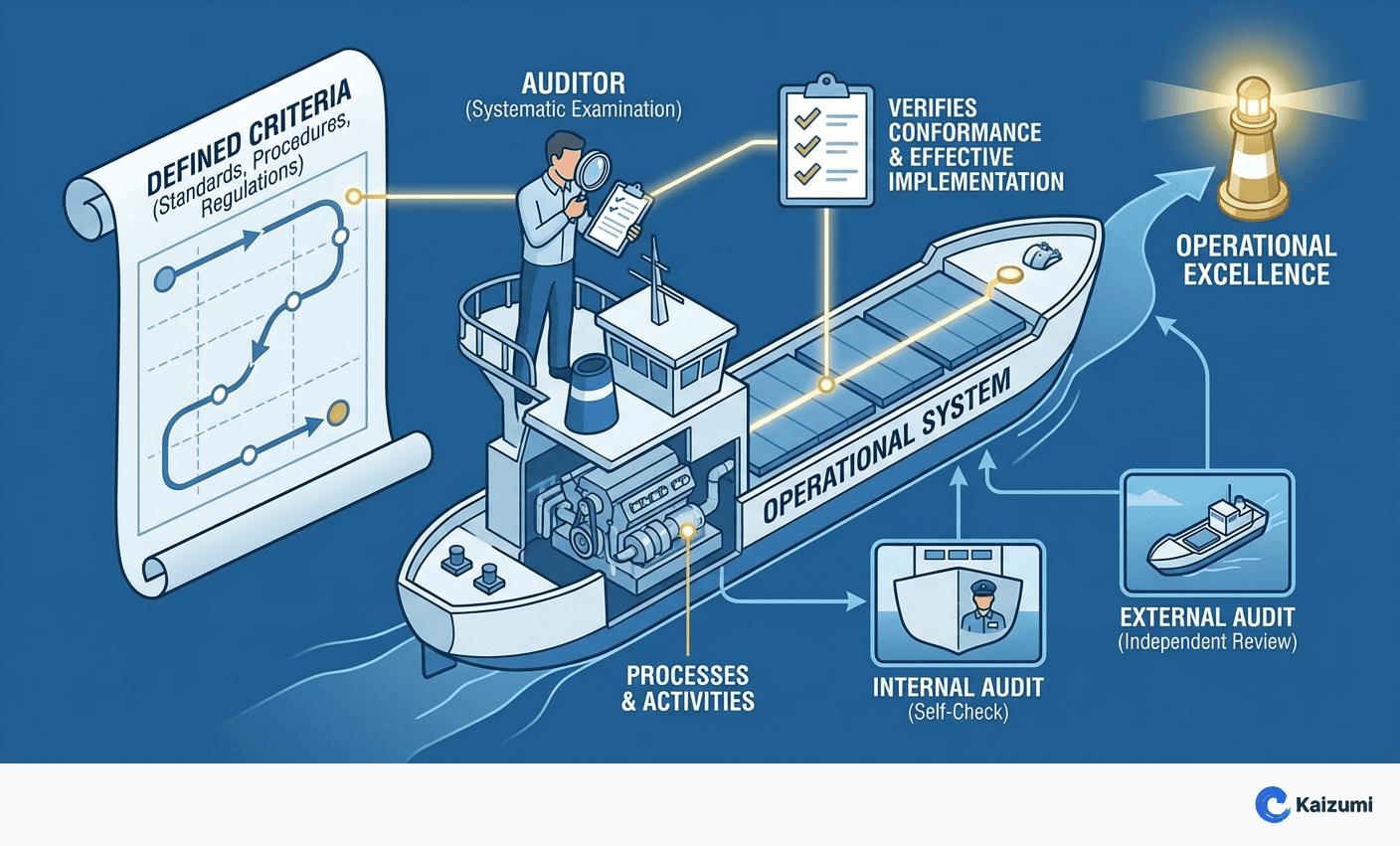
An audit is a systematic, documented examination of processes, systems, products, or management systems against defined criteria. Audits verify that activities conform to requirements (standards, procedures, regulations) and are implemented effectively. Types include internal audits (conducted by the organization), external audits (by customers or certification bodies), and process audits (examining specific operations). Beyond compliance verification, audits identify improvement opportunities and drive accountability for standards.
Examples
Layered process audits verify standard work compliance daily. Operators audit their peers, supervisors audit their areas, managers audit across departments. This layered approach catches drift from standards before it causes quality problems.
Key Points
- Systematic examination against defined criteria
- Verifies conformance and implementation effectiveness
- Types: internal, external, process, system, compliance
- Identifies improvement opportunities beyond compliance findings
Common Misconceptions
Audits are about catching people doing things wrong. Effective audits verify process effectiveness and find improvement opportunities. The focus is on processes, not blame. Audit findings should drive improvement, not punishment.
Passing audits means processes are optimized. Audits verify conformance to requirements—minimum acceptable standards. Passing means requirements are met, not that processes couldn't be significantly better. Compliance and excellence are different standards.