
Change Management
Personalize This
Get insights for your role
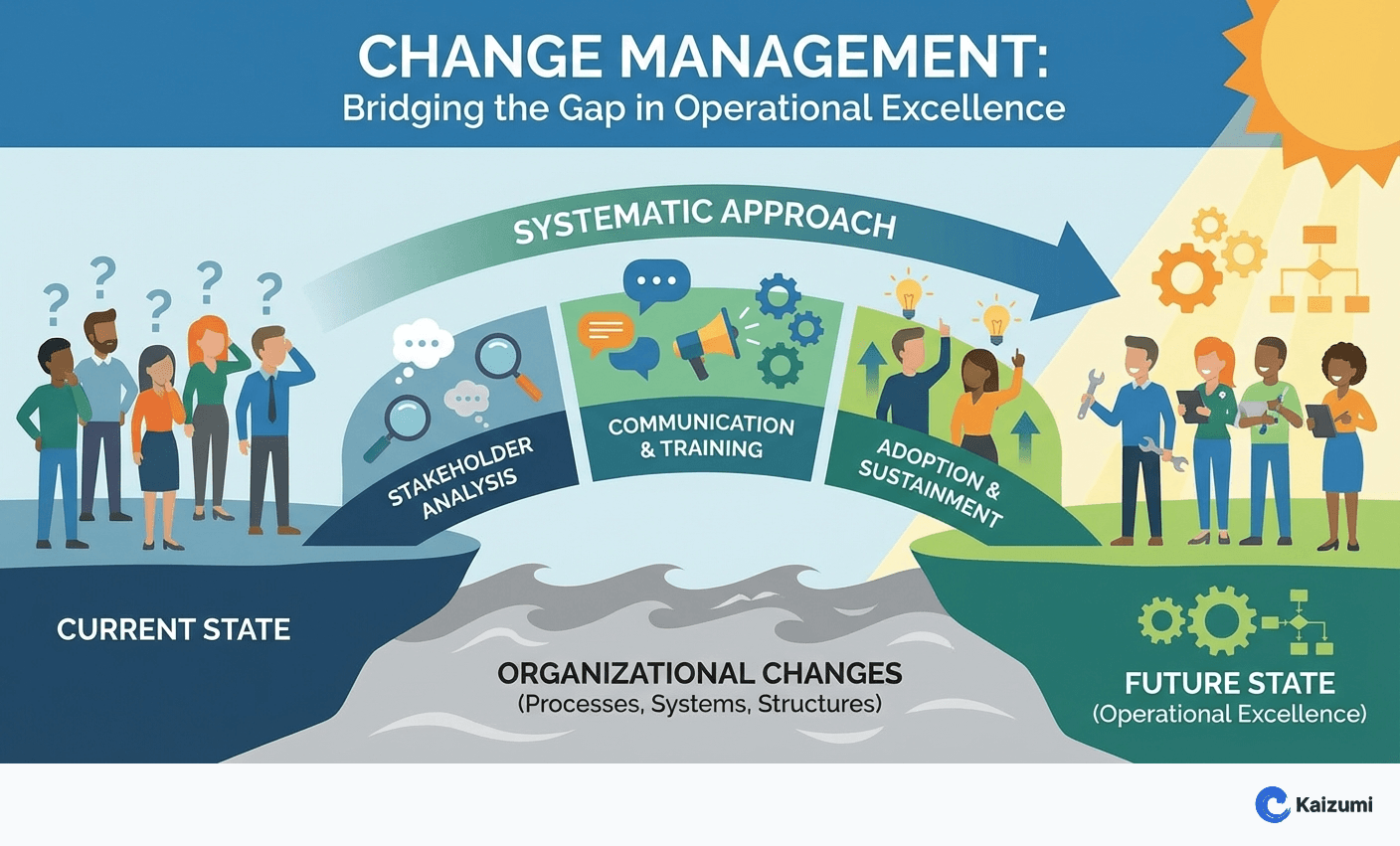
Change management is a structured approach to transitioning individuals, teams, and organizations from current state to desired future state.
Definition
Change management is a systematic approach to helping people adapt to organizational changes—new processes, systems, structures, or ways of working. It addresses the human side of change that technical implementations often neglect. Effective change management includes stakeholder analysis, communication planning, training, resistance management, and reinforcement. The discipline recognizes that organizations don't change—people do—and provides methods for facilitating that human transition.
Examples
A lean transformation included formal change management. Stakeholder analysis identified concerns by role. Targeted communication addressed each group's "What's in it for me?" Training preceded implementation. Supervisors received coaching on managing resistance. Adoption exceeded historical rates.
Key Points
- Addresses human side of organizational changes
- Includes stakeholder analysis, communication, training, resistance management
- Recognizes that technical implementation alone doesn't create change
- Should start before change implementation, not as afterthought
Common Misconceptions
Change management is communication. Communication is one component. Complete change management includes stakeholder analysis, readiness assessment, training design, resistance management, and reinforcement—not just announcing the change.
Resistance means the change is bad. Resistance is natural and often contains valid concerns. Effective change management treats resistance as data—understanding and addressing concerns improves the change and increases adoption.