
Lean Leadership
Personalize This
Get insights for your role
Lean leadership is a management approach where leaders develop people, enable improvement, and create conditions for sustainable performance excellence.
Definition
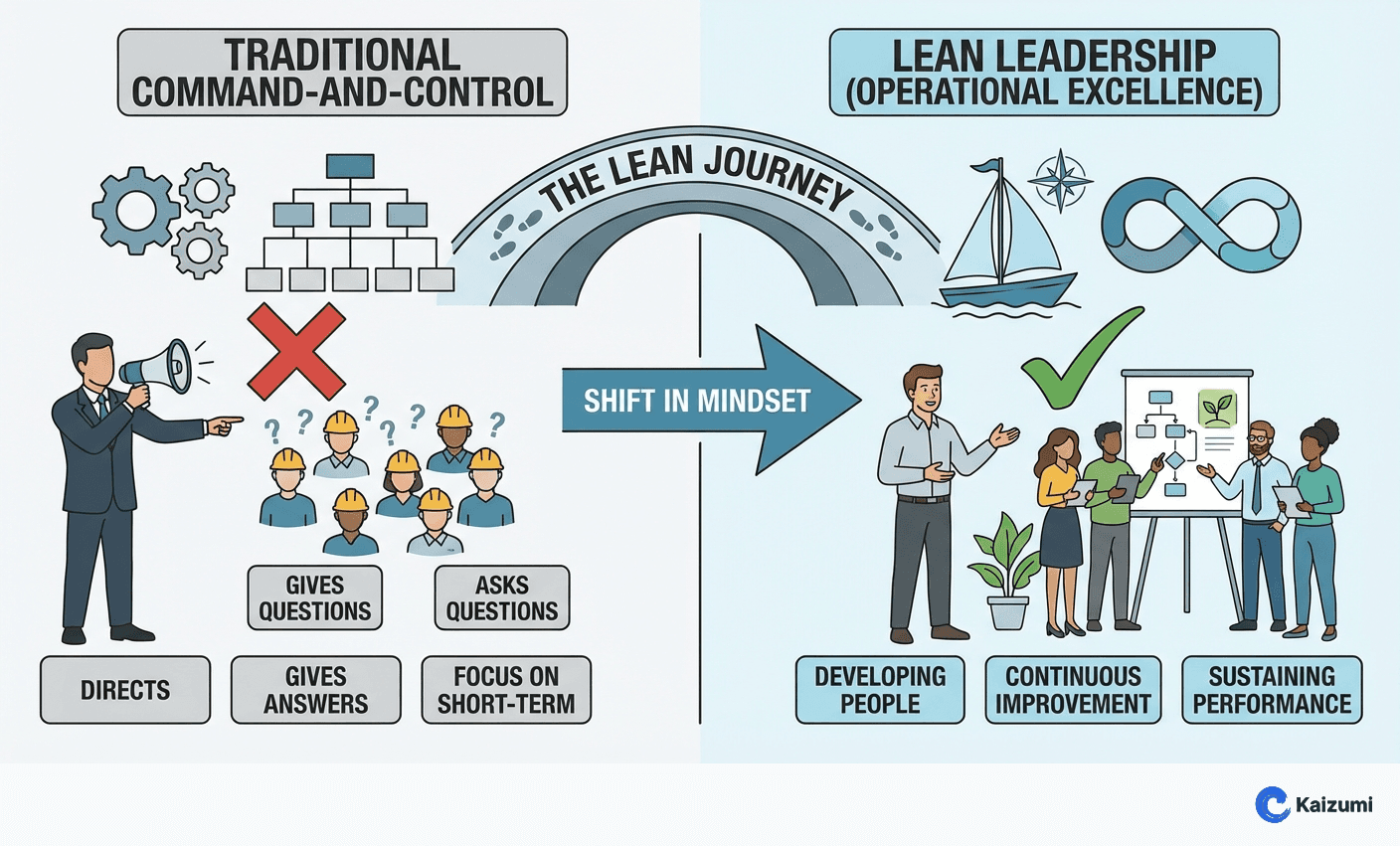
Lean leadership is a management philosophy where leaders focus on developing people, creating conditions for continuous improvement, and sustaining organizational performance. Unlike traditional command-and-control management, lean leaders coach rather than direct, ask questions rather than give answers, and spend time at gemba understanding real conditions. They practice servant leadership—removing obstacles so teams can succeed. Lean leaders build organizational capability by developing problem-solvers at every level, not by solving problems themselves.
Examples
A plant manager noticed a quality issue during gemba walk. Rather than directing a solution, she asked the team lead: "What do you think is causing this? What have you tried? What help do you need?" Over 30 minutes of coaching, the team lead developed their own solution—and built problem-solving capability for future issues.
Key Points
- Leaders develop people, not just deliver results
- Coach through questions rather than directing answers
- Regular gemba presence to understand reality
- Remove obstacles so teams can succeed (servant leadership)
Common Misconceptions
Lean leadership means being passive. Lean leaders are intensely engaged—but through coaching, teaching, and enabling rather than commanding. Active coaching requires more leadership skill than giving orders.
Results don't matter in lean leadership. Results matter tremendously, but sustainable results come through developing capable people, not through heroic leader effort. Lean leadership produces better results through better process.