
Gap Analysis
Personalize This
Get insights for your role
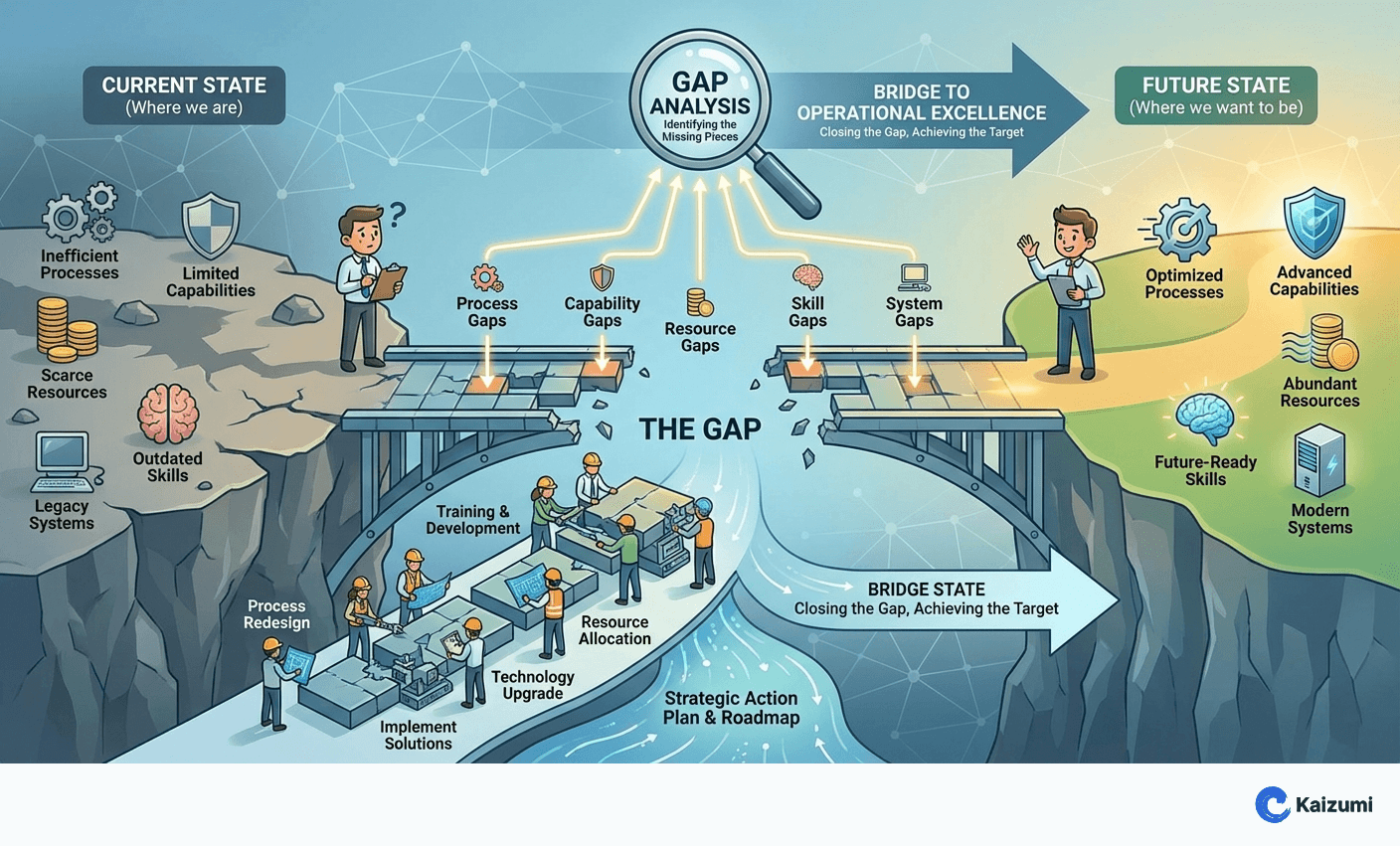
Gap analysis is a method for comparing current state to desired future state to identify the gaps that must be addressed to achieve goals.
Definition
Gap analysis is a strategic tool that compares where an organization currently is (current state) with where it wants to be (future state or target), identifying the gaps between them. The analysis examines multiple dimensions—processes, capabilities, resources, skills, systems—to understand what must change to achieve desired outcomes. Gap analysis provides the foundation for improvement planning by making visible what needs to be addressed and quantifying the magnitude of change required.
Examples
A plant compared current OEE (68%) to target OEE (85%). Gap analysis broke this into components: availability gap (5 points from breakdowns), performance gap (8 points from minor stops), quality gap (4 points from defects). Each gap led to specific improvement projects.
Key Points
- Compares current state to desired future state
- Identifies specific gaps requiring action
- Examines multiple dimensions: processes, capabilities, resources, skills
- Provides foundation for improvement prioritization and planning
Common Misconceptions
Gap analysis is just benchmarking. Benchmarking compares to external standards; gap analysis compares to your own strategic targets. The "future state" in gap analysis is your organization's defined goals, which may or may not match external benchmarks.
Identifying gaps means fixing everything. Gap analysis reveals what must change, but not everything can be addressed at once. Prioritization based on impact, feasibility, and strategic importance follows gap identification.