
Benchmark
Personalize This
Get insights for your role
A benchmark is a standard of excellence or best practice used as a reference point for comparing and improving organizational performance.
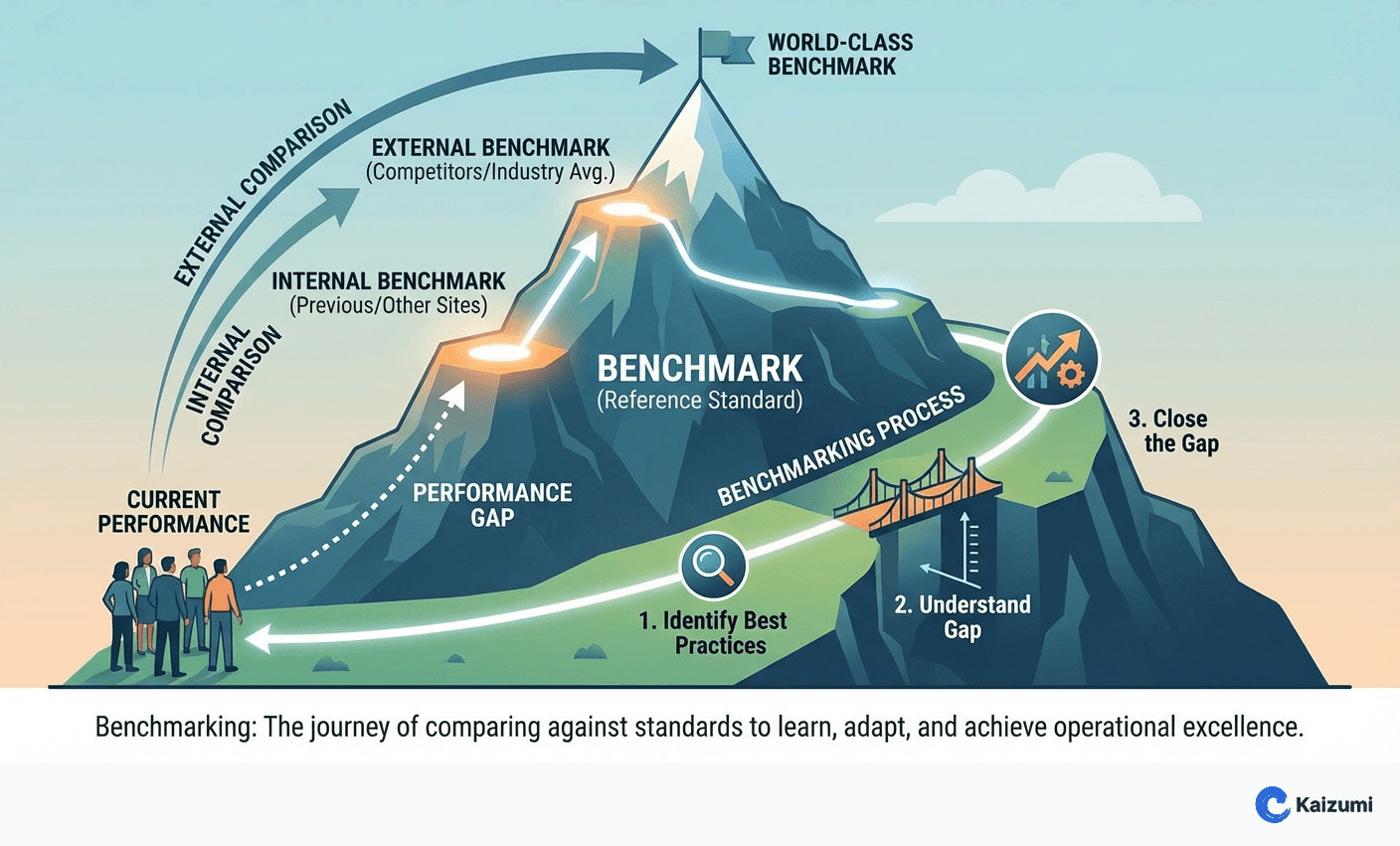
Definition
A benchmark is a reference standard used to compare performance—either internal (previous performance, other sites) or external (competitors, industry average, world-class). Benchmarking is the process of identifying best practices, understanding the gap between current and benchmark performance, and adapting approaches to close that gap. Effective benchmarking goes beyond metrics comparison to understand the practices that produce superior results.
Examples
A plant benchmarked OEE against industry average (65%) and world-class (85%). Their 72% was above average but below world-class. More importantly, they studied how world-class plants achieved 85%—autonomous maintenance, SMED, TPM practices—and adapted those approaches.
Key Points
- Reference standard for performance comparison
- Can be internal (historical, other units) or external (industry, world-class)
- Value comes from understanding practices behind performance, not just metrics
- Adapted practices, not copied practices, produce results
Common Misconceptions
Benchmarking is comparing numbers. Numeric comparison identifies gaps; practice comparison reveals solutions. Organizations that only benchmark metrics miss the learning opportunity about how high performers achieve results.
Best-in-class benchmarks always apply. Context matters. A world-class automotive benchmark may not apply to job shop manufacturing. The practices behind benchmarks must be adapted to context, not blindly copied.