
Hansei
反省·hansei·"self-reflection, introspection"
Personalize This
Get insights for your role
Hansei is the practice of critical self-reflection to acknowledge mistakes, understand root causes, and commit to improvement.
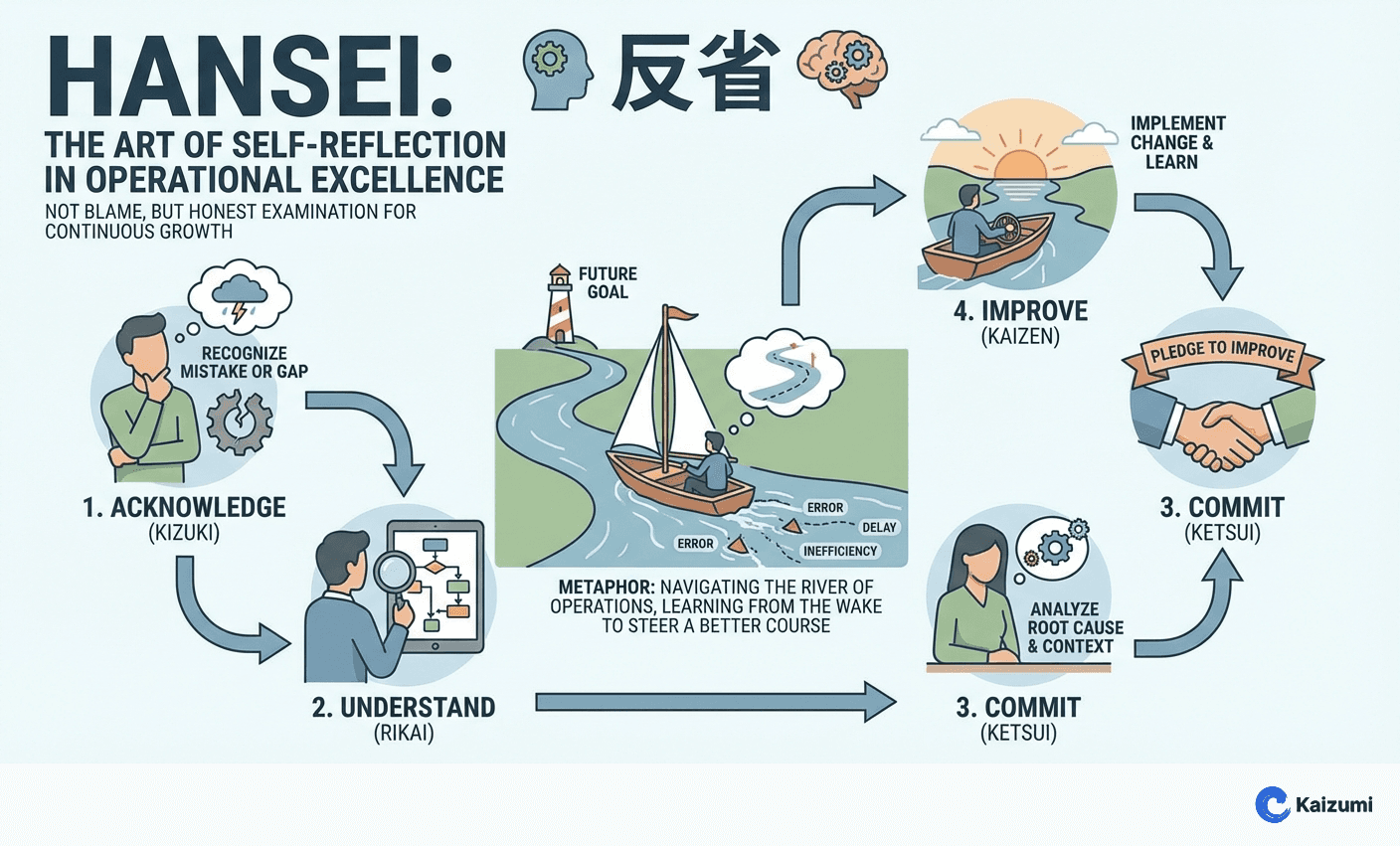
Definition
Hansei is a Japanese term meaning self-reflection or introspection—specifically, the practice of acknowledging one's own mistakes and shortcomings, understanding what went wrong, and committing to improvement. In lean culture, hansei is not about blame or punishment but about honest examination of results versus expectations. Even after successes, hansei asks what could have been done better. This disciplined reflection prevents complacency and drives continuous improvement by surfacing learning opportunities that might otherwise be overlooked.
Examples
After successfully launching a new product, a development team conducted hansei rather than simply celebrating. They examined what had gone wrong during development—late supplier qualification, underestimated testing time, last-minute design changes. This reflection improved their next launch, which completed two weeks early with fewer issues.
Key Points
- Hansei is practiced after both failures and successes—there is always room for improvement
- The practice requires psychological safety where honest reflection doesn't trigger punishment
- Hansei focuses on learning and improvement, not blame
- Regular hansei prevents the normalization of deviations and maintains high standards
Common Misconceptions
Hansei is only for failures. Toyota famously observed that the most dangerous time is after success, when complacency sets in. Hansei after success asks, "What could we do better next time?" preventing the assumption that good results mean nothing needs to improve.
Hansei is self-criticism or punishment. Hansei is constructive reflection aimed at learning and improvement, not negative self-judgment. The emotional tone is thoughtful examination, not guilt or shame.