
Policy Deployment
Personalize This
Get insights for your role
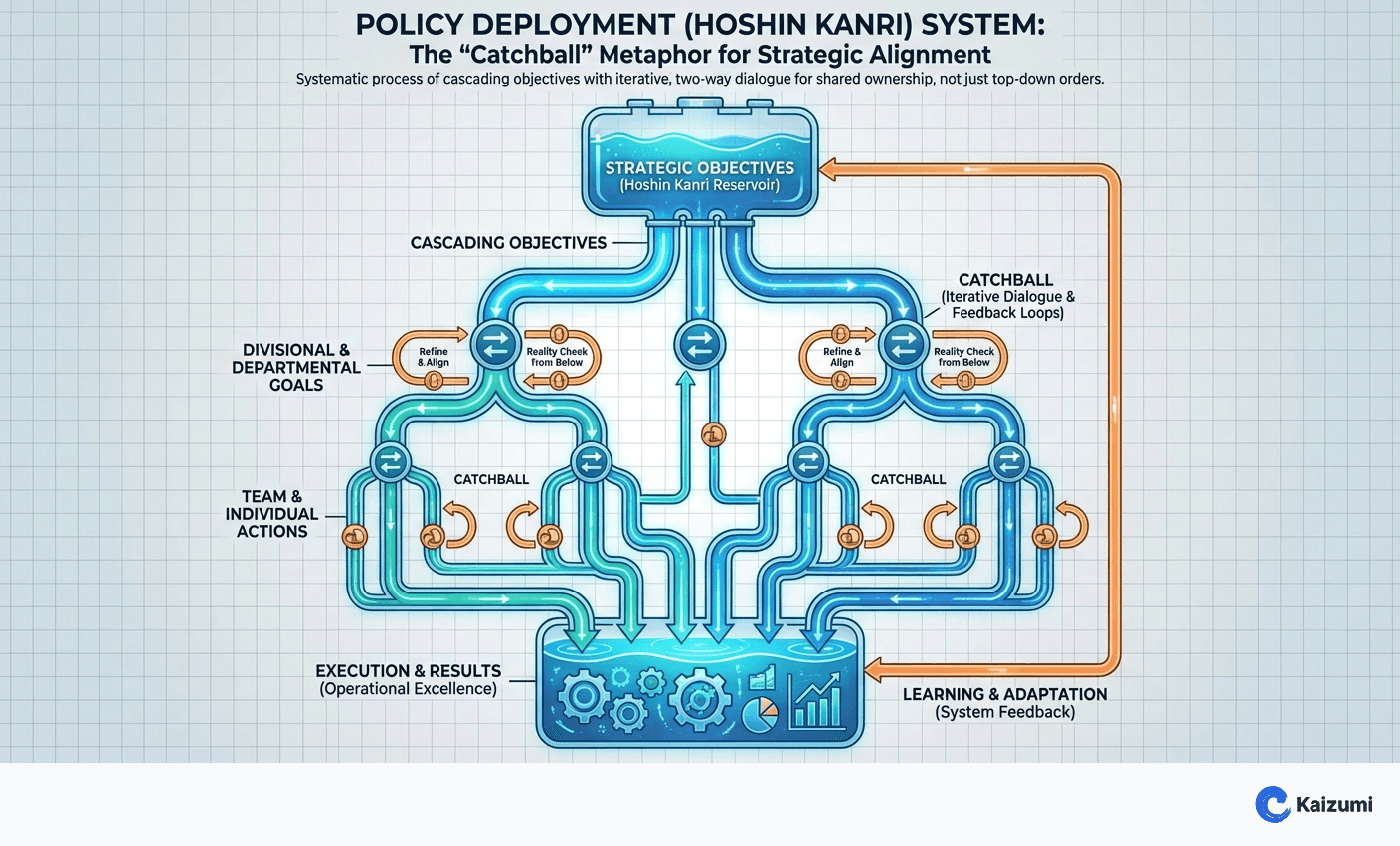
Policy deployment is a strategic planning process that aligns organizational goals from top to bottom through cascading objectives and catchball dialogue.
Definition
Policy deployment (also known as hoshin kanri or strategy deployment) is a systematic process for developing, cascading, and executing strategic objectives throughout an organization. Unlike traditional top-down planning, policy deployment uses "catchball"—iterative dialogue between levels—to ensure goals are understood, achievable, and aligned. Each level translates higher-level objectives into specific targets and actions appropriate to their scope. The process creates both vertical alignment (everyone working toward the same goals) and horizontal alignment (functions coordinating rather than conflicting).
Examples
The CEO set a True North goal of becoming the industry quality leader. Through catchball, this translated to plant-level goals (reduce defects 50%), department goals (specific quality projects), and team goals (daily quality metrics). Each level contributed to defining how they would support the objective.
Key Points
- Cascades strategic objectives through organizational levels
- Catchball dialogue ensures understanding and buy-in at each level
- Creates vertical alignment (everyone toward same goals) and horizontal alignment (functions coordinating)
- Typically focused on 3-5 breakthrough objectives, not everything
Common Misconceptions
Policy deployment is annual planning. While often done annually, effective policy deployment includes monthly reviews, adjustment cycles, and continuous connection between daily work and strategic goals. The plan is living, not locked.
More goals mean better alignment. Effective policy deployment focuses on a few breakthrough objectives. Too many deployed goals dilute focus and create conflicting priorities. The discipline is choosing what matters most.