
Preventive Action
Personalize This
Get insights for your role
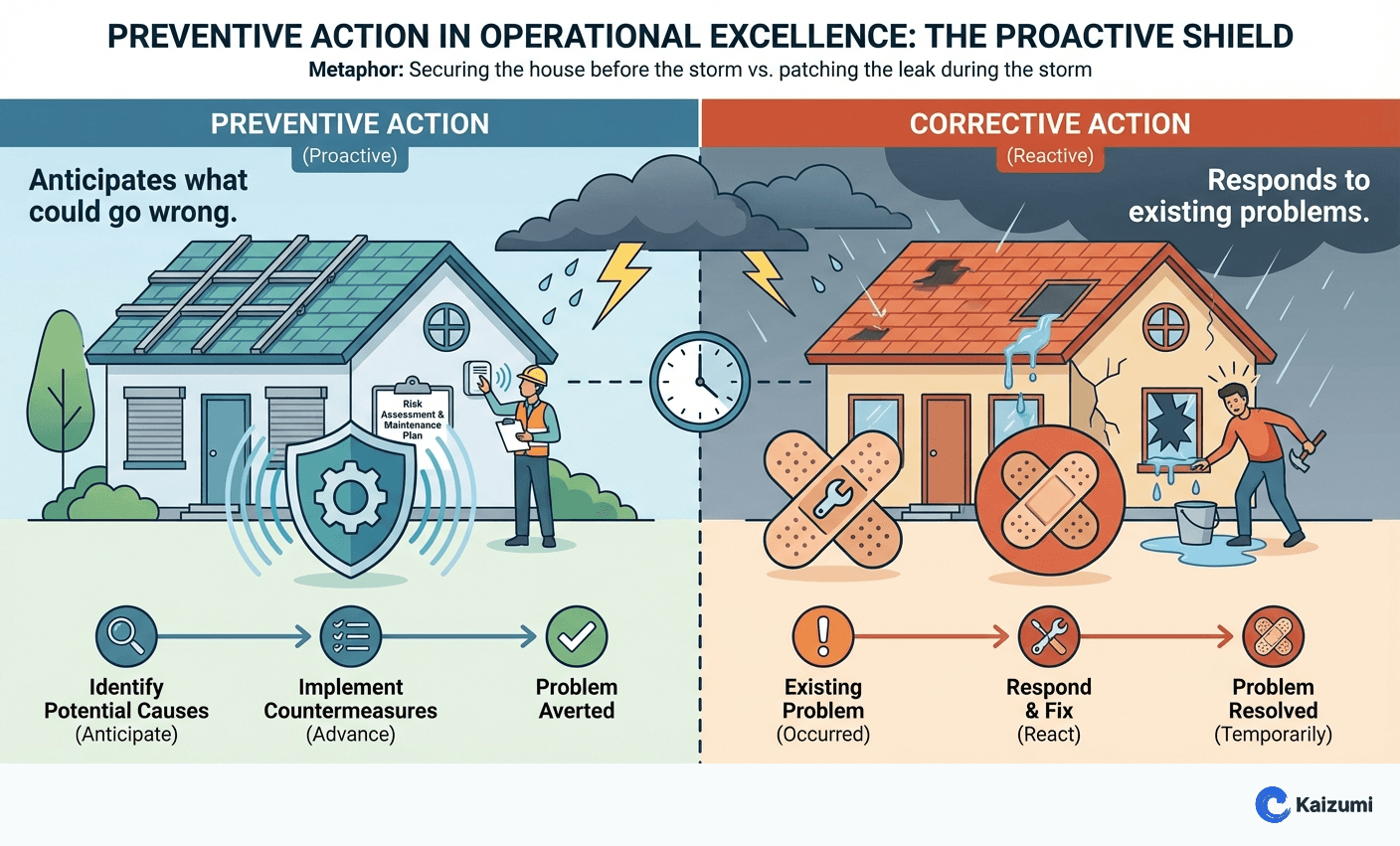
Preventive action is a proactive process for eliminating potential causes of problems before they occur, based on risk analysis.
Definition
Preventive action is a proactive process for identifying and eliminating potential causes of problems before they occur. Unlike corrective action (responding to existing problems), preventive action anticipates what could go wrong and implements countermeasures in advance. Preventive actions are identified through risk analysis tools like FMEA, process hazard analysis, and trend monitoring. The goal is preventing problems rather than reacting to them—a fundamental shift from reactive to proactive quality management.
Examples
FMEA analysis of a new product identified that a connector could be inserted incorrectly (potential failure). Preventive action: designed connector asymmetrically so incorrect insertion is physically impossible. The problem never occurred because prevention was built in.
Key Points
- Addresses potential problems before they occur
- Identified through risk analysis, FMEA, trend monitoring, industry learning
- Proactive rather than reactive—don't wait for failure
- Often more cost-effective than corrective action after failure
Common Misconceptions
Preventive action requires proven problems. Preventive action addresses potential problems—things that could go wrong based on analysis, trends, or experience elsewhere. Waiting for proof means waiting for failure.
All risks justify preventive action. Preventive action resources should focus on significant risks—high severity, reasonable probability. Minor potential problems may not justify prevention investment. Risk-based prioritization guides resource allocation.