
Quality Circle
Personalize This
Get insights for your role
A quality circle is a small group of employees who meet regularly to identify, analyze, and solve work-related quality and productivity problems.
Definition
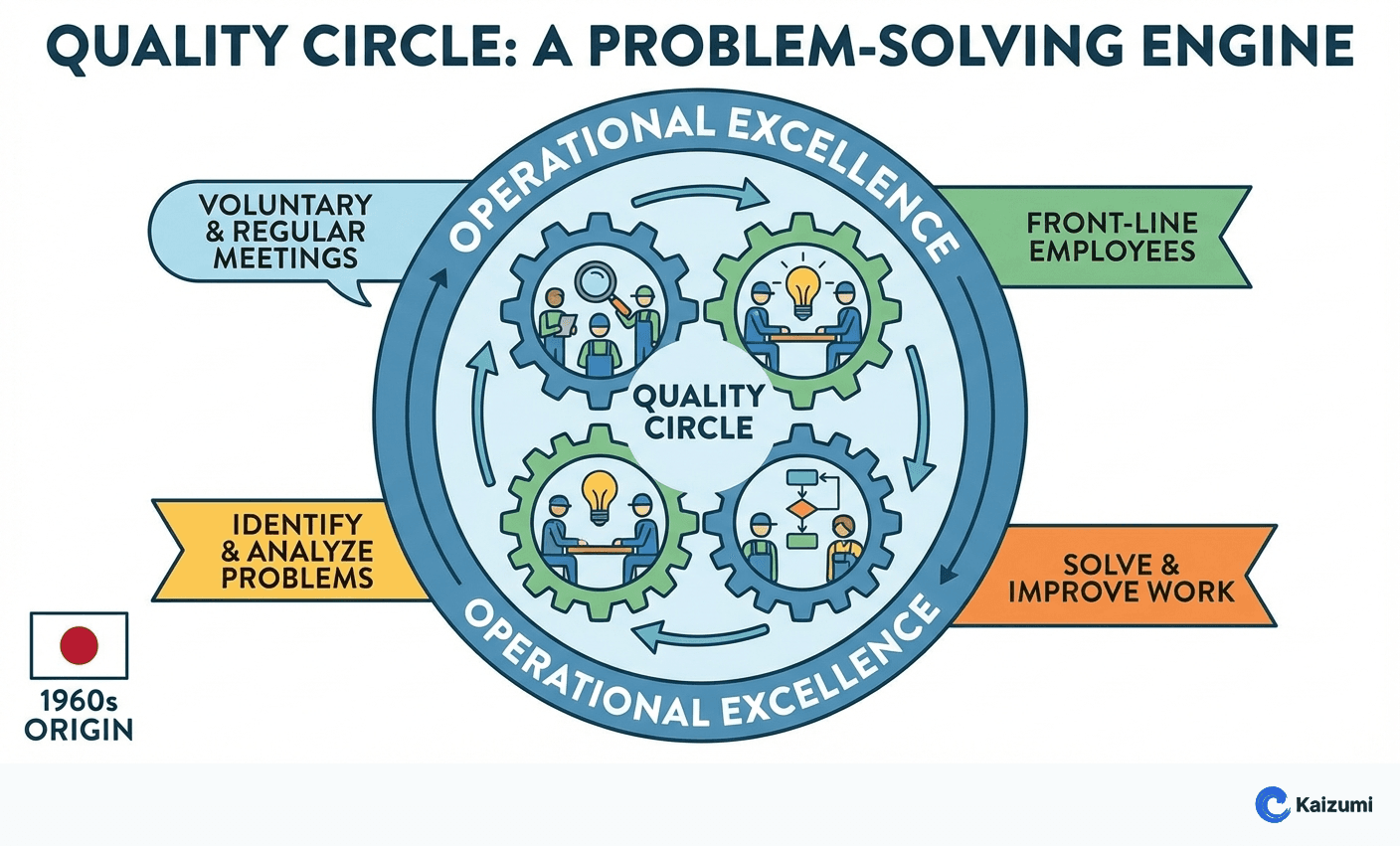
A quality circle (QC circle) is a small group of employees, typically from the same work area, who meet voluntarily and regularly to identify, analyze, and solve problems related to their work. Originating in Japan in the 1960s as part of the quality movement, quality circles engage frontline workers in improvement using structured problem-solving methods. The approach recognizes that people closest to the work often have the best insights into problems and solutions—they just need the structure, skills, and empowerment to act.
Examples
An assembly team's quality circle met weekly to address recurring defects. Over three months, they identified root causes, tested countermeasures, and reduced defects 40%. Members learned problem-solving tools they continued using after the project ended.
Key Points
- Small groups (typically 4-10 people) from the same work area
- Voluntary participation with regular meeting schedule
- Uses structured problem-solving methods (7 QC tools, PDCA)
- Management supports but doesn't direct circle activities
Common Misconceptions
Quality circles are just brainstorming sessions. Effective quality circles use rigorous problem-solving methods—data collection, root cause analysis, countermeasure testing. Structure distinguishes quality circles from unstructured discussion groups.
Quality circles solve management problems. Quality circles work on problems within their scope—issues they can analyze and influence. Management problems (strategy, resource allocation, policy) require different forums. Overloading circles with inappropriate issues destroys engagement.