
Respect for People
Personalize This
Get insights for your role
Respect for People is a foundational lean principle that values human potential, dignity, and development alongside process improvement.
Definition
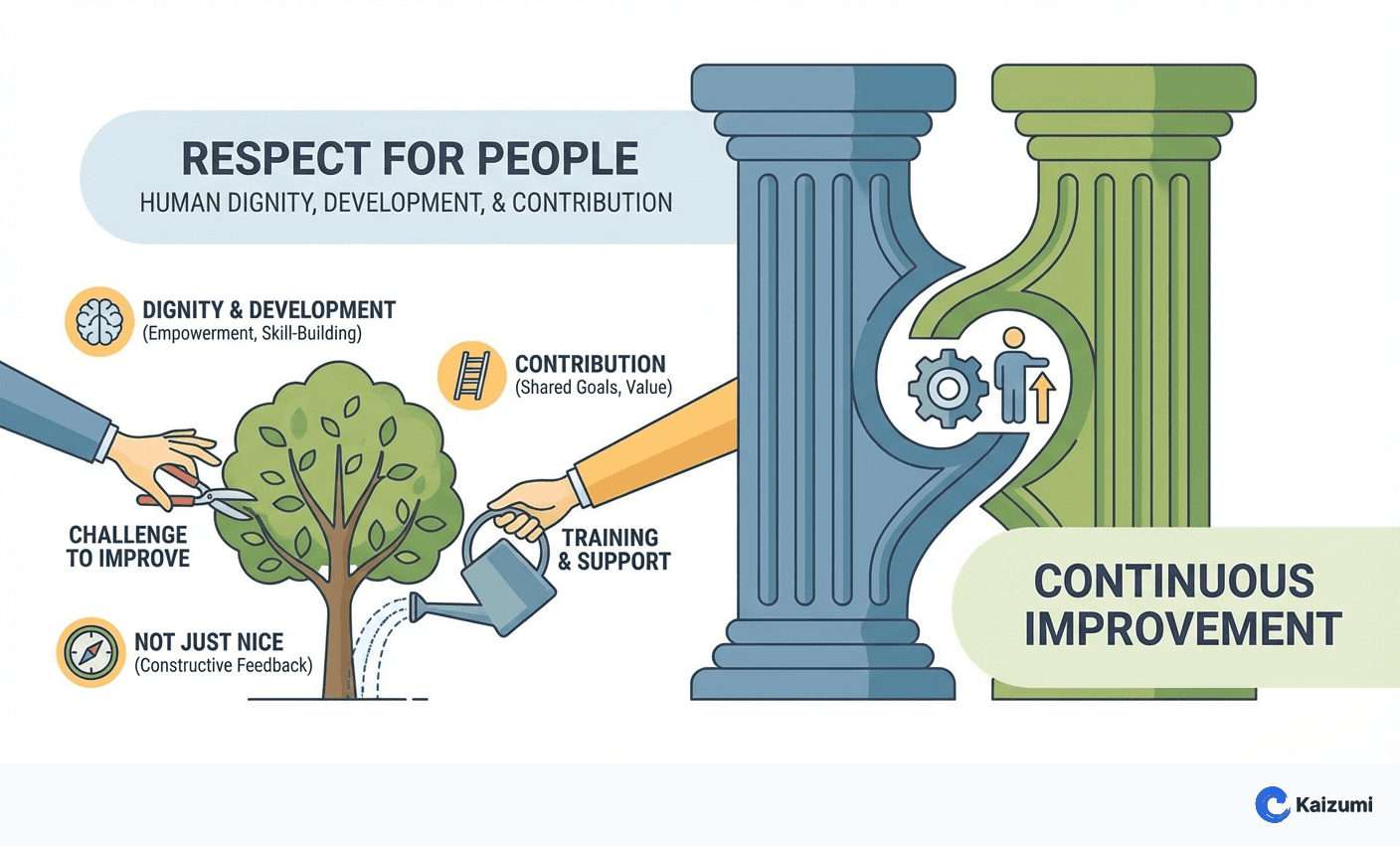
Respect for People is one of the two pillars of the Toyota Way (alongside Continuous Improvement) and represents a fundamental commitment to human dignity, development, and contribution. Respect doesn't mean being nice—it means challenging people to improve, providing the training and support they need, creating safe working conditions, listening to ideas from the frontlines, and never wasting human potential on work that doesn't add value. True respect for people recognizes that engaged, developed workers are essential for continuous improvement and sustainable results.
Examples
When a factory implemented lean, they committed that no one would lose their job due to efficiency improvements. Workers freed up by waste elimination were redeployed to new improvement projects or cross-trained for flexibility. This respect for job security enabled workers to identify improvements without fear.
Key Points
- Respect means challenging people to grow, not leaving them in comfortable mediocrity
- Process improvement without people development is unsustainable
- Physical safety and psychological safety are both essential
- Respect for people enables the transparency required for continuous improvement
Common Misconceptions
Respect for people means being soft or avoiding conflict. True respect includes honest feedback, high expectations, and accountability. It's disrespectful to accept poor performance or avoid difficult conversations.
Respect for people contradicts productivity improvement. The opposite is true. Engaged, respected workers identify more improvements, implement them more effectively, and sustain them more reliably than disengaged workers just following orders.
See Also
- Toyota Production System - The system this pillar holds up