
Ringi
稟議·ringi·"request for approval, collective decision-making"
Personalize This
Get insights for your role
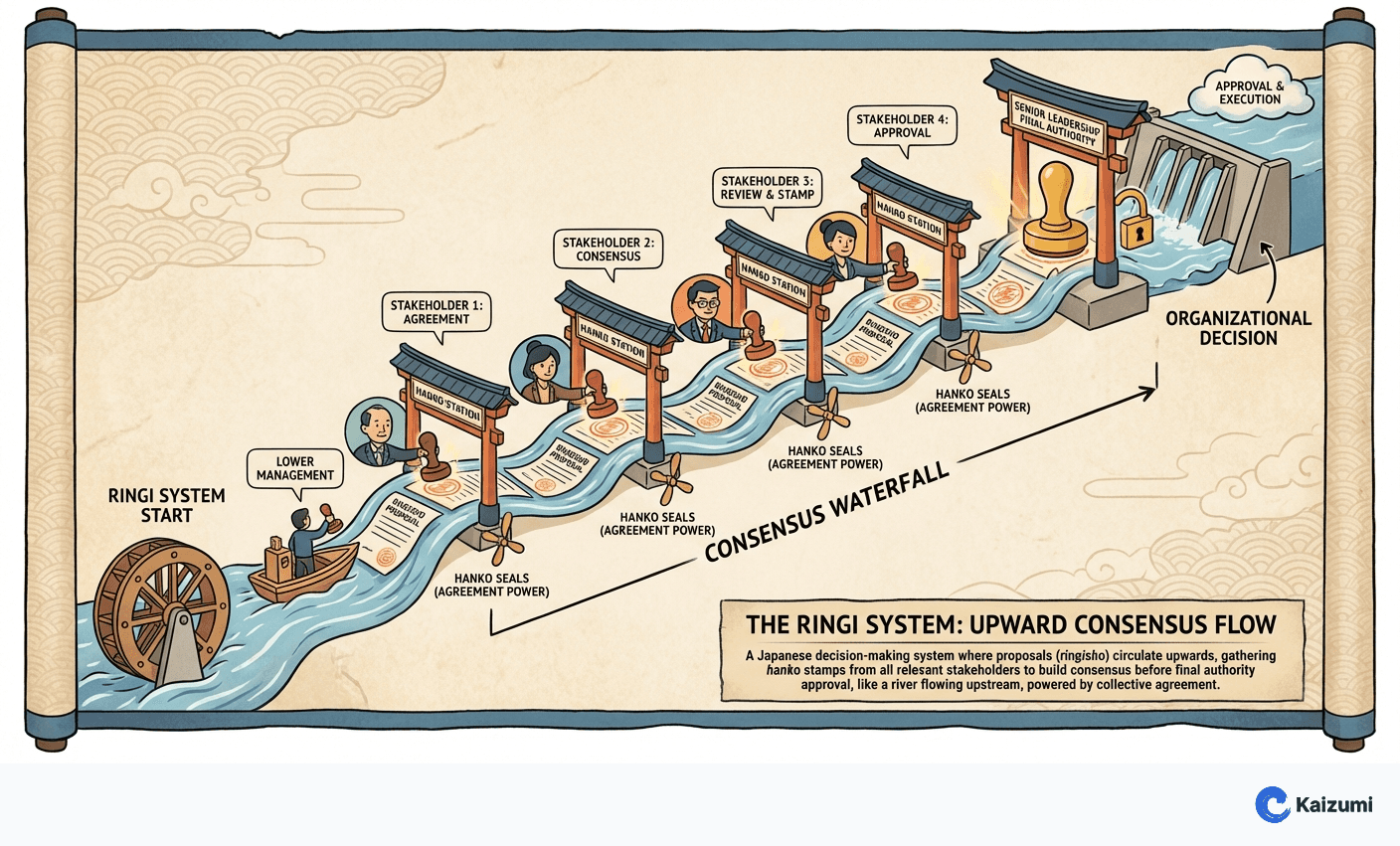
Ringi is the Japanese consensus-based decision-making process where proposals circulate for approval through multiple levels.
Definition
Ringi is a Japanese decision-making system where formal proposals (ringisho) circulate through relevant stakeholders who indicate their agreement by stamping the document with their personal seal (hanko). The document moves upward through the organization, collecting approvals until final authority grants approval. Ringi ensures broad consultation and shared responsibility for decisions. It works best when preceded by nemawashi (informal consensus-building), so that concerns have already been addressed before the formal circulation begins.
Examples
A proposal to change supplier for a critical component was documented in a ringisho and circulated to quality, engineering, purchasing, production, and finance. Each department reviewed and stamped approval. When the document reached the plant manager, it represented organizational consensus, not just one person's recommendation.
Key Points
- Ringi creates formal record of who approved what decisions
- The process distributes responsibility rather than concentrating it
- Works best when nemawashi has already built informal agreement
- Provides transparency and documentation for significant decisions
Common Misconceptions
Ringi is slow bureaucracy. When combined with effective nemawashi, ringi formalizes agreements already reached. The circulation documents rather than creates consensus. Problems arise when ringi is used without prior nemawashi.
Ringi removes individual accountability. While ringi distributes approval, accountability remains with the proposer and the final authority. The collective stamps indicate agreement with the proposal, not shared responsibility for execution.
See Also
- Nemawashi - The informal process that precedes ringi