
Tiered Accountability
Personalize This
Get insights for your role
Tiered accountability is a management system with cascading meetings that escalate unresolved issues from frontline to leadership on a defined schedule.
Definition
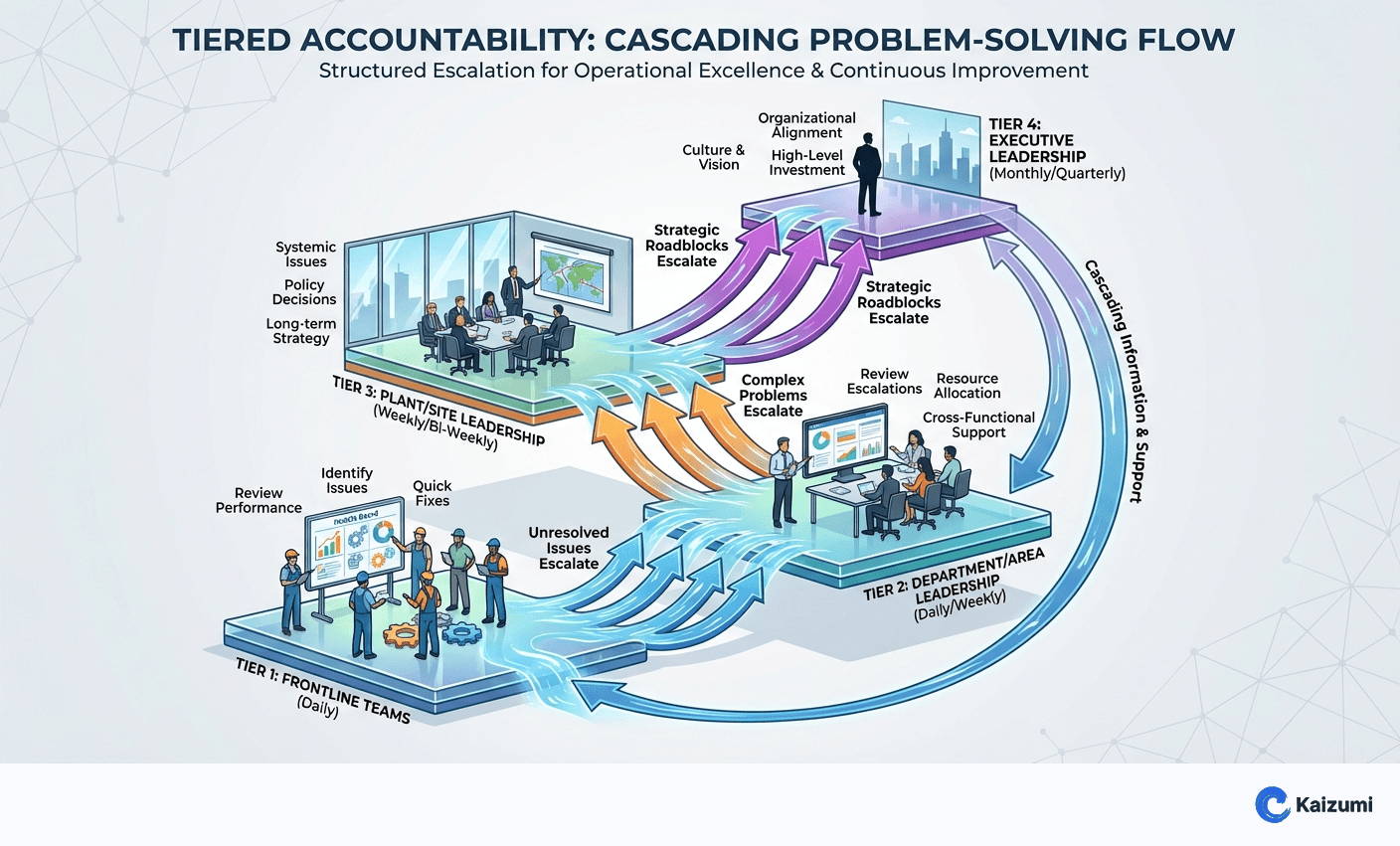
Tiered accountability is a structured system of cascading meetings where problems escalate through organizational levels on a defined schedule. Tier 1 (frontline teams) meets daily, reviewing performance and identifying issues. Unresolved issues escalate to Tier 2 (department/area leadership), which also meets daily but later. Tier 2 escalates to Tier 3 (senior leadership), typically meeting less frequently. The system ensures problems reach people with authority to solve them quickly while keeping ownership at the appropriate level.
Examples
Tier 1: Production cells met at 6:30 AM, reviewing previous shift metrics. Tier 2: Production supervisors met at 7:00 AM, receiving escalations and reviewing area performance. Tier 3: Plant leadership met at 7:30 AM, receiving escalations requiring senior authority. A quality issue identified at 6:30 could reach plant manager by 7:30.
Key Points
- Cascading meetings with defined escalation criteria
- Each tier meets at scheduled times, receiving escalations from below
- Problems reach appropriate authority level rapidly
- Prevents both unnecessary escalation and bottlenecked decisions
Common Misconceptions
Tiered accountability adds layers of meetings. Done well, tiered meetings are brief (10-15 minutes) and replace longer, less effective meetings. Total meeting time often decreases while decision speed increases.
Everything should escalate. The system includes defined criteria for escalation. Most issues should resolve at Tier 1. Only issues requiring resources, authority, or expertise beyond team capability escalate. Over-escalation indicates unclear criteria or insufficient team capability.