
Daily Management
Personalize This
Get insights for your role
Daily management is a system of standardized routines for monitoring performance, identifying problems, and initiating rapid response at the work level.
Definition
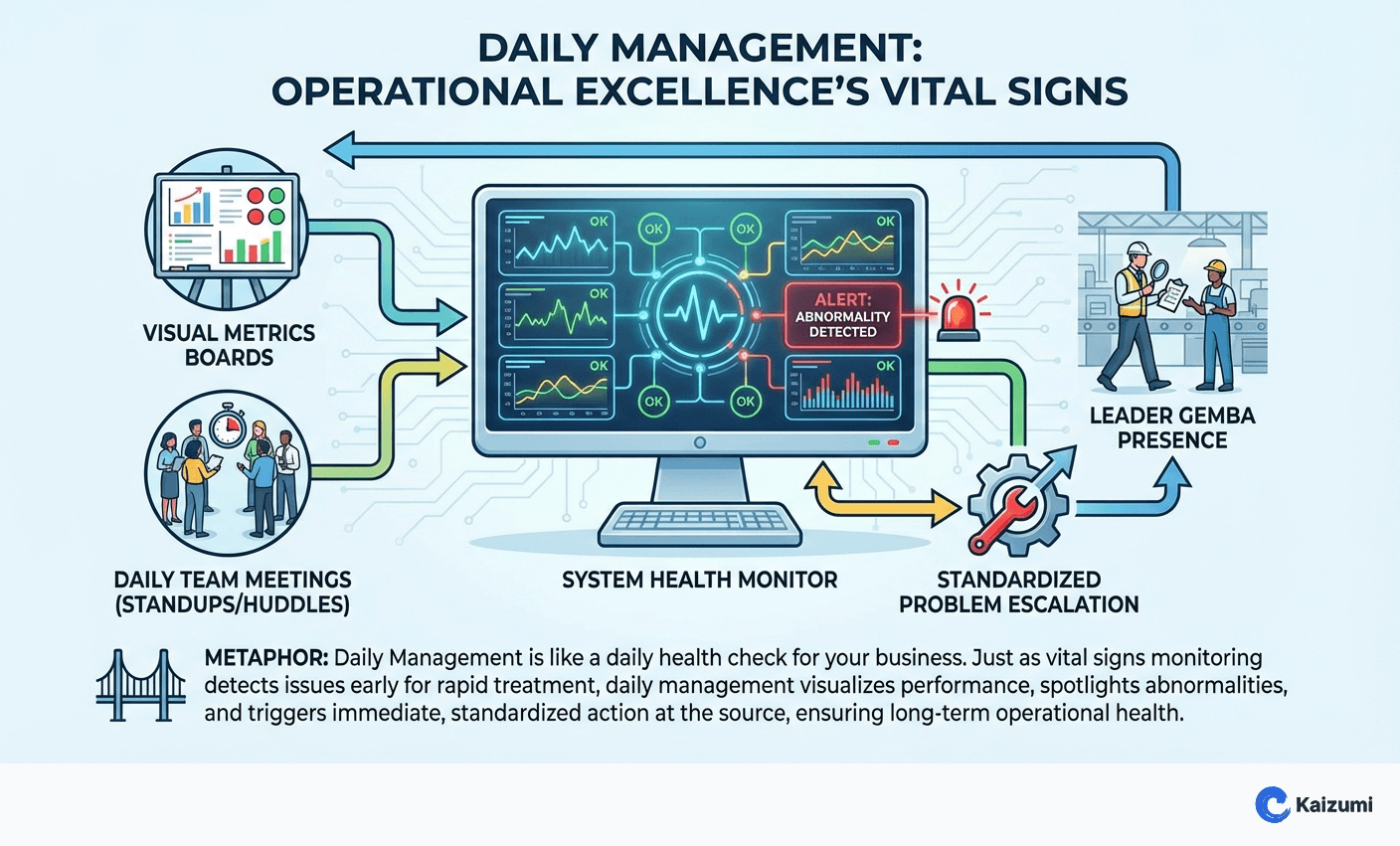
Daily management is a structured system for monitoring performance, identifying abnormalities, and initiating rapid response—all at the work level. Core elements include visual metrics boards, daily team meetings (standups or huddles), standardized problem escalation, and leader gemba presence. The goal is catching problems when they're small and fresh, not days or weeks later in aggregate reports. Daily management transforms leadership from periodic review to continuous engagement with actual performance.
Examples
Each shift began with a 10-minute team huddle at the performance board. Yesterday's metrics (safety, quality, delivery, productivity) were reviewed. Any red metric triggered immediate discussion of cause and countermeasure. Problems escalated the same day, not at month-end.
Key Points
- Visual boards make performance visible to all
- Daily huddles review metrics and surface problems
- Rapid escalation gets problems to people who can solve them
- Leader presence demonstrates commitment and enables coaching
Common Misconceptions
Daily management is daily meetings. Meetings are one element. Complete daily management includes visual metrics, defined escalation paths, leader standard work, and problem-solving response. The meeting without the system is just more meetings.
Daily management adds overhead. Effective daily management reduces total management time by preventing problems from growing. Ten minutes daily to catch a problem beats hours weekly to analyze why things went wrong.