
Work Instructions
Personalize This
Get insights for your role
Work instructions are detailed step-by-step directions for performing specific tasks correctly and consistently.
Definition
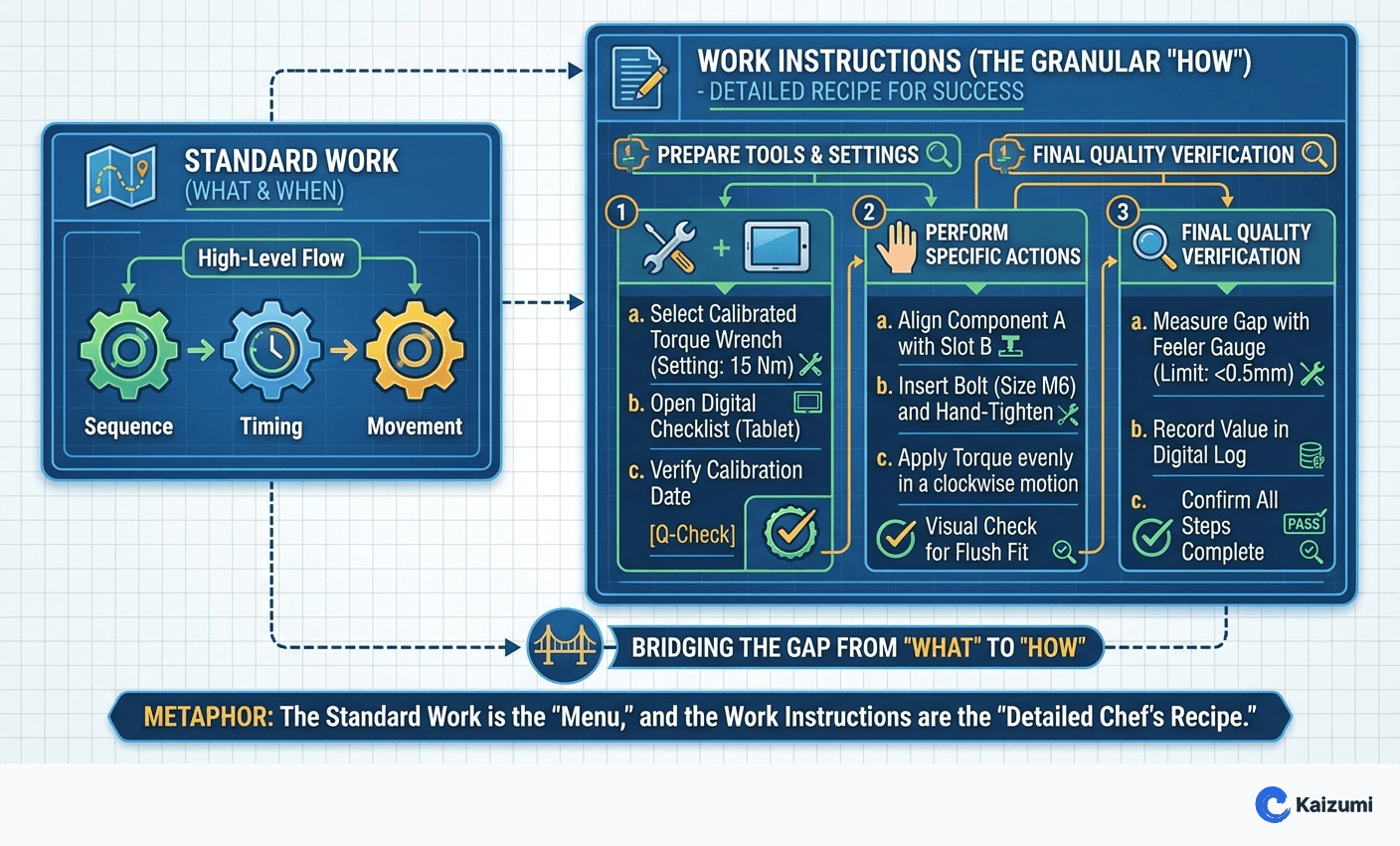
Work instructions are detailed, step-by-step documents that describe exactly how to perform a specific task. While standard work shows what should happen at a higher level (sequence, timing, movement), work instructions provide the granular "how"—the specific actions, tools, settings, and quality checks for each operation. Good work instructions are visual (using photos and diagrams), highlight key points and cautions, and are accessible where work is performed. They support training, ensure consistency, and preserve organizational knowledge.
Examples
A work instruction for operating a CNC machine includes: startup sequence with photos, parameter settings for each operation, quality checks at each stage, shutdown procedure, and troubleshooting guide. Key points are highlighted; safety cautions are prominently displayed.
Key Points
- Work instructions should be visual—photos and diagrams improve comprehension
- Key points and cautions should be highlighted prominently
- Instructions should be accessible where work is performed, not filed away
- Update instructions when methods change; outdated instructions cause confusion
Common Misconceptions
Work instructions are just for new employees. Instructions serve as reference for everyone, especially for infrequent tasks. Even experts consult instructions for tasks they don't perform regularly.
More detail is always better. Instructions should have appropriate detail—enough for consistency, not so much that essential points are buried. The right level depends on task complexity and user expertise.
See Also
- Job Instruction - The training method for work instructions