
Bottleneck Analysis
Personalize This
Get insights for your role
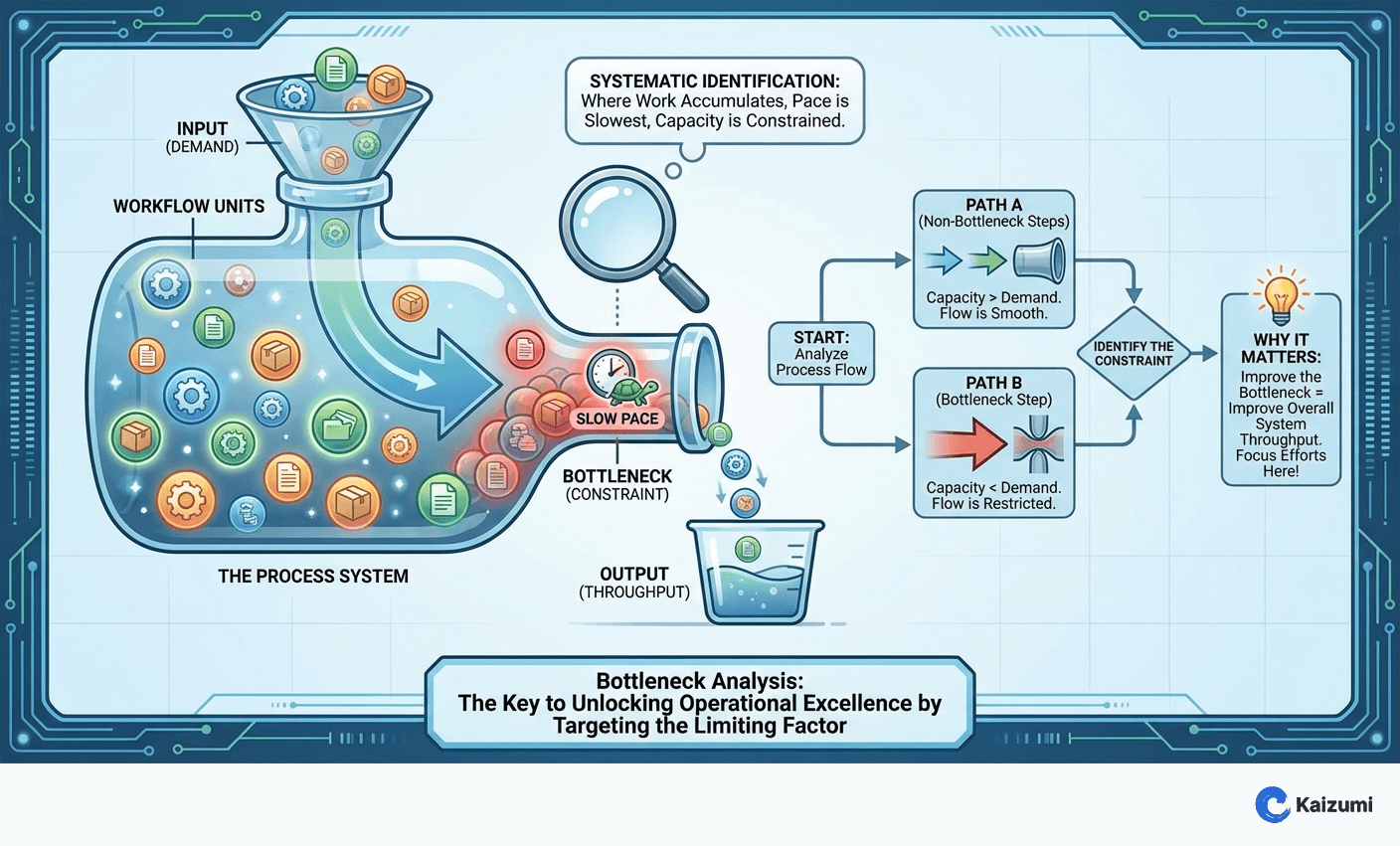
Bottleneck analysis identifies the constraint limiting system throughput, focusing improvement where it matters most.
Definition
Bottleneck analysis is the systematic identification of the resource or process step that limits overall system throughput. The bottleneck is where work accumulates, where the pace is slowest relative to demand, or where capacity is most constrained. Identifying the bottleneck matters because only improvements at the bottleneck increase system throughput—improvements elsewhere just create local efficiency without system benefit. Bottleneck analysis uses data on cycle times, queue lengths, and utilization to locate the true constraint.
Examples
Bottleneck analysis of a production line examined queue lengths before each station. Work-in-process accumulated before station 4, indicating it was the bottleneck. Cycle time data confirmed station 4 had the longest cycle time. Improvement efforts focused there, increasing line throughput.
Key Points
- The bottleneck limits system throughput; other steps have excess capacity
- Only improvements at the bottleneck increase system output
- Bottlenecks can shift as constraints are addressed
- Look for WIP accumulation, high utilization, and longest cycle times
Common Misconceptions
All steps should be improved equally. Resources spent improving non-bottlenecks don't increase throughput. Focus on the constraint first; then address the new bottleneck that emerges.
The bottleneck is obvious. Sometimes apparent bottlenecks are symptoms of upstream issues. Analysis should verify with data: cycle times, queues, and utilization.
Try It
The tool below finds the constraint by comparison rather than by argument. Enter available time and demand to set takt, then add each process step with its observed cycle time. Every step is drawn against the takt line, and anything above it turns red. A red bar is a step that cannot meet demand, which makes it the only place where improvement raises throughput.