
Control Plan
Personalize This
Get insights for your role
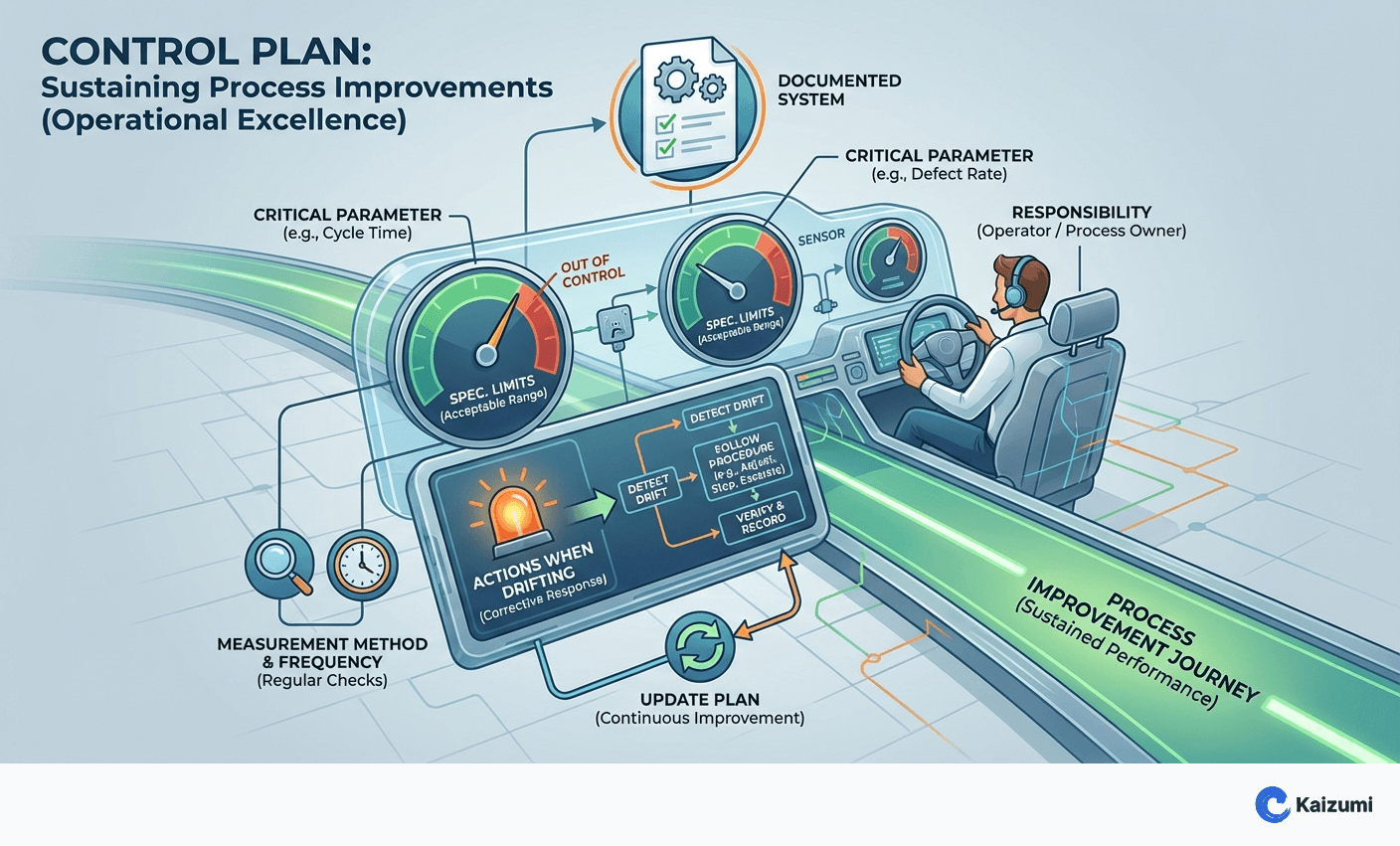
A control plan documents the system for maintaining process improvements, specifying what to monitor, how to measure, and how to respond to deviations.
Definition
A control plan is a documented system for maintaining process improvements over time. It specifies critical process parameters to monitor, measurement methods and frequencies, specification limits, who is responsible for monitoring, and what actions to take when parameters drift out of control. Control plans are the primary deliverable of the DMAIC Control phase, translating project improvements into sustainable daily management. Without effective control plans, improvements typically deteriorate within months.
Examples
After reducing weld defects, the team created a control plan specifying: Parameter: weld current. Spec: 180-220 amps. Measurement: digital readout, every setup. Frequency: start of shift and after any adjustment. Response: if out of range, stop and recalibrate before continuing. Responsible: operator with supervisor verification.
Key Points
- Control plans document what to monitor, how, how often, and what to do when out of spec
- Created in Control phase to sustain DMAIC improvements
- Should specify response plans before problems occur
- Requires clear ownership and regular review cadence
Common Misconceptions
Control plans are just documentation. Effective control plans drive daily behavior—operators check them, supervisors verify compliance, and response plans trigger immediate action. Documentation without action is worthless.
One control plan covers everything. Control plans focus on critical parameters from the improvement project. They don't replace overall process documentation but supplement it with specific monitoring for improvement sustainability.