
Design-In
Personalize This
Get insights for your role
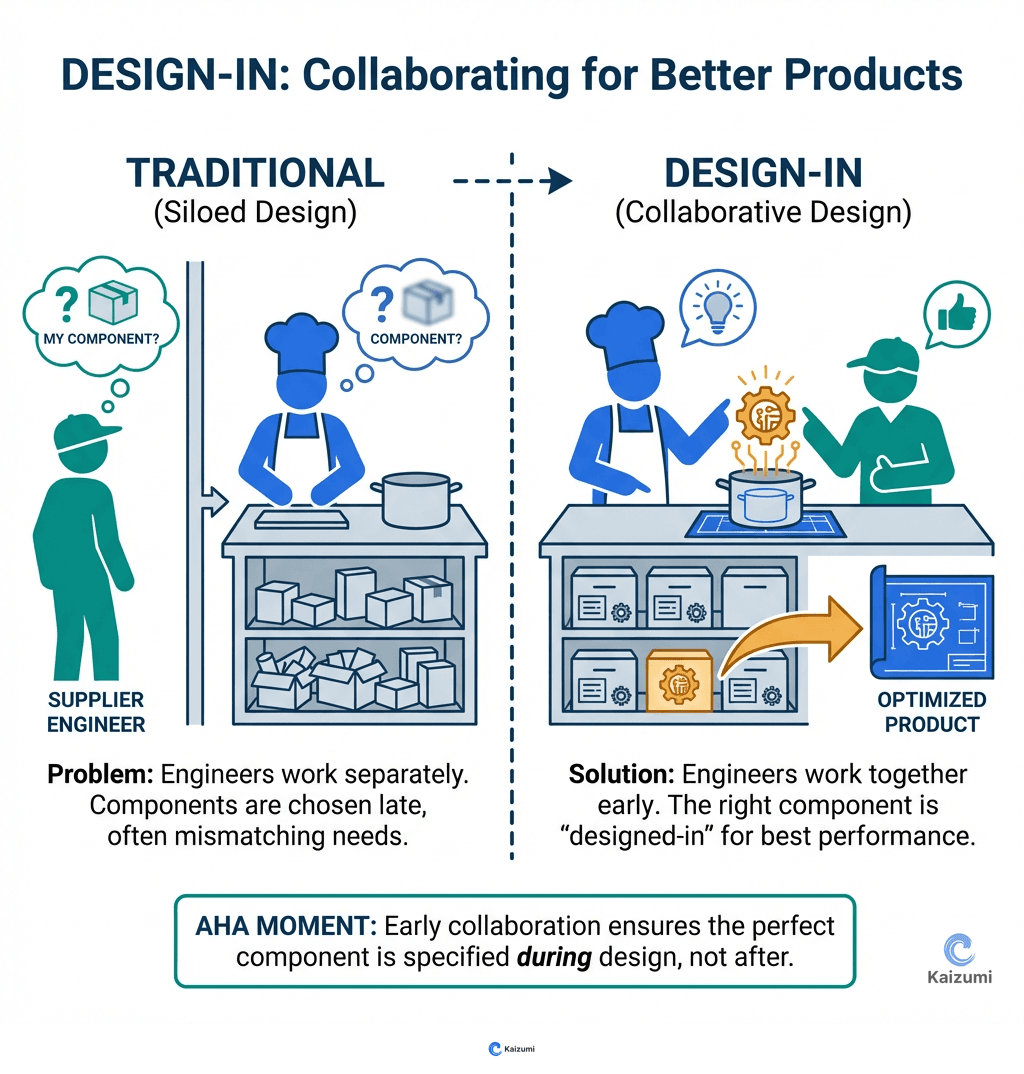
Design-in is integrating supplier components or technologies into a product during the design phase, creating mutual commitment and collaboration.
Definition
Design-in is the practice of involving suppliers early in product development, collaborating to integrate their components or technologies into the product design. Rather than completing the design and then soliciting competitive bids, design-in creates partnership where supplier expertise shapes the product. The supplier commits engineering resources and capacity; the customer commits to using that supplier's solution. This enables suppliers to innovate within the design space and reduces development time by eliminating the late-stage component selection and qualification process.
Examples
Key Points
- Involves suppliers as partners in development, not just bid recipients
- Creates mutual commitment—supplier invests in design, customer commits to purchase
- Enables supplier innovation within the design space
- Reduces development time by eliminating late-stage sourcing
Common Misconceptions
Design-in means sole-sourcing. While design-in often leads to single-source relationships for specific components, the relationship should be earned through collaboration value, not lock-in.
Design-in is only for strategic components. Commodity components may not warrant deep design-in, but more components benefit from early supplier involvement than most companies realize.