
Future Reality Tree
Personalize This
Get insights for your role
The Future Reality Tree is a TOC logic tool that tests whether proposed solutions will achieve desired outcomes and identifies potential negative effects.
Definition
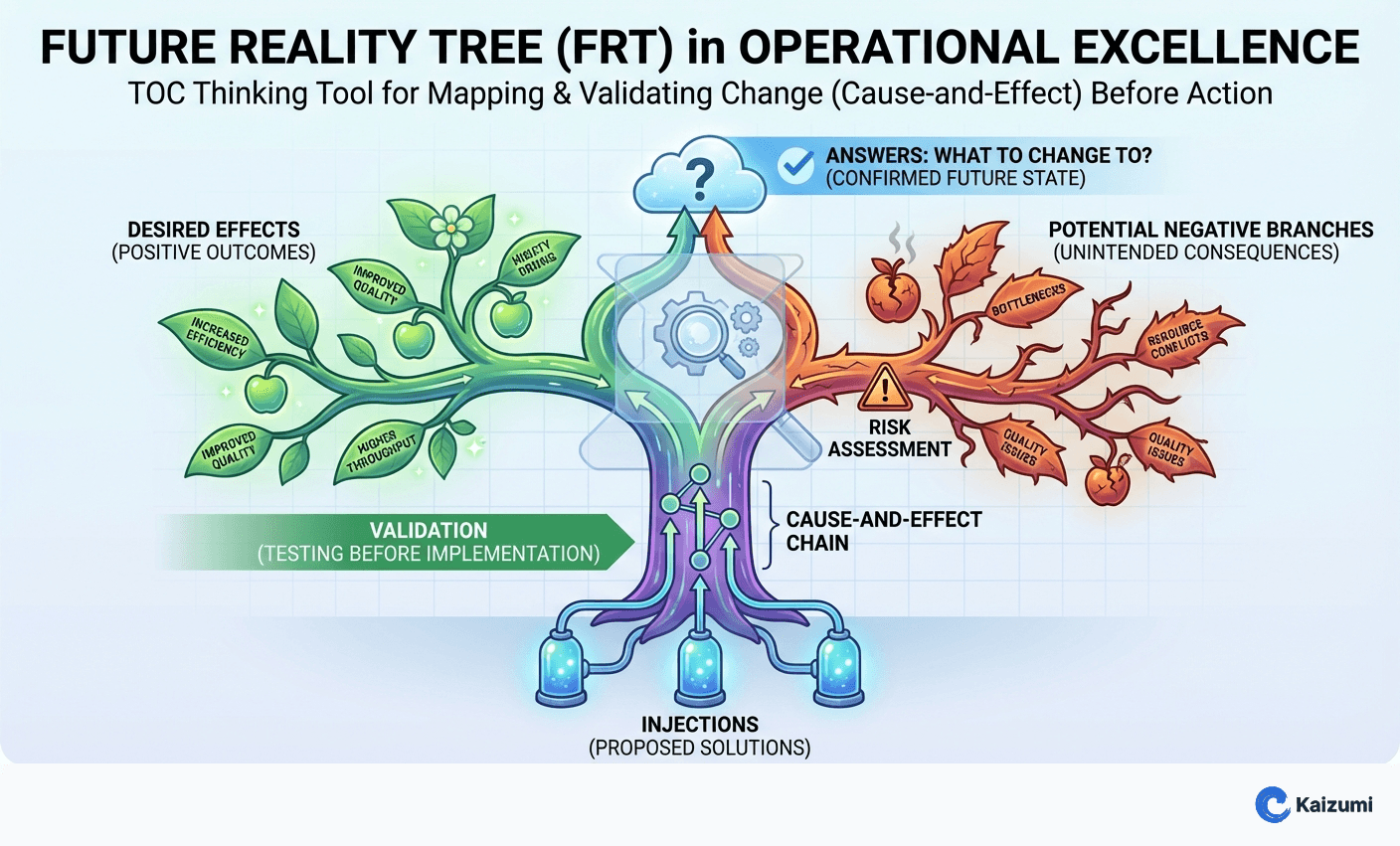
The Future Reality Tree (FRT) is a TOC thinking tool that tests proposed solutions before implementation. It maps cause-and-effect chains from proposed changes ("injections") to their outcomes—both desired effects and potential negative branches. The FRT answers "What to change to?" by validating that solutions will actually achieve goals. By working through the logic before implementation, teams identify problems with solutions early, add necessary supporting changes, and build confidence that the investment will pay off.
Examples
A team proposed implementing pull production to reduce inventory. The FRT traced the logic: pull → smaller batches → more changeovers → potential for constraint starvation (negative branch). The analysis revealed they needed to add SMED first, modifying the implementation sequence.
Key Points
- Tests proposed solutions through cause-and-effect logic before implementation
- "Injections" are the proposed changes entered into the tree
- Identifies negative branches—unintended negative consequences
- Validates that solutions will achieve desired outcomes
Common Misconceptions
FRT proves solutions will work. FRT validates logic and identifies potential problems—it doesn't guarantee success. Real-world implementation may encounter issues not anticipated. FRT improves odds, it doesn't eliminate risk.
Negative branches mean the solution is bad. Every change creates potential negatives. FRT helps identify and address them proactively—adding supporting injections or modifying the solution. Finding negatives is valuable, not disqualifying.