
Lagging Indicator
Personalize This
Get insights for your role
A lagging indicator is a results metric that reports performance after the fact, confirming what has already occurred.
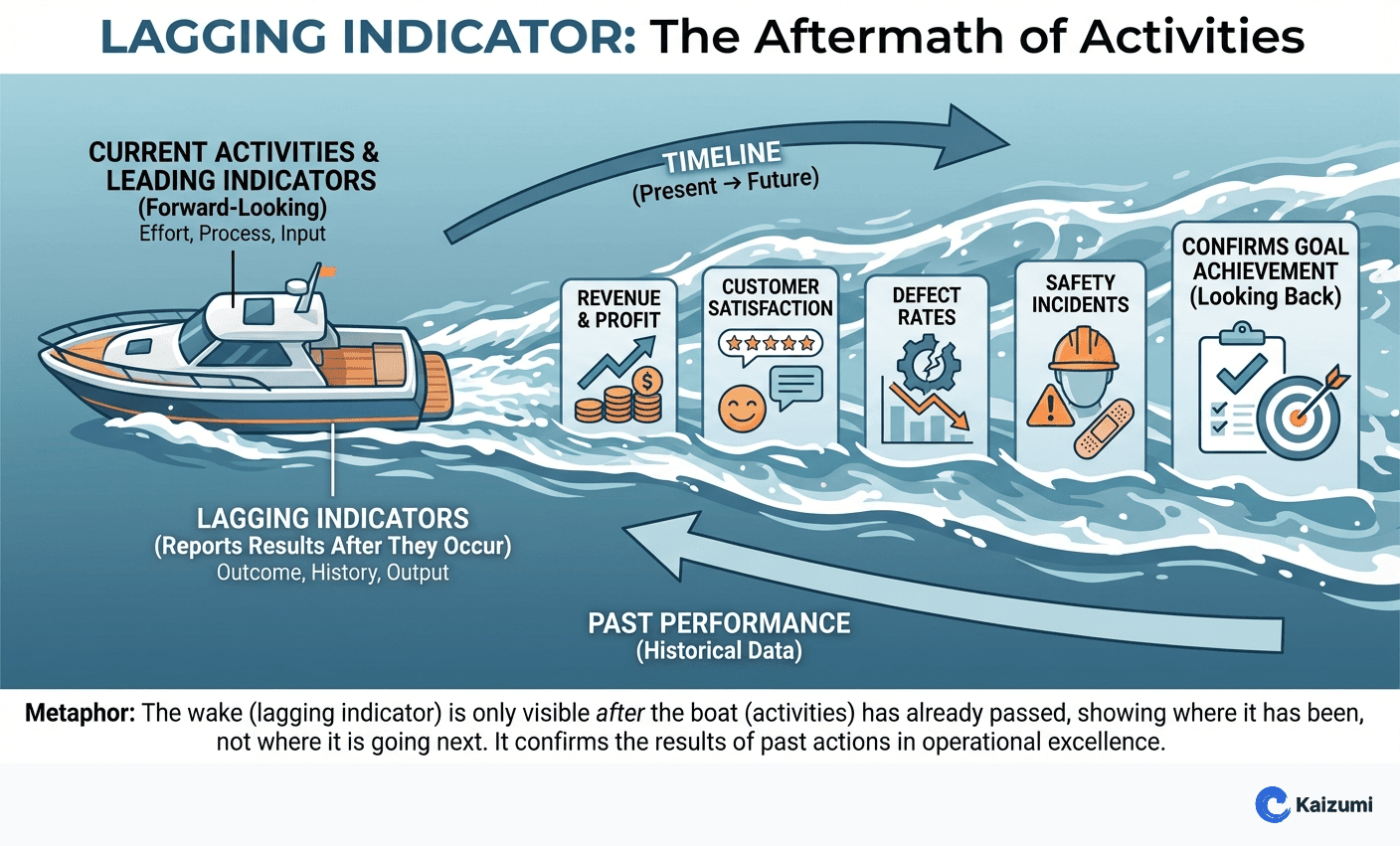
Definition
A lagging indicator is a metric that reports results after they have occurred—it "lags" behind the activities that produced those results. Common lagging indicators include revenue, profit, customer satisfaction, defect rates, and safety incidents. While lagging indicators confirm whether goals were achieved, they provide no opportunity for intervention—the outcomes have already happened. Effective measurement systems balance lagging indicators (confirming results) with leading indicators (enabling proactive management).
Examples
Monthly scrap cost is a lagging indicator—it reports what has already been thrown away. By the time the report appears, the scrap is in the bin. The metric confirms a problem exists but provides no early warning to prevent it.
Key Points
- Reports results after outcomes have occurred
- Cannot be directly managed—outcomes have already happened
- Essential for confirming goal achievement and trend direction
- Must be paired with leading indicators for proactive management
Common Misconceptions
Lagging indicators are bad. Lagging indicators are essential—they confirm whether strategies are working. The problem is relying only on lagging indicators, which means learning about problems only after damage is done.
Faster lagging indicators become leading. Even real-time reporting of results is still lagging—the event has occurred. Leading indicators predict future events, not just report current ones faster.