
KPI
Personalize This
Get insights for your role
A KPI (Key Performance Indicator) is a measurable value that demonstrates how effectively an organization achieves key business objectives.
Definition
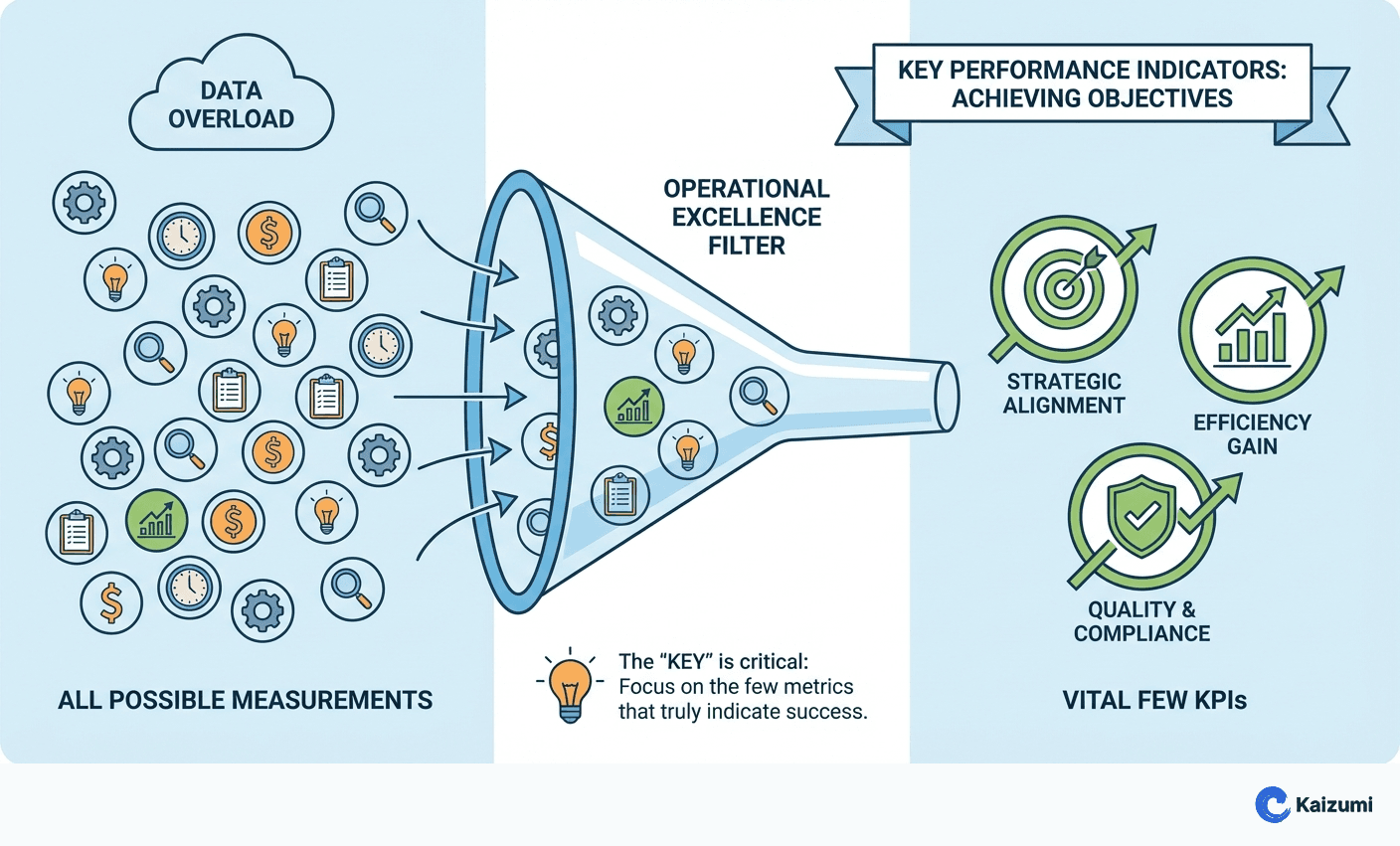
A KPI (Key Performance Indicator) is a quantifiable measure that demonstrates how effectively an organization is achieving key objectives. The "key" is critical—KPIs should be the vital few metrics that truly indicate success, not comprehensive measurement of everything possible. Effective KPIs are specific, measurable, aligned with strategy, and actionable. They typically cascade from organizational level to department to team, ensuring everyone knows how their work contributes to overall success.
Examples
A plant's KPIs aligned to strategic priorities: Safety (recordable incident rate), Quality (first-pass yield), Delivery (on-time shipping), Cost (cost per unit). Each department had aligned KPIs: production focused on yield and efficiency; maintenance on equipment availability. Everyone could trace their metrics to plant goals.
Key Points
- "Key" means vital few, not comprehensive many
- Should align with and indicate progress toward strategic objectives
- Typically cascade from organizational to team to individual level
- Must be measurable, specific, and actionable
Common Misconceptions
More KPIs mean better management. Too many KPIs dilute focus and create conflicting priorities. Effective organizations identify 3-5 truly key indicators at each level. If everything is a KPI, nothing is.
KPIs should only be financial. Balanced scorecards include financial, customer, process, and people perspectives. Leading indicators often come from non-financial measures that predict financial results.