
Leading Indicator
Personalize This
Get insights for your role
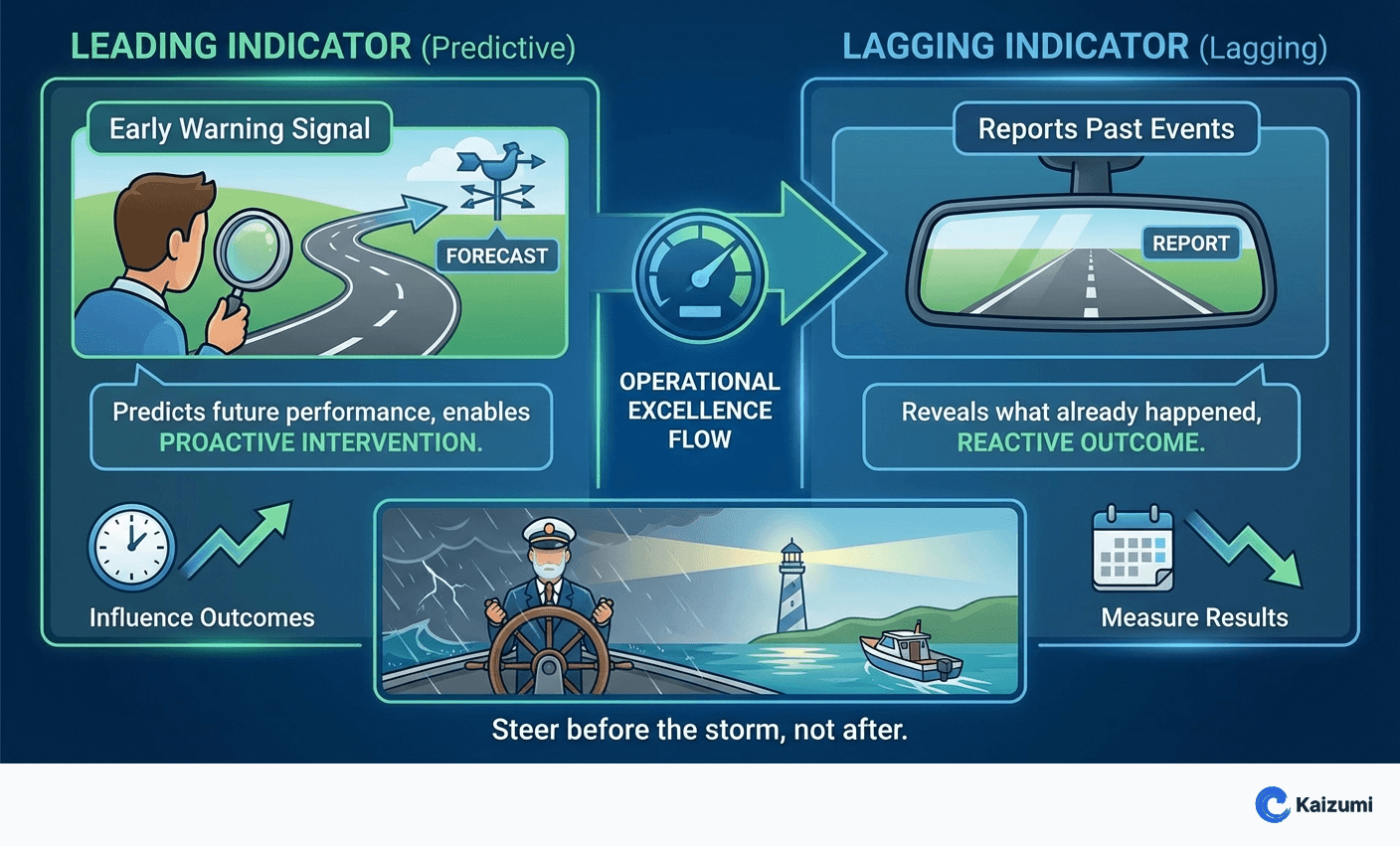
A leading indicator is a predictive metric that signals future performance, enabling proactive intervention before results materialize.
Definition
A leading indicator is a metric that predicts future performance—an early warning signal that enables proactive intervention. Unlike lagging indicators that report what already happened, leading indicators reveal what's likely to happen, providing opportunity to influence outcomes. Effective leading indicators have a validated relationship with the results they predict and change quickly enough to enable timely response. Managing leading indicators is how organizations shift from reactive to proactive management.
Examples
Lagging indicator: customer complaints. Leading indicator: in-process defect rate. By the time complaints arrive, defects have shipped. Monitoring in-process defects enables intervention before customers are affected. The leading indicator predicts and prevents the lagging result.
Key Points
- Predicts future performance before results materialize
- Enables proactive intervention while outcomes can still be influenced
- Must have validated relationship with the lagging indicator it predicts
- Should change quickly enough to provide useful early warning
Common Misconceptions
Any early metric is a leading indicator. True leading indicators have demonstrated predictive relationships. A metric that happens to come first chronologically isn't automatically a leading indicator unless it actually predicts outcomes.
Leading indicators replace lagging indicators. Both are needed. Lagging indicators confirm whether leading indicator management is working. The pairing provides both early warning (leading) and validation (lagging).