
Maturity Model
Personalize This
Get insights for your role
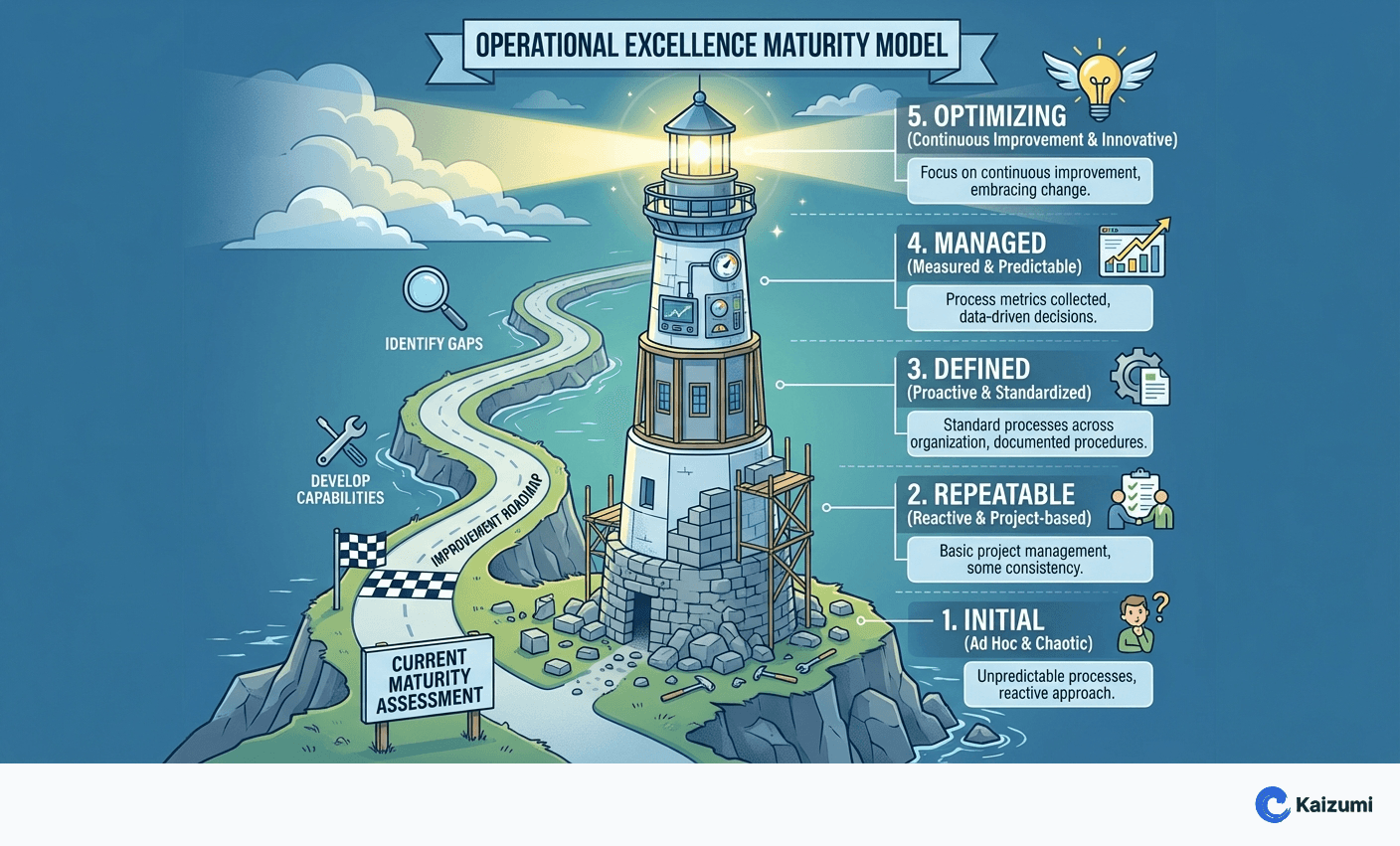
A maturity model is a framework that describes progressive levels of capability development, from initial to optimized states.
Definition
A maturity model is a structured framework that defines progressive stages of capability development in a specific domain. Organizations assess their current maturity level, identify gaps to desired levels, and develop improvement roadmaps. Common maturity models include five levels—from initial/ad-hoc practices to optimized/continuously improving capabilities. Maturity models provide a common language for discussing capability, enable benchmarking, and guide improvement sequencing by identifying what capabilities must be established before others.
Examples
A lean maturity assessment evaluated the plant across dimensions: standardization, flow, pull, continuous improvement. Results showed Level 2 (Developing) in most areas, Level 3 (Defined) in standardization. The maturity model guided improvement sequence—stabilize processes before implementing advanced pull systems.
Key Points
- Defines progressive levels of capability development
- Enables self-assessment and benchmarking
- Guides improvement sequencing and roadmapping
- Common structure: five levels from initial to optimized
Common Misconceptions
Higher maturity is always better. The appropriate maturity level depends on strategic needs. Level 5 in every dimension may require investment that exceeds value. Organizations should target maturity levels aligned with business requirements.
Maturity models are pass/fail assessments. Maturity models are development tools, not compliance checklists. They reveal current state, clarify targets, and guide improvement—not judge adequacy.