
Monozukuri
ものづくり·monozukuri·"making things, craftsmanship, the art of production"
Personalize This
Get insights for your role
Monozukuri is the Japanese philosophy of making things with craftsmanship, pride, and continuous pursuit of excellence.
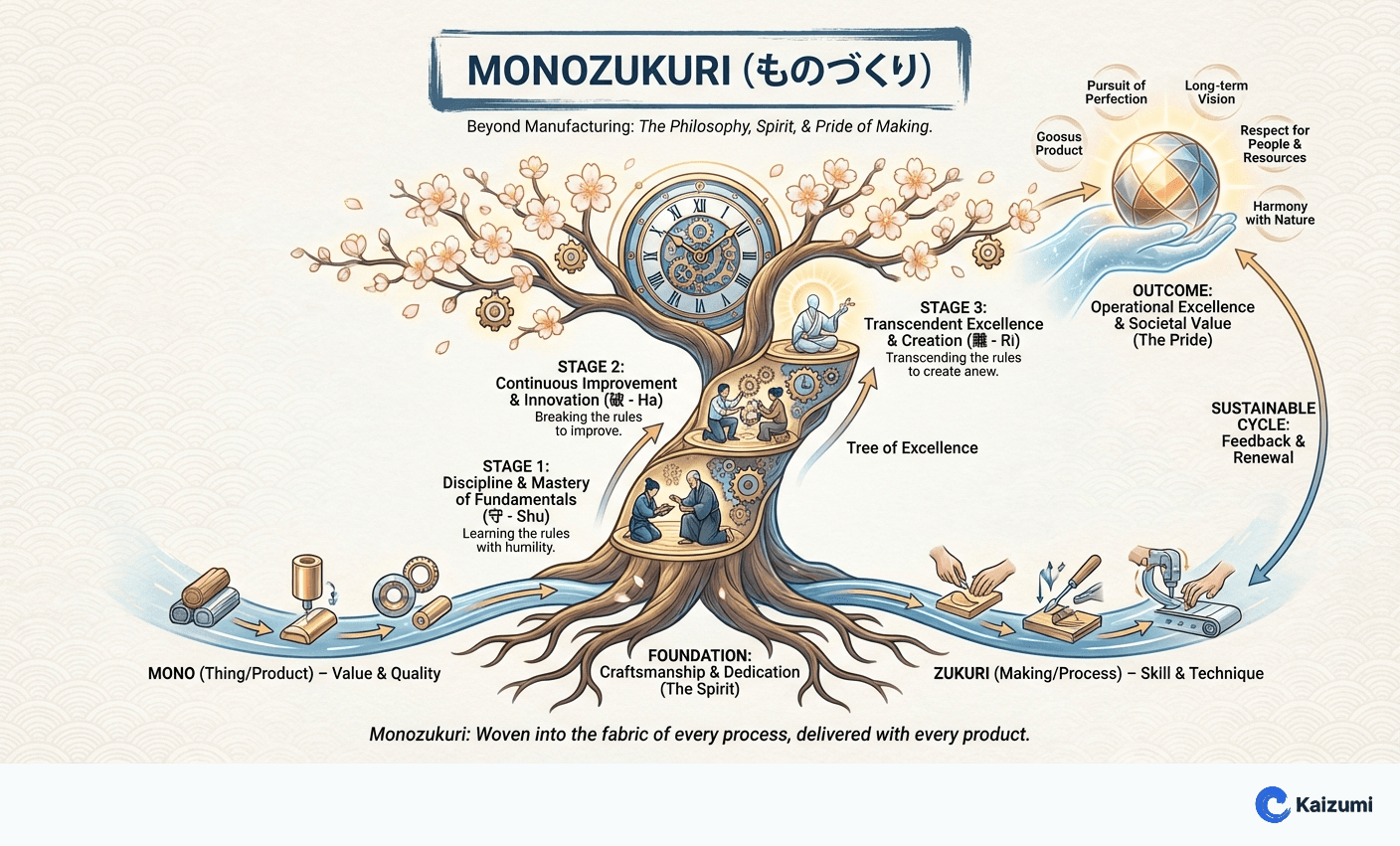
Definition
Monozukuri is a Japanese concept that goes beyond manufacturing to encompass the philosophy, spirit, and pride of making things. It combines mono (thing) and zukuri (making) but carries much deeper meaning than the literal translation suggests. Monozukuri embodies craftsmanship, the pursuit of excellence, pride in creation, and continuous improvement of both the product and the process. It represents a cultural value where making things well matters intrinsically, not just for commercial purposes.
Examples
A veteran machine operator doesn't just run parts—he maintains his equipment meticulously, monitors quality intently, and continuously improves his process. He takes pride in producing excellent parts and feels personal responsibility for quality. This is monozukuri—the spirit of the craftsman applied to industrial production.
Key Points
- Monozukuri is about the spirit and pride of creation, not just the mechanics
- Quality comes from craftsman mentality, not just quality systems
- Continuous improvement is driven by internal standards, not just targets
- Monozukuri represents intrinsic motivation to do excellent work
Common Misconceptions
Monozukuri is just Japanese manufacturing. While the term is Japanese, the craftsman spirit exists in all cultures. Monozukuri names a philosophy that can be cultivated anywhere people take pride in making things well.
Monozukuri is incompatible with standardization. Craftsman spirit works within and improves standards. Master craftspeople follow discipline; their artistry comes from deep knowledge of fundamentals, not from ignoring them.