
Brownfield
Personalize This
Get insights for your role
Brownfield refers to implementing lean in an existing operation with established processes, equipment, culture, and constraints.
Definition
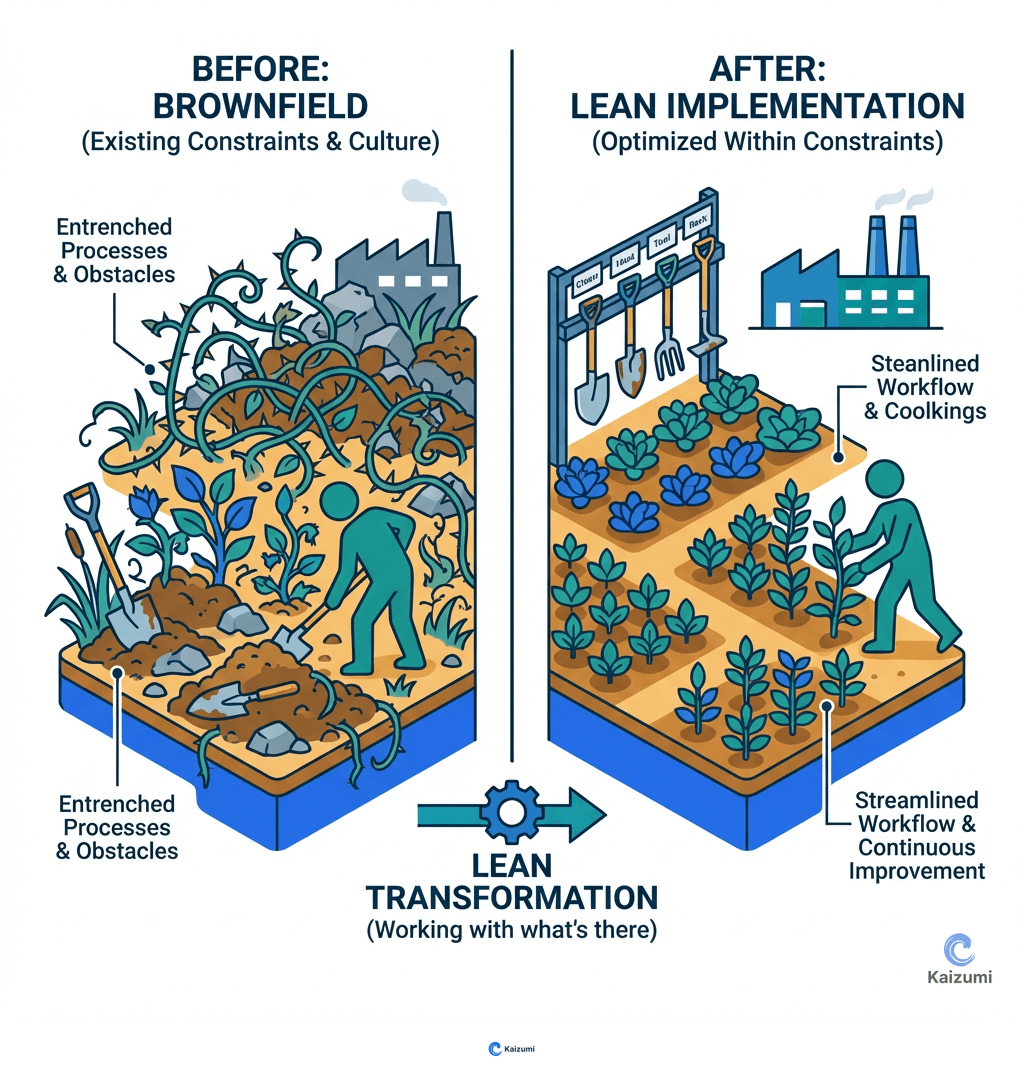
Brownfield refers to implementing lean principles in an existing operation—a facility with established processes, equipment layouts, workforce culture, and organizational constraints. Brownfield transformation is more common and typically more challenging than greenfield (new) implementation because existing physical layouts, labor agreements, equipment investments, and cultural patterns must be addressed. Brownfield improvement often proceeds through incremental kaizen rather than wholesale redesign, adapting lean principles to existing constraints while gradually creating the conditions for more significant change.
Examples
A 40-year-old plant with fixed equipment, union agreements, and deeply ingrained batch production culture is a brownfield site. Lean implementation must work within equipment limitations, negotiate changes with the union, and gradually shift culture—not simply start fresh with optimal design.
Key Points
- Most lean implementations are brownfield—working with existing constraints
- Requires change management alongside technical improvement
- Physical and cultural constraints often limit ideal solutions
- Progress is typically incremental rather than transformational
Common Misconceptions
Brownfield means lean can't fully work. Constraints are real but often more moveable than assumed. Brownfield implementations can achieve substantial improvement; they just require different approaches than greenfield.
Brownfield is always harder than greenfield. Brownfield has existing expertise, customer relationships, and revenue. Greenfield must build everything from scratch while establishing the business. Both have challenges.