
Buffer Management
Personalize This
Get insights for your role
Buffer management monitors the consumption of time or inventory buffers to identify problems early and prioritize improvement efforts.
Definition
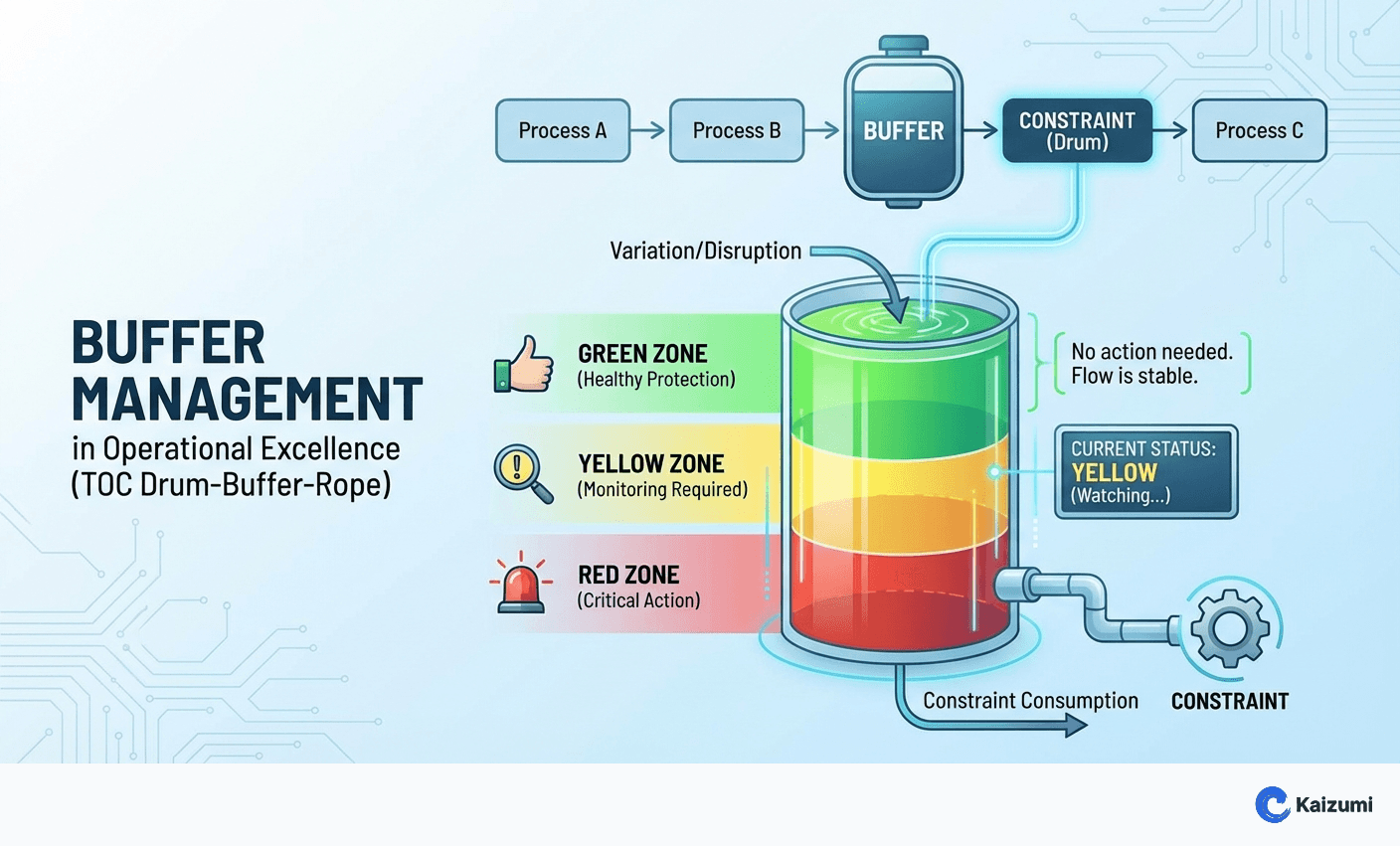
Buffer management is a TOC technique for monitoring and responding to buffer consumption in Drum-Buffer-Rope systems. Buffers protect the constraint from variation; buffer management monitors how much protection remains. Typically buffers are divided into three zones: green (buffer healthy—no action), yellow (buffer consumed—monitor and expedite if needed), and red (buffer critical—immediate action required). Beyond real-time expediting, buffer management data reveals which problems most frequently threaten the constraint, prioritizing improvement efforts.
Examples
A 2-day time buffer preceded the constraint. Buffer management tracked job status: green (>1.3 days remaining), yellow (0.7-1.3 days), red (<0.7 days). Weekly analysis showed 40% of red penetrations came from one supplier—making vendor quality the improvement priority.
Key Points
- Divides buffers into green (OK), yellow (monitor), and red (act now) zones
- Enables real-time expediting when buffer is threatened
- Aggregated data reveals chronic problems for improvement focus
- Complements DBR scheduling with execution monitoring
Common Misconceptions
Red buffer status means failure. Buffers are designed to absorb variation—occasional red penetration is expected and proves the buffer is working. Consistent red status indicates the buffer is undersized or systemic problems need addressing.
Larger buffers are always safer. Larger buffers mean more WIP, longer lead times, and higher inventory cost. Buffer management helps right-size buffers—large enough to protect throughput, small enough to maintain flow.