
Change Agent
Personalize This
Get insights for your role
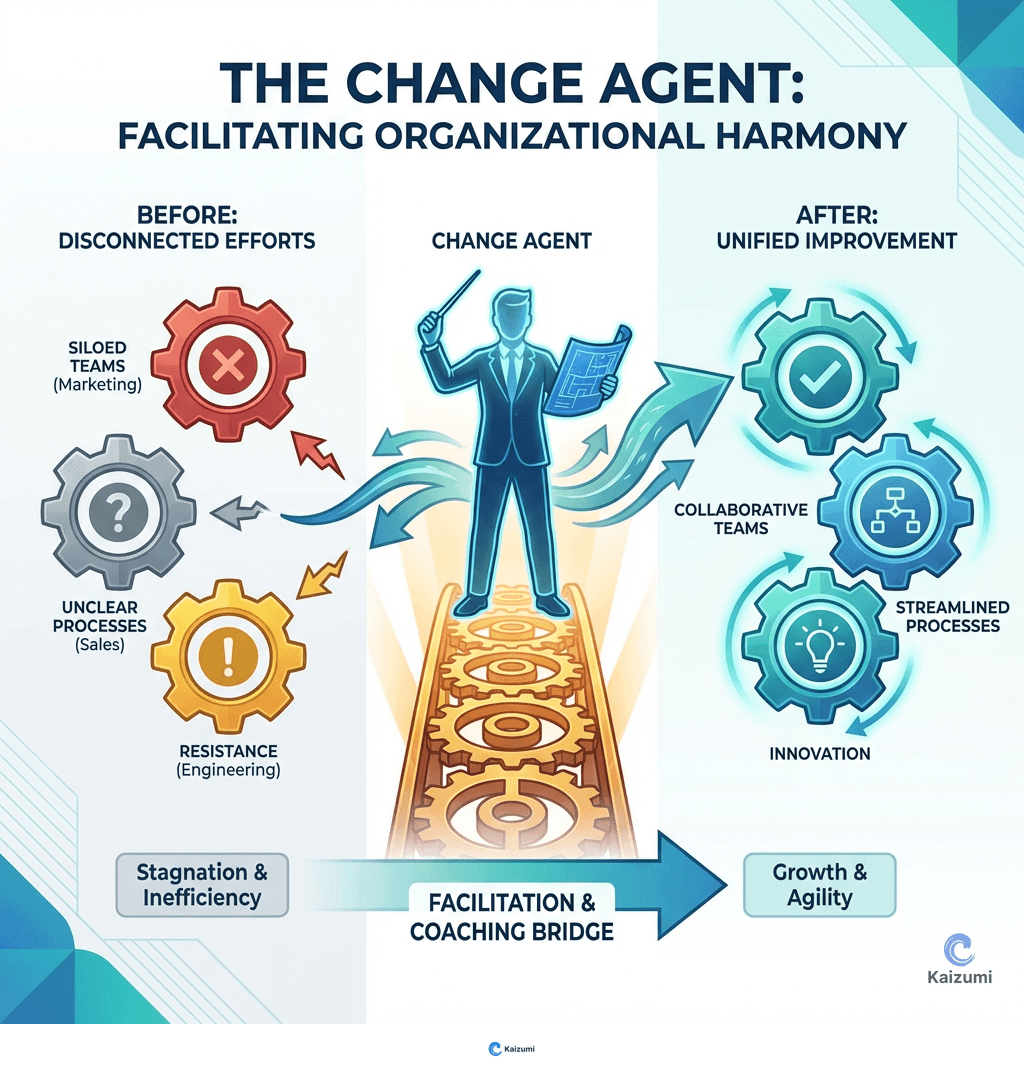
A change agent is a person responsible for driving organizational transformation, helping others adopt new methods and ways of thinking.
Definition
A change agent is an individual dedicated to driving organizational transformation—helping people adopt new methods, change behaviors, and sustain improvements. Change agents may be internal (dedicated lean resources, improvement specialists) or external (consultants, sensei). Effective change agents combine technical knowledge of improvement methods with the interpersonal skills to influence, coach, and overcome resistance. They work across organizational boundaries, building capability in others rather than doing improvement work themselves. The goal is to develop the organization's own improvement capability, eventually making the change agent role unnecessary.
Examples
A manufacturing company assigned five experienced engineers as change agents during their lean transformation. They facilitated kaizen events, coached supervisors on daily management, and modeled problem-solving behaviors. As the organization matured, these change agents moved to new challenges while line managers sustained and continued improvement.
Key Points
- Develops capability in others rather than doing improvement work themselves
- Combines technical knowledge with change management and coaching skills
- Works across boundaries to connect silos and spread good practices
- Success is measured by sustained improvement after the change agent moves on
Common Misconceptions
Change agents do the improvement work. If change agents do the work, the organization doesn't learn. Their role is to teach, coach, and facilitate—building capability that remains after they leave.
Change agents just need technical skills. Technical skills are necessary but insufficient. Influencing, coaching, overcoming resistance, and sustaining change require interpersonal skills that are equally important.