
Sensei
先生·sensei·"teacher, master, one who has gone before"
Personalize This
Get insights for your role
Sensei is a teacher or master who guides lean transformation through hands-on coaching, challenging questions, and experiential learning.
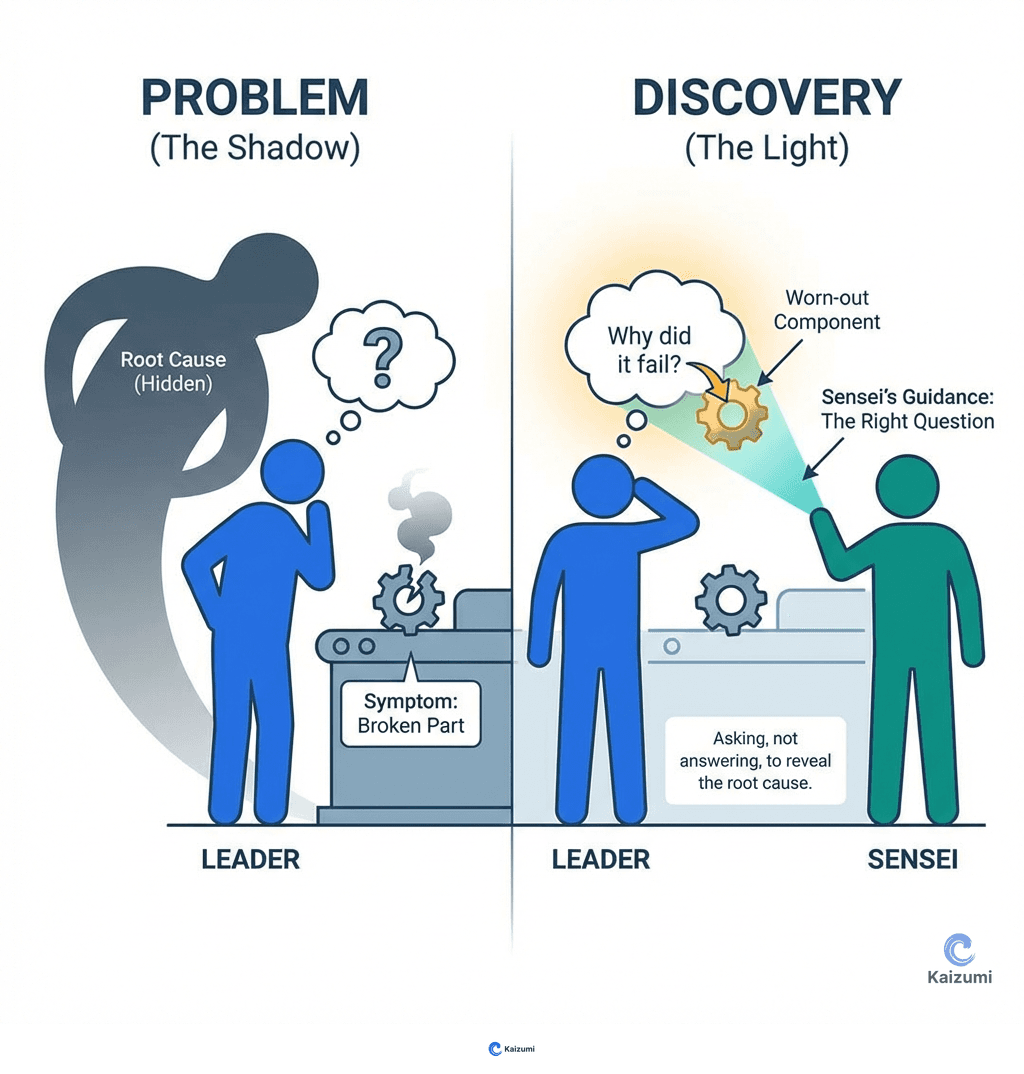
Definition
Sensei (literally "one who has gone before") is a teacher or master who guides organizational lean transformation. Unlike consultants who diagnose problems and prescribe solutions, sensei teach through questioning, challenging, and creating learning experiences. They push organizations to see waste they've accepted as normal, set stretch targets that seem impossible, and guide leaders through hands-on problem-solving at the gemba. Sensei develop the organization's own capability rather than creating dependency. The sensei role requires deep expertise earned through years of practice, not just theoretical knowledge of lean methods.
Examples
A sensei visiting a plant refuses to accept that changeovers take 4 hours. "I've seen 10-minute changeovers," she says. "Show me one." Standing at the machine, she asks questions that reveal assumptions the team hasn't questioned. By day's end, they've achieved a 90-minute changeover—still not 10 minutes, but they now believe it's possible.
Key Points
- Teaches through questions and challenges, not answers and prescriptions
- Pushes beyond what the organization believes possible
- Works at the gemba, not in conference rooms
- Develops organizational capability, not dependency
Common Misconceptions
Sensei are consultants with a different title. The approach is fundamentally different. Consultants often provide solutions; sensei develop the organization's capability to find its own solutions.
Anyone who knows lean can be a sensei. Sensei credibility comes from demonstrated mastery over years of practice. Teaching others requires deeper understanding than personal competence.