
DMADV
Personalize This
Get insights for your role
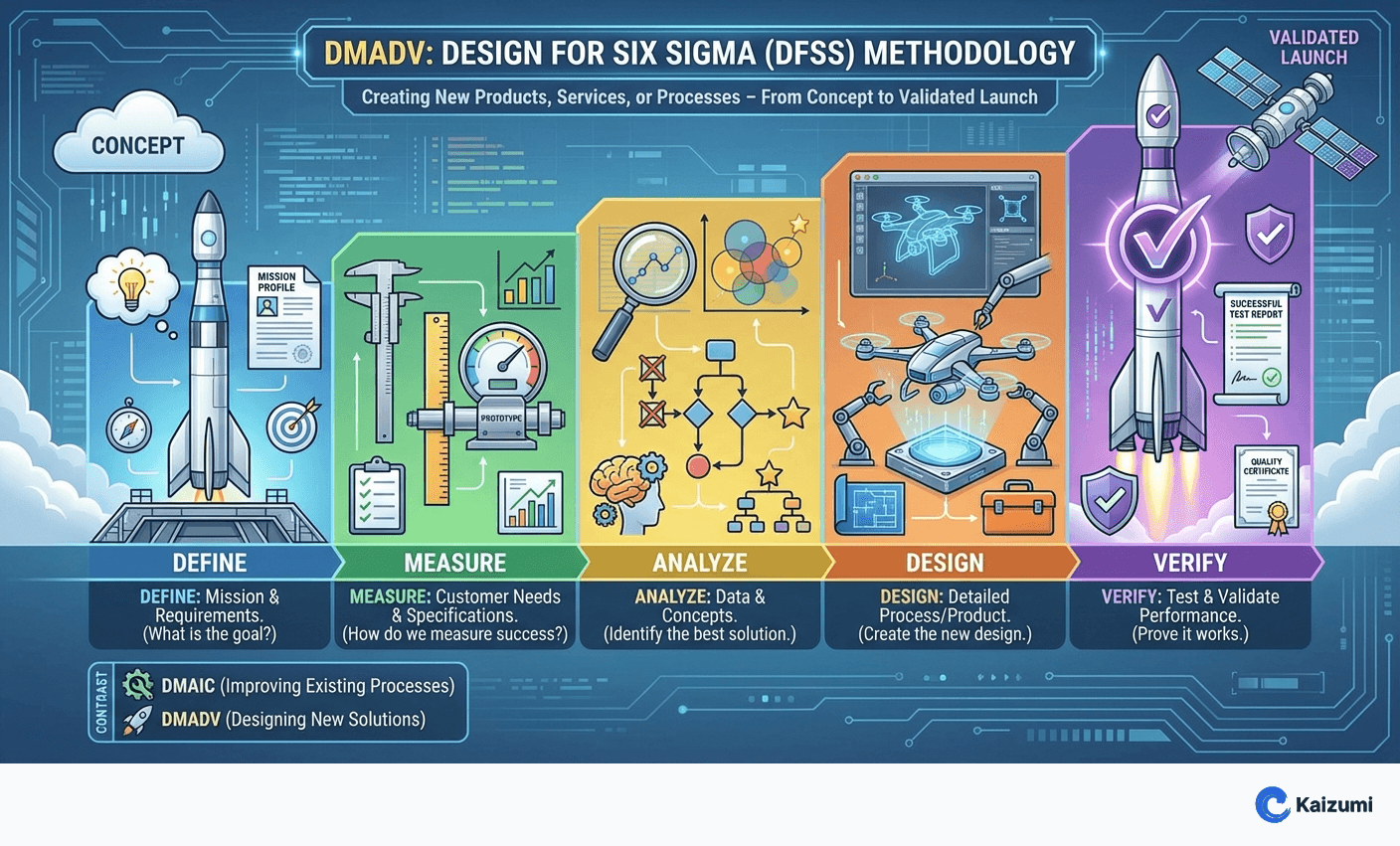
DMADV is the five-phase Design for Six Sigma methodology: Define, Measure, Analyze, Design, and Verify for creating new products or processes.
Definition
DMADV (Define, Measure, Analyze, Design, Verify) is the primary methodology used in Design for Six Sigma (DFSS) for creating new products, services, or processes. Unlike DMAIC which improves existing processes, DMADV guides the design of something new from concept to validated launch. Each phase builds on the previous: Define customer requirements, Measure and quantify those requirements, Analyze design options, Design the optimal solution, and Verify performance meets requirements.
Examples
A medical device company used DMADV for a new insulin pump. Define: patient and regulatory requirements. Measure: CTQs for accuracy, ease of use, reliability. Analyze: competing design concepts evaluated against CTQs. Design: selected concept optimized through tolerance analysis and FMEA. Verify: clinical trials confirmed performance met all requirements.
Key Points
- Define: Identify customer requirements and project goals
- Measure: Translate requirements into measurable CTQs with specifications
- Analyze: Evaluate design alternatives against requirements
- Design: Develop and optimize the selected solution
- Verify: Confirm design meets requirements through testing and pilots
Common Misconceptions
DMADV is just DMAIC with different names. While the acronyms share letters, the activities differ substantially. DMADV's Design phase creates new solutions; DMAIC's Improve phase modifies existing ones. The toolsets and outputs differ accordingly.
Analyze means the same thing in both methodologies. In DMAIC, Analyze identifies root causes of problems. In DMADV, Analyze evaluates design options and identifies the best concept. Same word, different focus.