
Genchi Genbutsu
現地現物·genchi genbutsu·"actual place, actual thing"
Personalize This
Get insights for your role
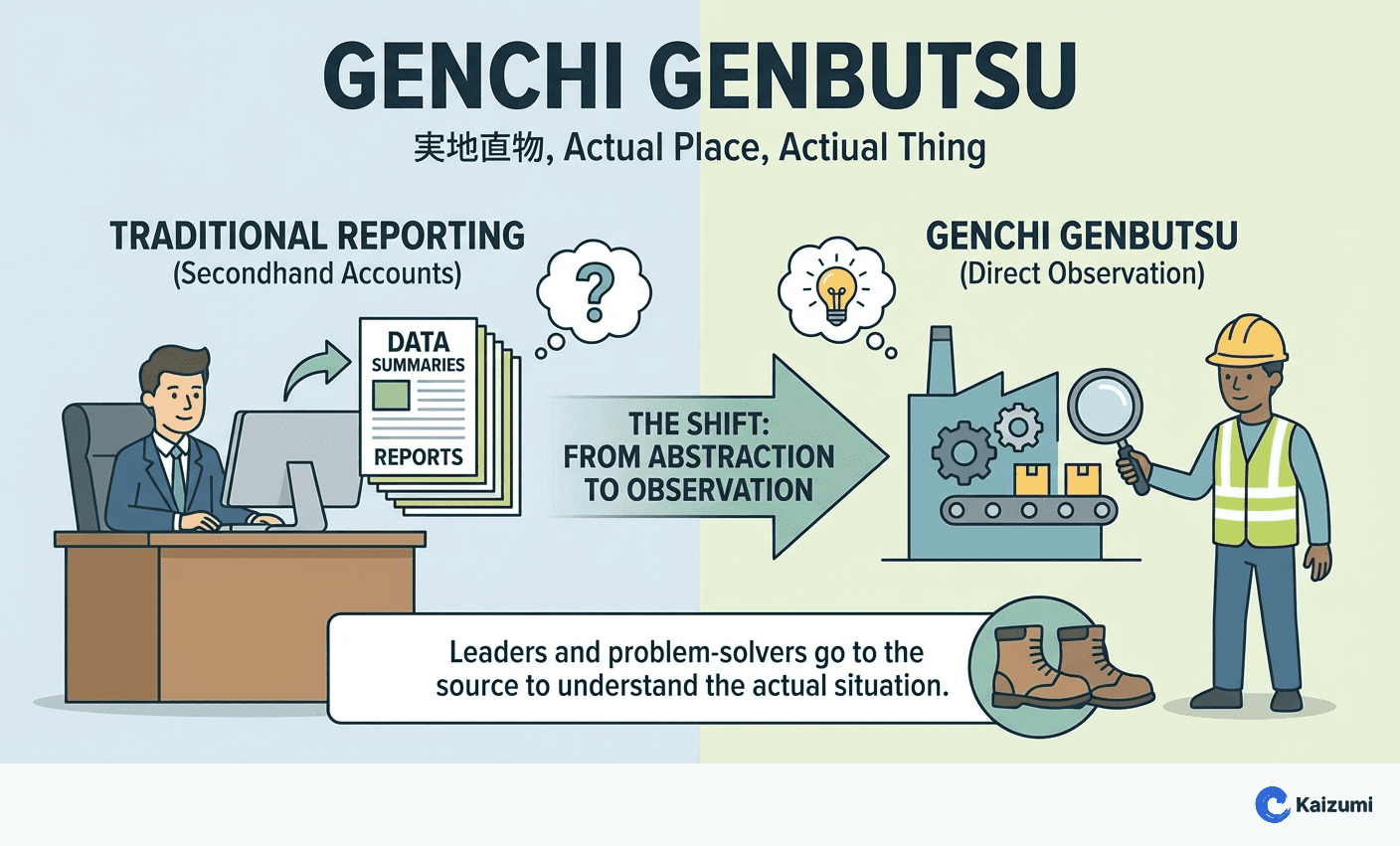
Genchi Genbutsu means 'go and see for yourself' - the practice of direct observation at the source to understand the actual situation.
Definition
Genchi Genbutsu is a Japanese phrase meaning "actual place, actual thing" that describes the practice of going to the source to directly observe and understand the actual situation. Rather than relying on reports, data summaries, or secondhand accounts, genchi genbutsu requires leaders and problem-solvers to personally witness conditions, handle the actual materials, and speak with the people doing the work. This direct observation is essential for accurate understanding and effective problem-solving.
Examples
When scrap rates increased on a machining line, the engineering manager resisted the urge to analyze data in his office. Practicing genchi genbutsu, he stood at the machine for two hours watching the process. He observed that coolant spray patterns had changed after maintenance, something that appeared nowhere in the data but was immediately obvious through direct observation.
Key Points
- Understanding comes from direct observation of actual conditions, not abstractions
- Data and reports are useful but cannot replace witnessing the real situation
- The practice requires humility—recognizing that you don't understand until you see
- Genchi genbutsu applies to problem-solving, decision-making, and leadership development
Common Misconceptions
Genchi genbutsu is inefficient when data is available. While data analysis is valuable, it cannot reveal context, root causes, or conditions that weren't anticipated when data collection was designed. Direct observation often discovers factors that data systems miss entirely.
Genchi genbutsu means leaders should do the work. The goal is understanding through observation, not performing the work. Leaders observe to comprehend, then engage workers in problem-solving rather than imposing solutions from their limited observation.