
Servant Leadership
Personalize This
Get insights for your role
Servant leadership is a philosophy where leaders prioritize serving their teams—enabling success by removing obstacles and providing support.
Definition
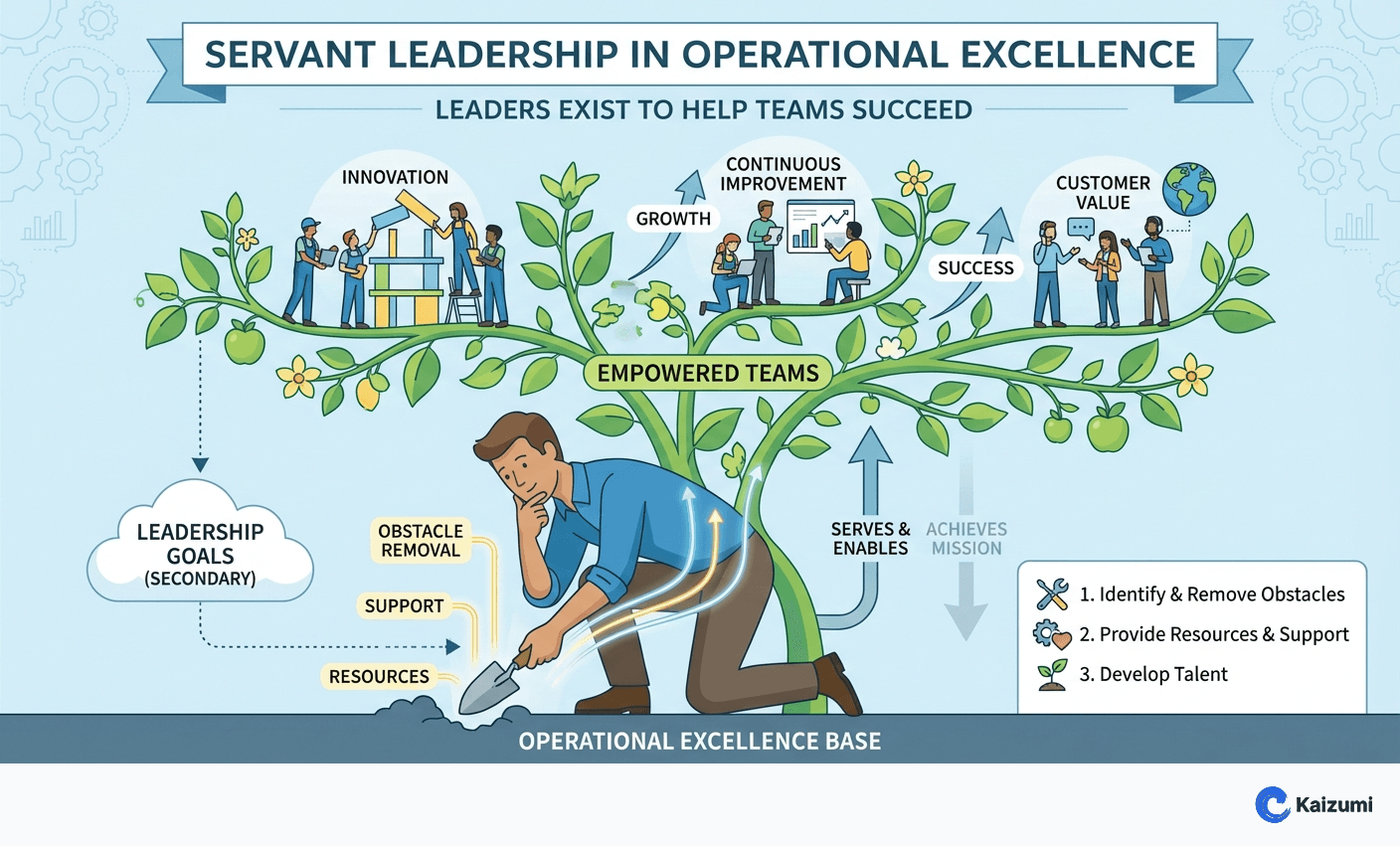
Servant leadership is a leadership philosophy where the primary role of leaders is to serve those they lead. Rather than teams existing to serve leadership goals, leaders exist to help teams succeed. In practice, this means identifying and removing obstacles, providing resources and support, developing people's capabilities, and creating conditions for team success. The concept, articulated by Robert Greenleaf, aligns closely with lean principles of respect for people and management's role in supporting frontline work.
Examples
When operators complained about reaching tools, the production manager spent two hours reorganizing the workstation. "My job is to make your job easier," she explained. "You produce value; I remove waste." Productivity and morale both improved.
Key Points
- Leaders exist to enable team success, not the reverse
- Primary activities: removing obstacles, providing resources, developing people
- Requires humility—putting team needs above personal recognition
- Builds trust and engagement through demonstrated commitment to team success
Common Misconceptions
Servant leadership means leaders have no authority. Servant leaders exercise authority—but in service of team success. They make decisions, set direction, and hold standards. The difference is purpose: using authority to serve rather than to dominate.
Servant leadership is soft. Removing obstacles often requires tough conversations, organizational politics, and persistent follow-through. Effective servant leadership requires strength and skill, not just good intentions.