
Plan For Every Person
Personalize This
Get insights for your role
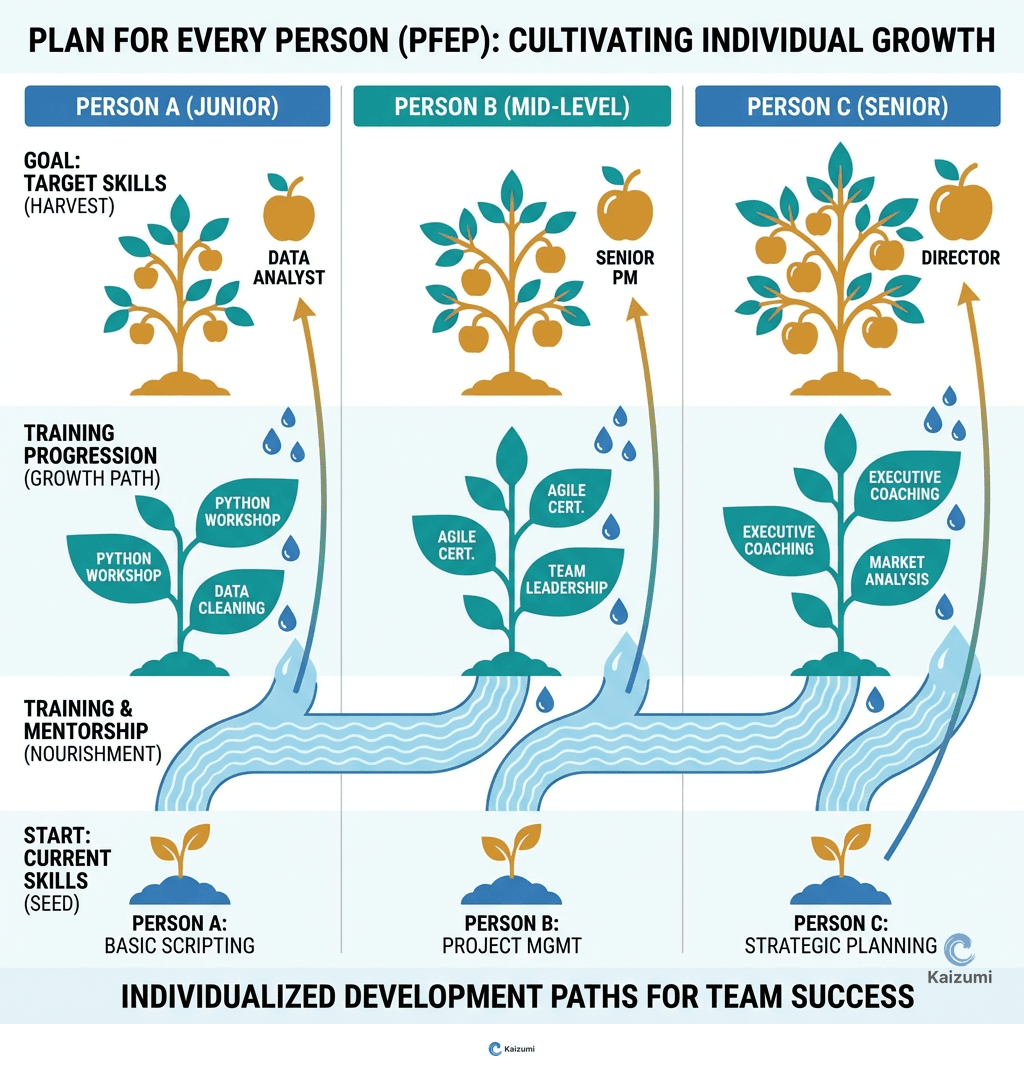
Plan For Every Person documents training requirements, current competencies, and development plans for every individual in an organization.
Definition
Plan For Every Person is a systematic approach to workforce development that documents, for every individual: current competencies, required competencies for their role, competency gaps, training plans, and career development goals. Like PFEP (Plan For Every Part) documents material flow specifications, Plan For Every Person documents people development specifications. This ensures no one is overlooked, training is intentional rather than random, and the organization has visibility into capability gaps and development needs across the workforce.
Examples
A production facility maintains Plan For Every Person for all 200 operators. Each person's record shows: current job certifications, cross-training status, leadership potential assessment, and 12-month development plan. Monthly reviews ensure training happens, and supervisors can identify who needs development versus who is ready for new challenges.
Key Points
- Every person has a documented plan—no exceptions
- Includes both current state (what they can do) and future state (development plan)
- Reviewed regularly with the individual—not just a management database
- Enables intentional development rather than random training assignment
Common Misconceptions
HR owns Plan For Every Person. Direct supervisors should own and manage their team's plans, with HR providing support and systems. Development is a line responsibility, not a staff function.
Documenting skills is the same as developing people. The plan must include action: specific training, assignments, mentoring. A database without development action is just bureaucracy.