
Psychological Safety
Personalize This
Get insights for your role
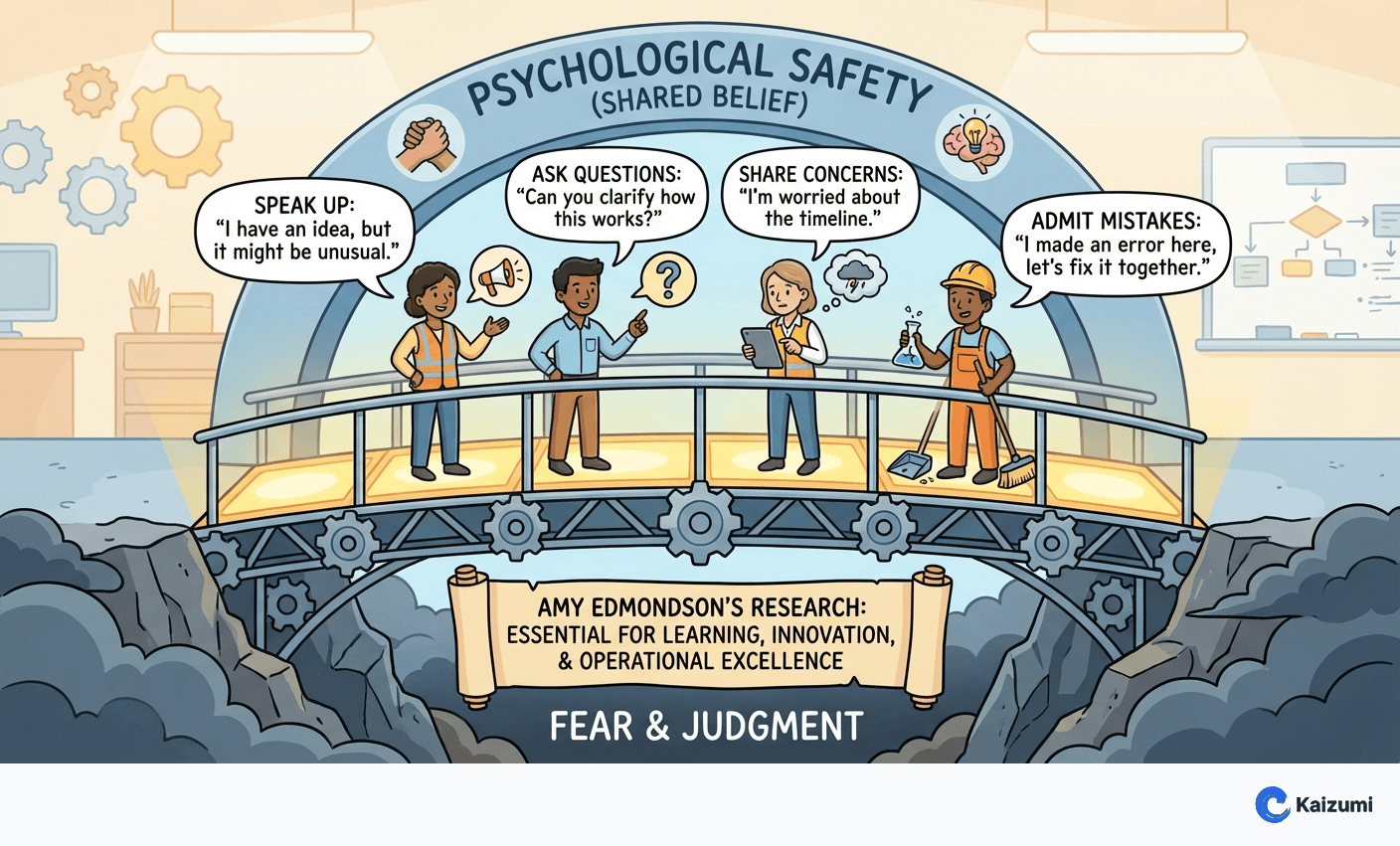
Psychological safety is a shared belief that the team is safe for interpersonal risk-taking—speaking up, asking questions, and admitting mistakes.
Definition
Psychological safety is a shared belief that the team environment is safe for interpersonal risk-taking—that you won't be punished or humiliated for speaking up, asking questions, sharing concerns, or admitting mistakes. Research by Amy Edmondson shows that psychological safety is essential for learning, innovation, and improvement. In lean organizations, psychological safety enables the transparency that improvement requires: problems can't be solved if they can't be discussed openly.
Examples
After a quality escape, the operator immediately flagged the issue rather than hiding it. "We appreciate you catching this," the supervisor responded, then engaged the team in understanding the system gap. The operator's willingness to speak up prevented a customer complaint—a direct result of psychological safety.
Key Points
- Shared belief that speaking up won't result in punishment or humiliation
- Essential for learning, innovation, and continuous improvement
- Created through leader behavior: responding constructively to concerns, admitting own mistakes
- Different from comfort—psychological safety enables productive conflict and challenge
Common Misconceptions
Psychological safety means being nice. Psychological safety enables productive disagreement and direct feedback. It's not about avoiding conflict—it's about making conflict productive by removing interpersonal fear.
Psychological safety is the same as trust. Trust is about believing others are competent and have good intentions. Psychological safety is specifically about interpersonal risk—whether it's safe to be vulnerable. Related but distinct concepts.