
Strategy Deployment
Personalize This
Get insights for your role
Strategy deployment (hoshin kanri) is the process of translating strategic objectives into actionable plans throughout the organization.
Definition
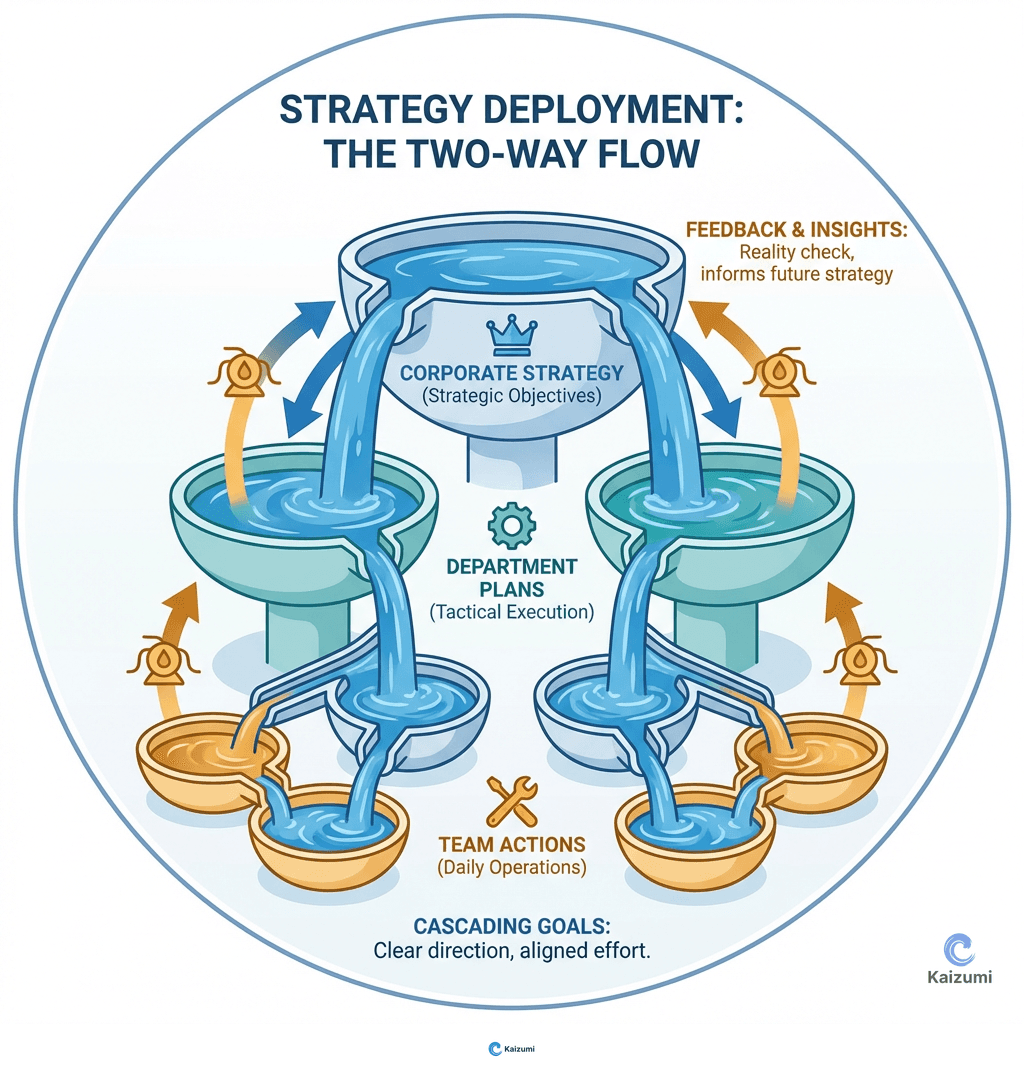
Strategy deployment is the systematic process of translating high-level strategic objectives into specific, actionable plans at every organizational level. Also called policy deployment or hoshin kanri, strategy deployment ensures that everyone understands how their work connects to company goals. The process includes: senior leaders defining breakthrough objectives, cascading goals down through organizational levels, negotiating plans through catchball dialogue, tracking progress through regular reviews, and adjusting as conditions change. Strategy deployment creates alignment without micromanagement—each level determines how to achieve their goals within the framework.
Examples
A company's strategic goal: improve profitability by 5 points. Strategy deployment translates this: Operations must reduce cost by 3%; each plant identifies specific productivity improvements; each department develops action plans. Everyone knows how their work contributes to the 5-point improvement.
Key Points
- Links daily work to strategic objectives through cascading goals
- Uses catchball for dialogue—not just top-down mandates
- Creates alignment without micromanagement—each level chooses how
- Requires regular review and adjustment as conditions change
Common Misconceptions
Strategy deployment is just top-down goal setting. Catchball makes it two-way: lower levels negotiate what's achievable and propose how. True strategy deployment is dialogue, not dictation.
More goals mean more focus. Strategy deployment typically limits breakthrough objectives to 3-5. Too many goals dilutes focus and prevents real progress on any.