
Visual Controls
Personalize This
Get insights for your role
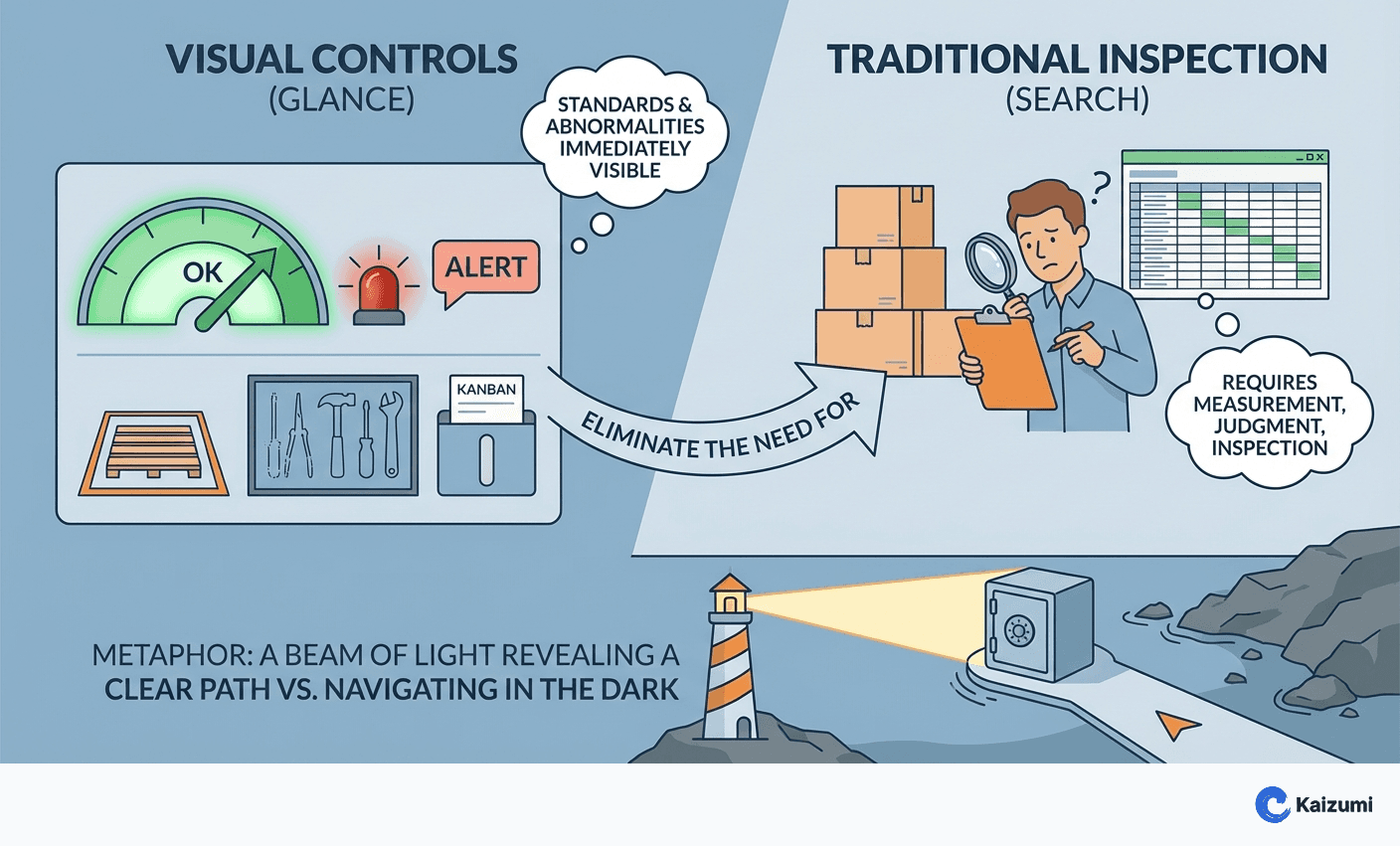
Visual controls are mechanisms that make standards and abnormalities immediately visible without requiring inspection or data analysis.
Definition
Visual controls are specific devices or mechanisms within visual management that make standards and abnormalities immediately visible. They eliminate the need for inspection, measurement, or judgment by making correct and incorrect conditions obvious at a glance. Examples include floor markings that show where materials belong, shadow boards that reveal missing tools, min/max indicators that show inventory status, and color coding that identifies categories. Visual controls create self-explaining, self-regulating workplaces.
Examples
Visual controls in a machine shop include: floor tape marking correct cart positions, shadow boards showing where each tool belongs (missing tools are immediately obvious), gauge color coding (green zone for acceptable, red for out-of-spec), and kanban squares limiting WIP (empty square means "make more").
Key Points
- Visual controls should work at a glance—no reading, counting, or analysis required
- The standard condition and abnormal condition should both be obvious
- Visual controls reduce reliance on memory, discipline, and inspection
- Simple visual controls are often more reliable than complex ones
Common Misconceptions
Visual controls are just for manufacturing floors. Visual controls apply wherever work happens—offices, hospitals, service centers. Any process benefits from making status visible.
Visual controls require significant investment. Effective visual controls are often simple and inexpensive: tape, labels, colors, positions. Creativity and understanding matter more than budget.