
Green Belt
Personalize This
Get insights for your role
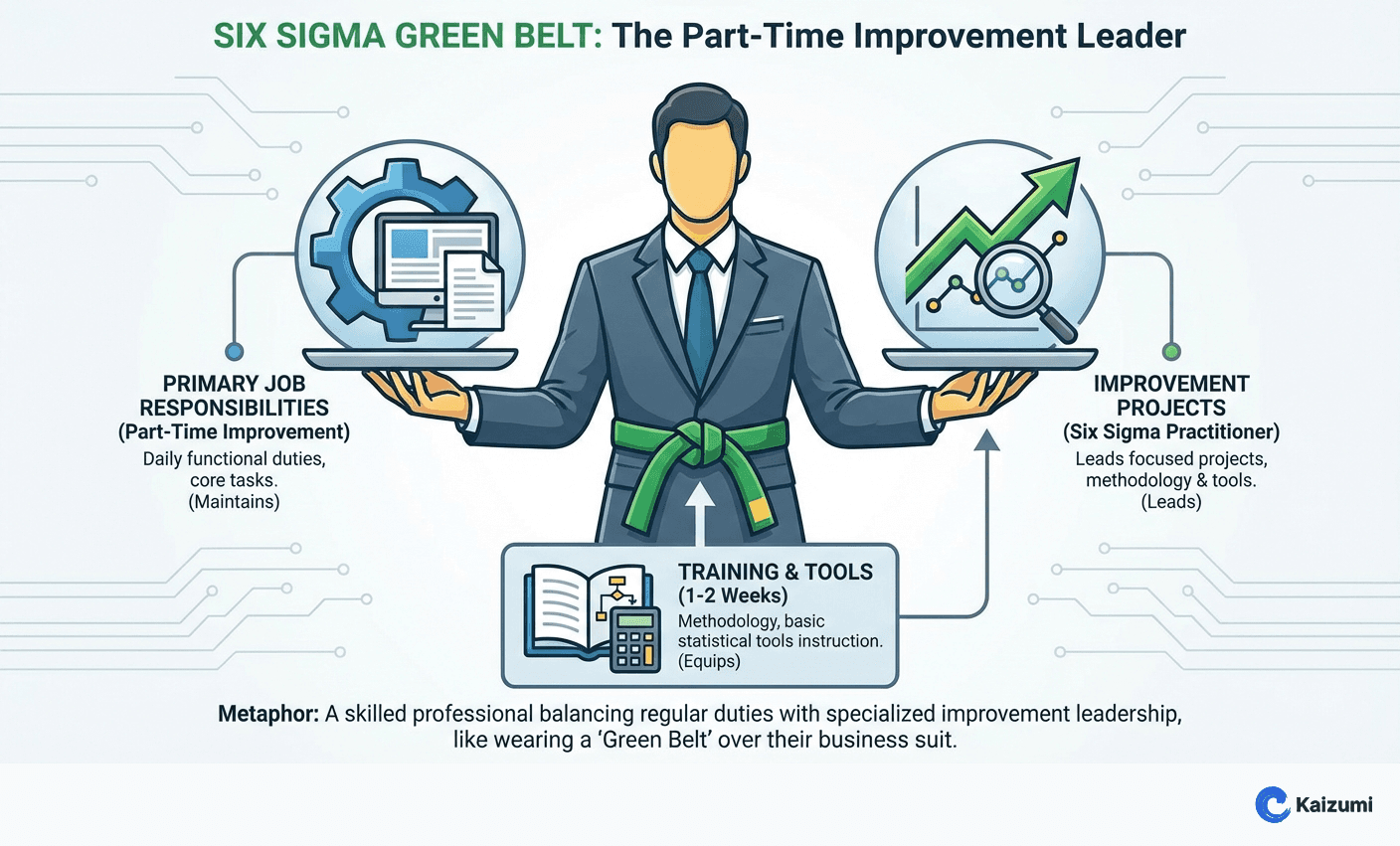
A Green Belt is a part-time Six Sigma practitioner who leads smaller improvement projects while maintaining regular job responsibilities.
Definition
A Green Belt is a Six Sigma practitioner who leads improvement projects part-time while maintaining primary job responsibilities. Green Belts receive training in Six Sigma methodology and basic statistical tools—typically one to two weeks of instruction. They lead projects within their functional area, often with Black Belt mentorship. Green Belts extend the reach of Six Sigma throughout organizations by embedding improvement capability in operational roles rather than concentrating it in a specialized group.
Examples
A production supervisor earned Green Belt certification and led a project to reduce changeover time on her line. Working 20% of her time on the project over four months, she reduced changeovers from 45 minutes to 15 minutes, increasing capacity by 12%. Her Black Belt mentor provided statistical coaching.
Key Points
- Green Belts dedicate 20-50% of time to Six Sigma projects
- Training covers DMAIC fundamentals and basic statistical tools
- Projects typically focus on their own work area or department
- Often mentored by Black Belts on statistical analysis
Common Misconceptions
Green Belts are just Black Belts with less training. The roles differ fundamentally. Black Belts work full-time across the organization on complex projects; Green Belts work part-time within their area on focused improvements. Both are essential—Green Belts multiply improvement capacity throughout operations.
Green Belt projects are less important. While smaller in scope, Green Belt projects often address issues closest to daily operations. The cumulative impact of many Green Belt projects can exceed that of a few Black Belt initiatives. Both contribute to organizational improvement.