
Material Flow
Personalize This
Get insights for your role
Material flow is the physical movement of materials, components, and products through production and logistics processes.
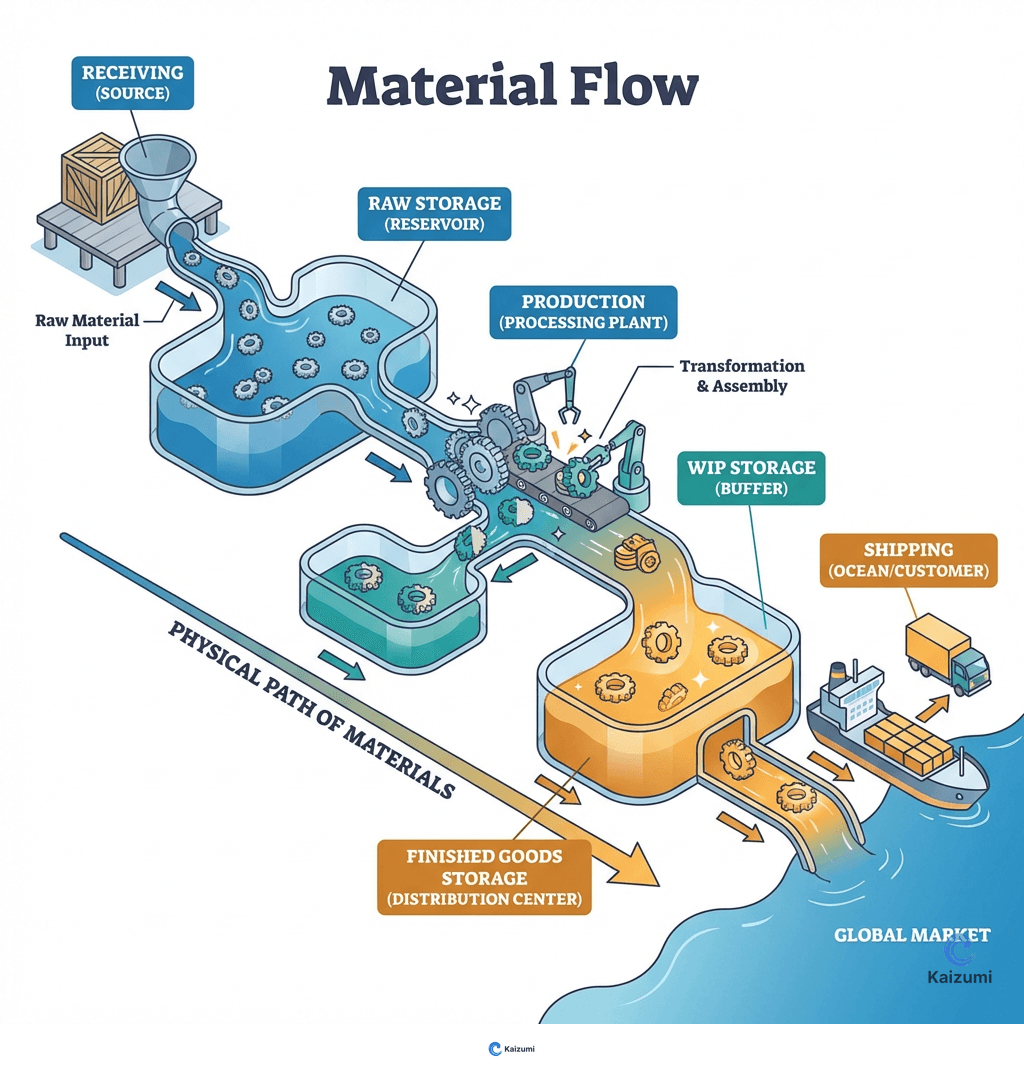
Definition
Material flow refers to the physical movement of raw materials, work-in-process, and finished goods through production and distribution systems. Material flow includes receiving, storage, transportation between operations, processing, and shipping. In value stream mapping, material flow is depicted on the lower portion of the map (with information flow above). Analyzing material flow reveals transportation waste, inventory accumulation points, and opportunities to create smoother, faster flow from receipt to delivery. The goal is material flowing continuously without unnecessary stops, storage, or backtracking.
Examples
A factory mapped material flow: raw materials arrive at receiving dock, move to warehouse, are retrieved for first operation, return to WIP storage, continue through four more operations with storage between each, reach finished goods warehouse, and finally ship. Total distance: 2,400 feet. After creating flow cells, distance dropped to 400 feet with dramatically less inventory between steps.
Key Points
- Distinct from information flow, though both must be coordinated
- Straight-line flow minimizes transportation and handling
- Inventory accumulation points indicate flow disruptions
- Distance traveled is a proxy for transportation waste
Common Misconceptions
Good material flow just means organized warehousing. Warehousing is the absence of flow. True material flow improvement eliminates the need for storage rather than making storage more efficient.
Material flow and information flow can be optimized separately. They must be coordinated. Information flow triggers material flow; poor information flow creates material flow problems even in well-designed physical systems.