
Value
Personalize This
Get insights for your role
Value is any action or process that the customer is willing to pay for - the starting point for lean thinking.
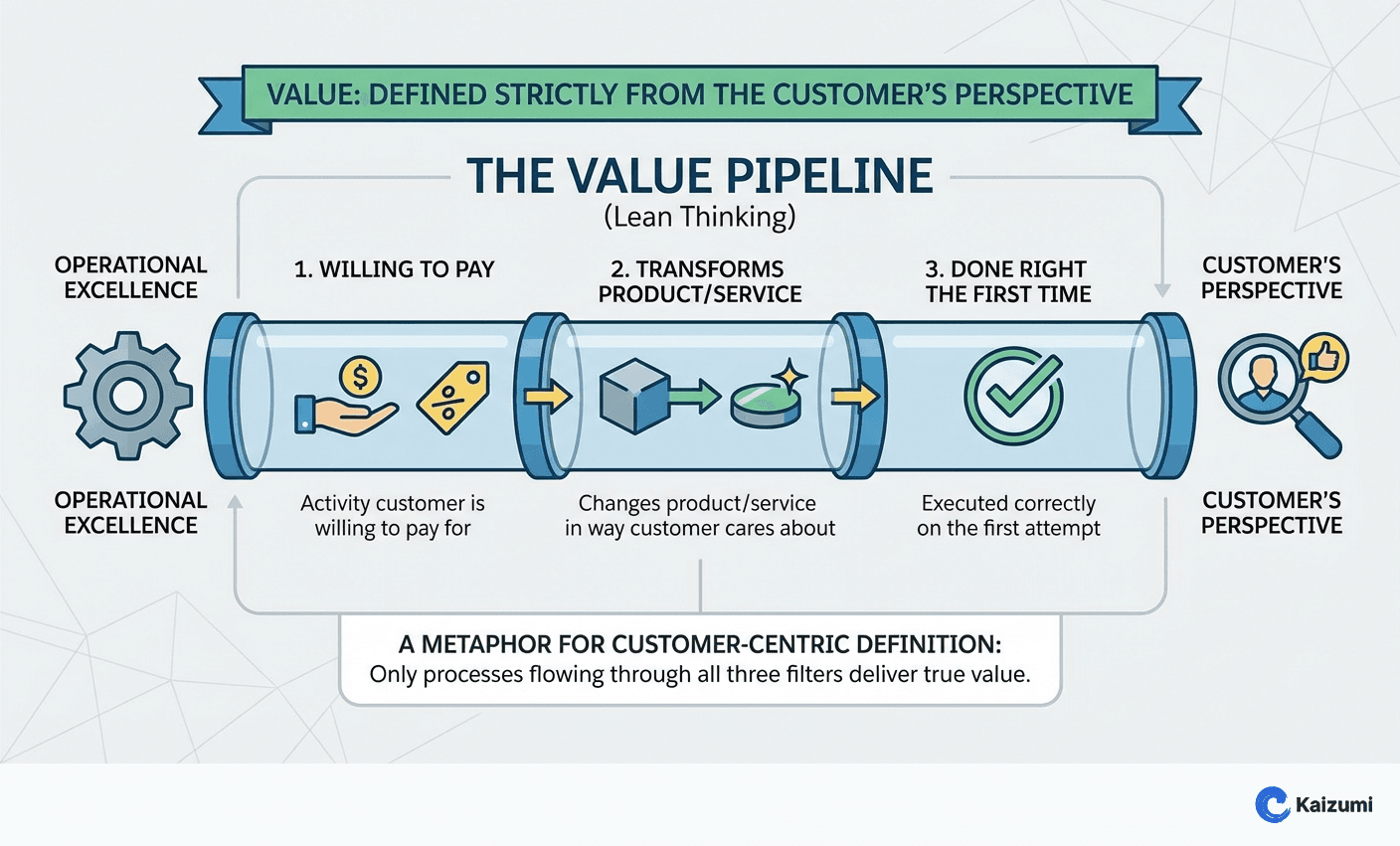
Definition
Value, in lean thinking, is defined strictly from the customer's perspective: an activity or process step adds value if the customer is willing to pay for it, it transforms the product or service in a way the customer cares about, and it's done right the first time. This customer-centric definition is the starting point for lean improvement because it provides the standard against which all activities are measured. Steps that don't meet this definition are either necessary waste (required by regulations, technology limitations) or pure waste to be eliminated.
Examples
In an automotive assembly plant, installing the dashboard adds value—customers want dashboards and would pay for them. However, walking to get tools, waiting for parts, and reworking defective installations are all non-value-adding activities, even though they're necessary given current process design.
Key Points
- Value can only be defined by the ultimate customer, not by internal departments
- The three criteria: customer willing to pay, transforms the product/service, done right first time
- Activities are classified as value-adding, necessary non-value-adding, or waste
- Understanding value is prerequisite to identifying waste
Common Misconceptions
Value is what we think customers should want. Organizations often add features, reports, or service elements they believe have value without verifying customers actually want them. True value determination requires understanding actual customer needs.
All necessary activities add value. Many necessary activities—regulatory compliance, quality inspections, material handling—don't add value from the customer's perspective even though they're currently required. This distinction matters because it identifies improvement opportunities.