
Build-to-Order
Personalize This
Get insights for your role
Build-to-order is a production strategy where products are manufactured only after receiving a customer order, minimizing finished goods inventory.
Definition
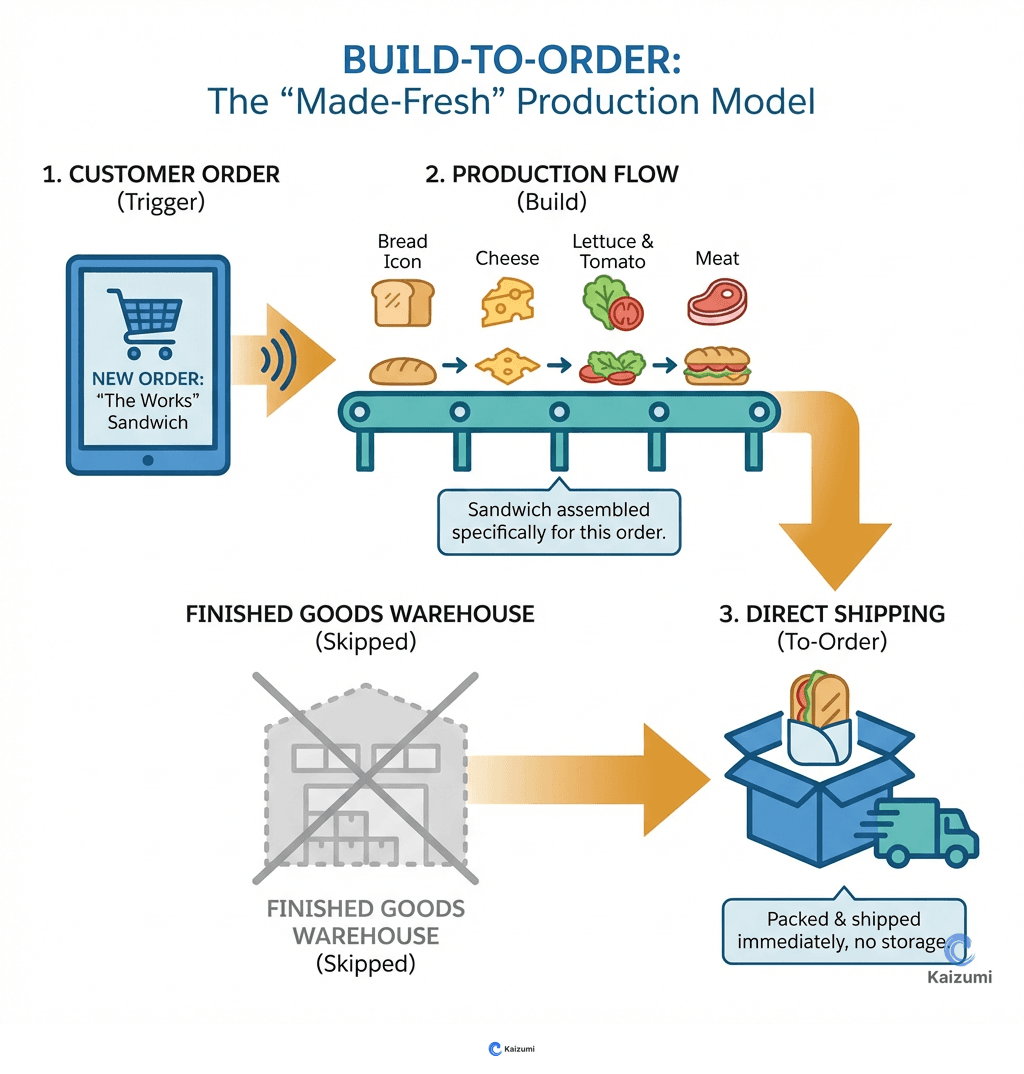
Build-to-order (BTO) is a production strategy where manufacturing begins only after a customer order is received. No finished goods inventory is held—each product is made specifically for a known customer. This eliminates the risk of building products that don't sell, reduces inventory carrying costs, and enables mass customization. However, BTO requires short, reliable lead times to meet customer expectations. Successful BTO depends on flexible processes, rapid changeover, capable suppliers, and leveled production scheduling to handle demand variation without long delays.
Examples
Dell pioneered build-to-order computers: customers configured systems online, orders triggered component pulls from suppliers, and assembly occurred only after payment. This eliminated finished goods inventory and obsolescence risk in a fast-changing market while offering customization that competitors with pre-built inventory couldn't match.
Key Points
- Eliminates finished goods inventory and associated carrying costs
- Requires lead times short enough to satisfy customer expectations
- Enables customization that make-to-stock cannot offer
- Demands process flexibility and supplier responsiveness
Common Misconceptions
Build-to-order means long delivery times. Not if the production system is designed for flow. Toyota builds custom-ordered vehicles in days, not weeks, because their production system supports rapid, flexible response.
Build-to-order is only for high-value custom products. Many commodity products can be build-to-order with the right process design. The key is whether lead time can meet customer expectations.