
Huddles
Personalize This
Get insights for your role
Huddles are brief, structured stand-up meetings held regularly to share information, identify issues, and coordinate team activities.
Definition
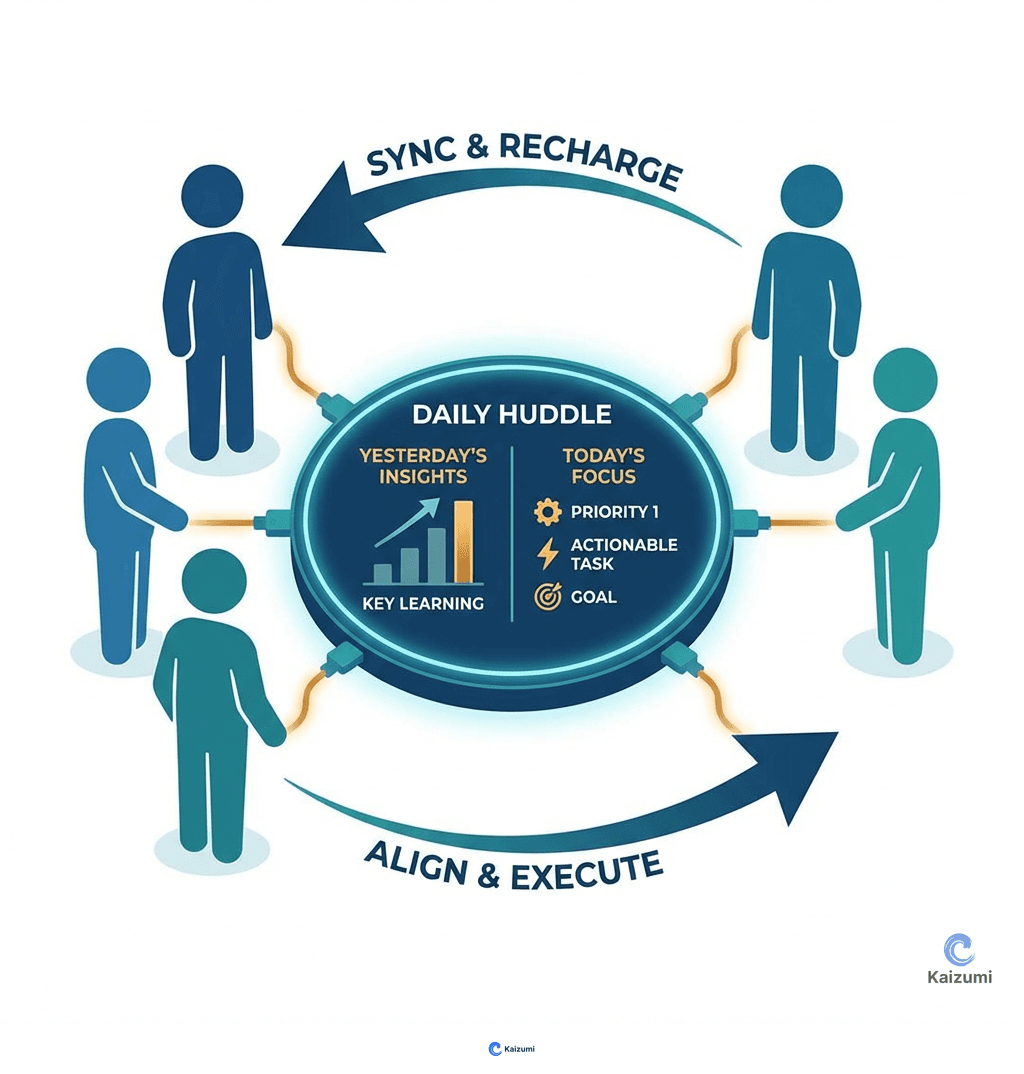
Huddles are brief, focused meetings (typically 5-15 minutes) held at regular intervals—daily, per shift, or even more frequently—where teams share critical information, identify problems, and coordinate work. Huddles are held standing up to ensure brevity and at visual management boards to ground discussion in data. The structure is consistent: review key metrics from the previous period, identify issues requiring attention, confirm today's priorities, and acknowledge wins. Huddles create rhythm, surface problems early, and ensure everyone starts aligned. They are a cornerstone of lean daily management.
Examples
A production team huddles at shift start for 10 minutes. Standing at their hourly tracking board, they review yesterday's production (target vs. actual), identify equipment or quality issues requiring attention, confirm today's staffing and production plan, and acknowledge good catches or improvements from yesterday.
Key Points
- Brief and focused—stand-up format enforces discipline
- Regular rhythm creates predictability and habit
- Visual boards ground discussion in facts, not opinions
- Surface problems early when they're easiest to address
Common Misconceptions
Huddles are just another meeting. Structure and discipline matter. Huddles without visual boards, consistent format, or time discipline become ineffective meetings, not lean huddles.
Huddles can replace other communication. Huddles handle routine coordination. Complex problems, individual coaching, and strategic discussions need separate forums.