
Monument
Personalize This
Get insights for your role
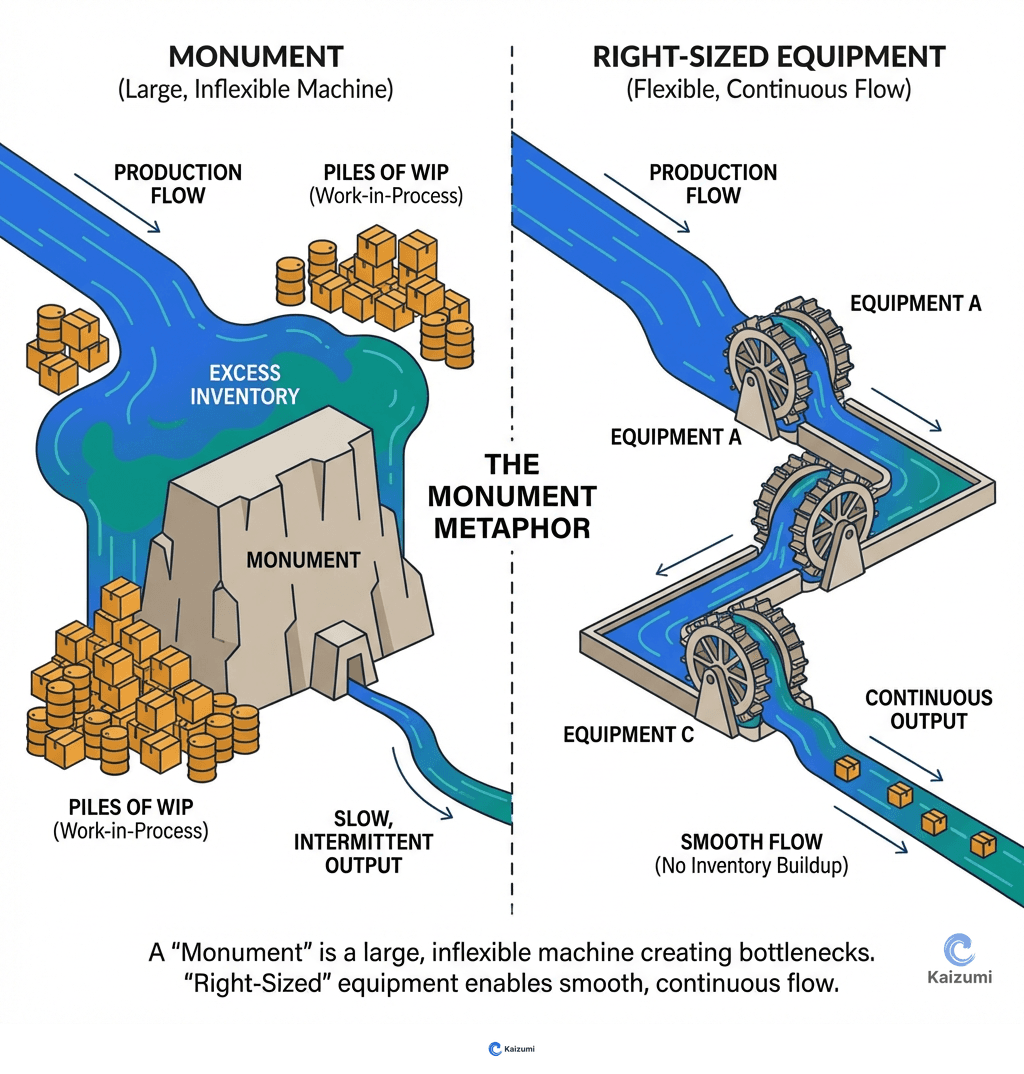
A monument is a large, inflexible piece of equipment that constrains material flow and production flexibility due to its size or capacity.
Definition
A monument is a large, expensive, or inflexible piece of equipment that cannot be easily moved, scaled, or integrated into a flow-based production system. Monuments typically serve multiple product lines or departments, creating scheduling conflicts, batch accumulation, and material handling complexity. Examples include large heat treat furnaces, giant presses, centralized paint booths, or mainframe computers. Because monuments can't be dedicated to single product flows, they force products to travel to them, wait for batch processing, and then return—disrupting flow and extending lead times.
Examples
A 1,000-ton press serves all product lines in a stamping plant. Parts from different areas queue for the press, are processed in large batches for efficiency, then wait for transport back. This monument adds 5 days of lead time and requires extensive material handling. The lean ideal would be smaller presses dedicated to each product family.
Key Points
- Monuments create batching, queuing, and material handling waste
- Right-sized equipment dedicated to product families enables flow
- Sometimes monuments are necessary—the goal is to minimize their flow-breaking effects
- Total cost includes inventory, handling, and lead time, not just equipment utilization
Common Misconceptions
Big equipment is always more efficient. Per-unit processing cost may be lower, but total cost including inventory, handling, quality, and lead time is often higher. Right-sized equipment frequently wins on total cost.
Monuments can't be avoided. Some truly can't, but many exist because of traditional thinking about economies of scale. Challenge whether the monument is truly necessary or just conventional.