
Overproduction
造りすぎ·tsukurisugi·"making too much"
Personalize This
Get insights for your role
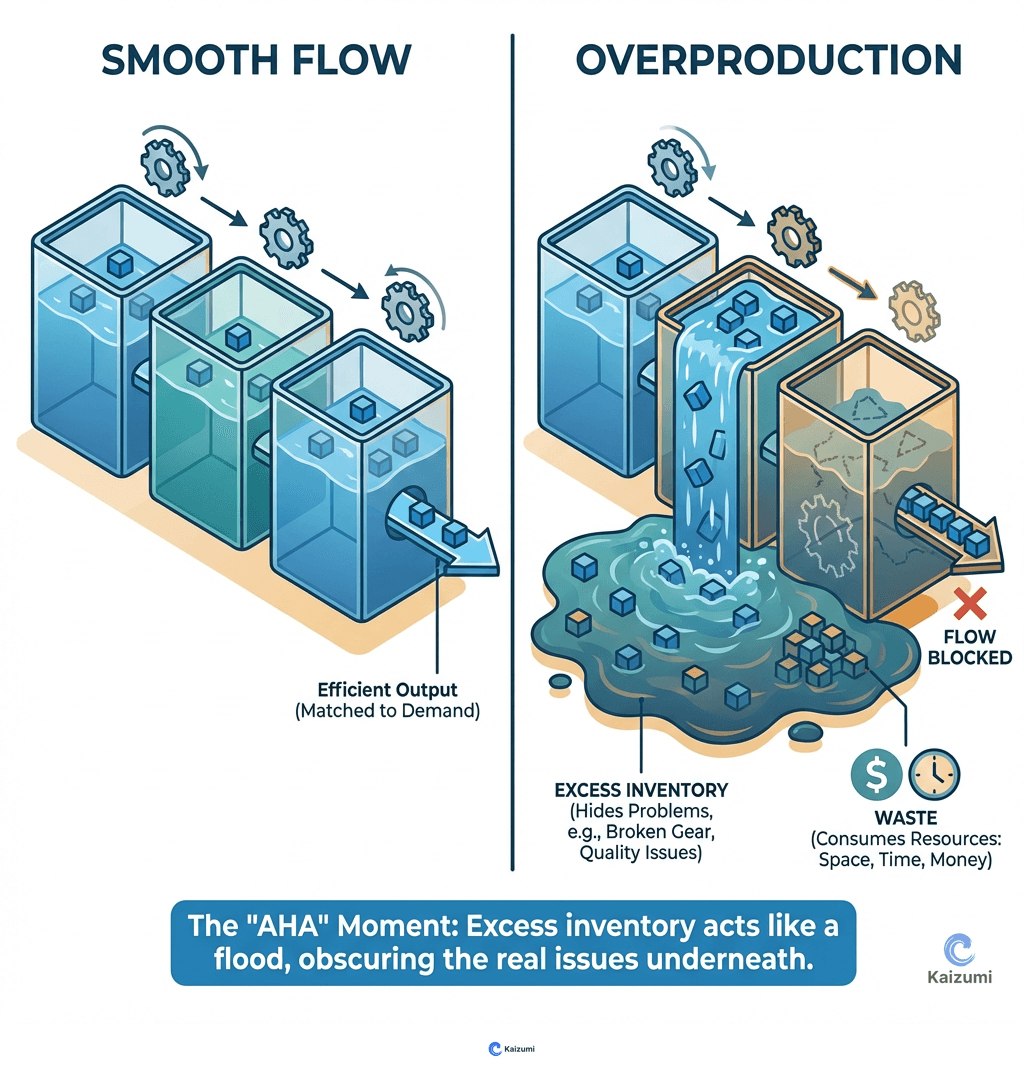
Overproduction is making more than needed, faster than needed, or sooner than needed—considered the worst form of waste in lean thinking.
Definition
Overproduction is producing more than the customer needs, faster than they need it, or sooner than required. Taiichi Ohno identified overproduction as the worst of the seven wastes because it generates all other wastes: excess inventory requires storage space, handling, and tracking; defects multiply before being discovered; motion and transportation increase; waiting occurs as downstream processes can't keep up. Overproduction often stems from the belief that keeping people and machines busy is efficient, when in fact producing unneeded items consumes resources and obscures problems.
Examples
A stamping department runs large batches "for efficiency" because changeovers take time. They produce a month's supply in one run, but demand patterns change, specifications get revised, and half the inventory becomes obsolete. The "efficient" batch created massive waste through overproduction.
Key Points
- Creates a cascade of secondary wastes (inventory, handling, defects, waiting)
- Often driven by misguided efficiency metrics that reward utilization over flow
- Obscures problems by buffering them with inventory
- Countered by producing to takt time, using pull systems, and reducing batch sizes
Common Misconceptions
It's not overproduction if we'll eventually sell it. "Eventually" carries costs: storage, obsolescence risk, quality degradation, tied-up capital. Producing before needed is overproduction regardless of eventual sale.
Keeping equipment running maximizes investment. Running equipment to produce unneeded items doesn't recover the investment—it creates more waste. Investment is maximized by producing exactly what customers need when they need it.