
Two parts
Toyota’s self-driving plan has two parts. For the cars people buy, Toyota is building its own driving AI, due from 2028. For driverless taxis, Toyota builds vehicles for partners that supply the driving system. Pony.ai and May Mobility run their software on Toyota vehicles now, and Waymo starts in 2027. Toyota is also developing its own driverless system for shuttles.
The levels of self-driving
Carmakers describe self-driving with six levels set by SAE International, an engineering standards group (SAE J3016).
- Level 0
- The car can warn the driver or brake in an emergency, but the driver does all the driving.
- Level 1
- The car helps with steering or speed, one at a time. Adaptive cruise control is an example.
- Level 2
- The car steers and controls speed at the same time. The driver must watch the road the whole time and is responsible. Most driver-assist systems on sale today are Level 2.
- Level 3
- The car drives itself in set conditions, such as a highway traffic jam. The driver can look away but must take over when the car asks.
- Level 4
- The car drives itself with no driver, but only in set conditions, such as a mapped area of a city. Waymo’s robotaxis are Level 4.
- Level 5
- The car drives itself anywhere a person could. No car does this today.
Source: SAE J3016.
Terms like “Level 2+” and “Level 2++” are not in the standard. Carmakers use them for Level 2 systems that do more of the driving. Legally, they are still Level 2.
Toyota’s own system
On August 27, 2026, Toyota told reporters it will start selling what it calls “Level 2++” driving in 2028 (Car Watch). The car does most of the driving, with minimal input from the driver (Nikkei Asia). Toyota expects it to work on ordinary roads as well as highways (Best Car). The driver must still watch the road and stays responsible (Best Car).
Toyota said the system goes first into mass-market cars, with more models from 2030 (Sankei). It has not named a model. Reports that it starts with the Corolla or Yaris are reporters’ guesses (Best Car). Toyota also has not said which markets get it first, what it costs, or which sensors it uses.
In July, Car Watch reported Toyota CTO Hiroki Nakajima’s view that “Level 2++” is NVIDIA’s label. He said, “After Level 2 comes Level 3” (Car Watch). Toyota used the term itself in August. No report quotes Toyota promising hands-off driving.
Toyota says it develops the driving AI itself, with Woven by Toyota (Car Watch, Motor Fan). Akihiro Sarada, who runs Toyota’s Digital Software Development Center, said Toyota will “insist on developing safe, reassuring cars in-house” and keep the technology in its own hands (Newswitch). Not everything is in-house. NVIDIA says its chips and operating system will run the system in the car (Car Watch). The AI is built on Arene, the software platform from Toyota’s subsidiary Woven by Toyota (Car Watch).
The AI comes with a set of fixed rules that Toyota calls a “guardrail.” Toyota describes it as a safety system that steps in when the AI does something unexpected, and that helps explain the cause if a crash happens (Car Watch). Sankei reports that Toyota sees this mix of AI and rules as what sets it apart from other carmakers’ systems (Sankei).
Why Toyota thinks it can catch up
Toyota’s system uses an approach called end-to-end AI. Older self-driving systems split the job into separate parts: one for seeing the road, one for predicting what others will do, one for deciding, and one for steering. Engineers designed each part separately. In an end-to-end system, one AI learns the whole task from camera and sensor data (Motor Fan).
Nakajima said this could close Toyota’s gap: “Frankly, our self-driving development had fallen well behind, but thanks to end-to-end, I think it may quickly reach a much higher level” (Motor Fan, Kaizumi translation). He described a possibility, not a result. Motor Fan adds that end-to-end AI alone does not get a car to Level 4.
Car Watch reports that the AI draws on what Toyota learned from working with Waymo and Momenta (Car Watch). That is the reporter’s summary of Sarada’s briefing, not a quote. Toyota has not said what data trains the AI.
Toyota first showed the test car outside the company in October 2026, in Europe. A Car Watch reporter rode it on the grounds of Toyota Motor Europe’s technical center, during a briefing for investors. The car had cameras, radar and lidar. It handled staged situations without jerking, and the guardrail never had to step in. The reporter had ridden Nissan’s car, and an NVIDIA car built with Mercedes-Benz, on public roads. He said he hoped Toyota would offer rides on real roads too (Car Watch).
Level 4 shuttles
Toyota’s dates for Level 4 depend on the vehicle.
- e-Palette with Tier IV. Toyota aims for a Level 4 e-Palette shuttle within fiscal 2027, working with the Japanese software company Tier IV. Testing starts at Level 2 with a driver on board (Car Watch).
- Toyota’s own Level 4. In August, Toyota said it would develop Level 4 for commercial shuttles by 2030 (Sankei). In October, Nakajima said Toyota is developing its own Level 4 “so we can bring it out to the world by 2032” (Kuruma News). Kuruma News says it is meant for public vehicles where drivers are scarce.
Reports from August give 2030. In October, Nakajima gave 2032. Toyota has not explained the gap. Nikkei reports that Level 2++ and Level 4 will share one core AI model (Nikkei xTECH).
- 2027Waymo starts testing Toyota-built bZ4X robotaxis in Japan.
- FY2027Toyota aims for a Level 4 e-Palette shuttle with Tier IV.
- 2028Toyota’s own Level 2++ system goes into mass-market cars.
- 2030More models get Level 2++. August reports give 2030 for Toyota’s own Level 4 for shuttles.
- 2032Nakajima’s date for bringing Toyota’s own Level 4 to the public.
Sources: Toyota, Car Watch, Sankei, Kuruma News.
Toyota’s partners
Toyota also works with companies that make driving software. For most of them, Toyota builds the vehicle. In China, Momenta’s software goes into cars Toyota sells.
| Partner | What Toyota supplies | Where | Status |
|---|---|---|---|
| Waymo | bZ4X robotaxi, built at Takaoka | Testing in Japan from 2027; UK and other markets later | Announced October 30, 2026 |
| Pony.ai | bZ4X robotaxi, built by GAC Toyota | China | In production since February 2026 |
| Momenta | Toyota cars that carry Momenta’s driver-assist software | China | On sale since March 2025 |
| May Mobility | Sienna vans and e-Palette shuttles | US and Japan | Rides in Atlanta and Minnesota; pilot in Nagoya |
| Aurora | Sienna vans | US | Still listed as a partner; ride service planned after trucks, no date |
Car Watch says Toyota splits this work by region, with Momenta in China and Waymo in the US, partly because rules on using driving data differ, such as the EU’s data protection law (Car Watch). That is the reporter’s reading, not a quote from Toyota.
Waymo
Toyota will build a robotaxi version of the bZ4X at its Takaoka plant, with Waymo’s hardware fitted in the same plant. A test fleet starts in Japan in 2027 (Toyota). Kaizumi covers that deal in Why Waymo picked Toyota to build its robotaxis.
The deal does not put Waymo’s system in cars people buy. In April 2025, the two companies said they would explore how to “leverage Waymo’s autonomous technology” for personally owned cars. Waymo said it would “begin to incorporate aspects of its technology for personally owned vehicles” (Waymo). In October 2026, the wording was weaker: they “will continue to explore the future of autonomous driving technology for personally owned Toyota vehicles” (Toyota). That sentence no longer names Waymo’s technology for personal cars. Motor Fan reports that nothing has been decided about putting Waymo’s system in Toyota’s showroom cars (Motor Fan).
Pony.ai
Toyota invested $400 million in Pony.ai in 2020 (electrive). In August 2023, Pony.ai, Toyota China and GAC Toyota agreed to form a joint venture to build robotaxis. They planned to invest more than 1 billion yuan (TMTPost). On February 9, 2026, Pony.ai and Toyota said the first mass-produced bZ4X robotaxi had come off the GAC Toyota line in Guangzhou (electrive, Pony.ai).
Pony.ai said it had secured 1,000 bZ4X vehicles for 2026 (Pony.ai). Its whole fleet reached 1,975 cars on June 30, 2026. It does not say how many are Toyotas (Pony.ai).
Momenta
In China, Toyota cars already ship with a partner’s AI. GAC Toyota uses Momenta’s end-to-end driver-assist software (CnEVPost). The bZ3X electric car went on sale in March 2025 from 109,800 yuan. Only its two lidar versions have Momenta’s system (CnEVPost).
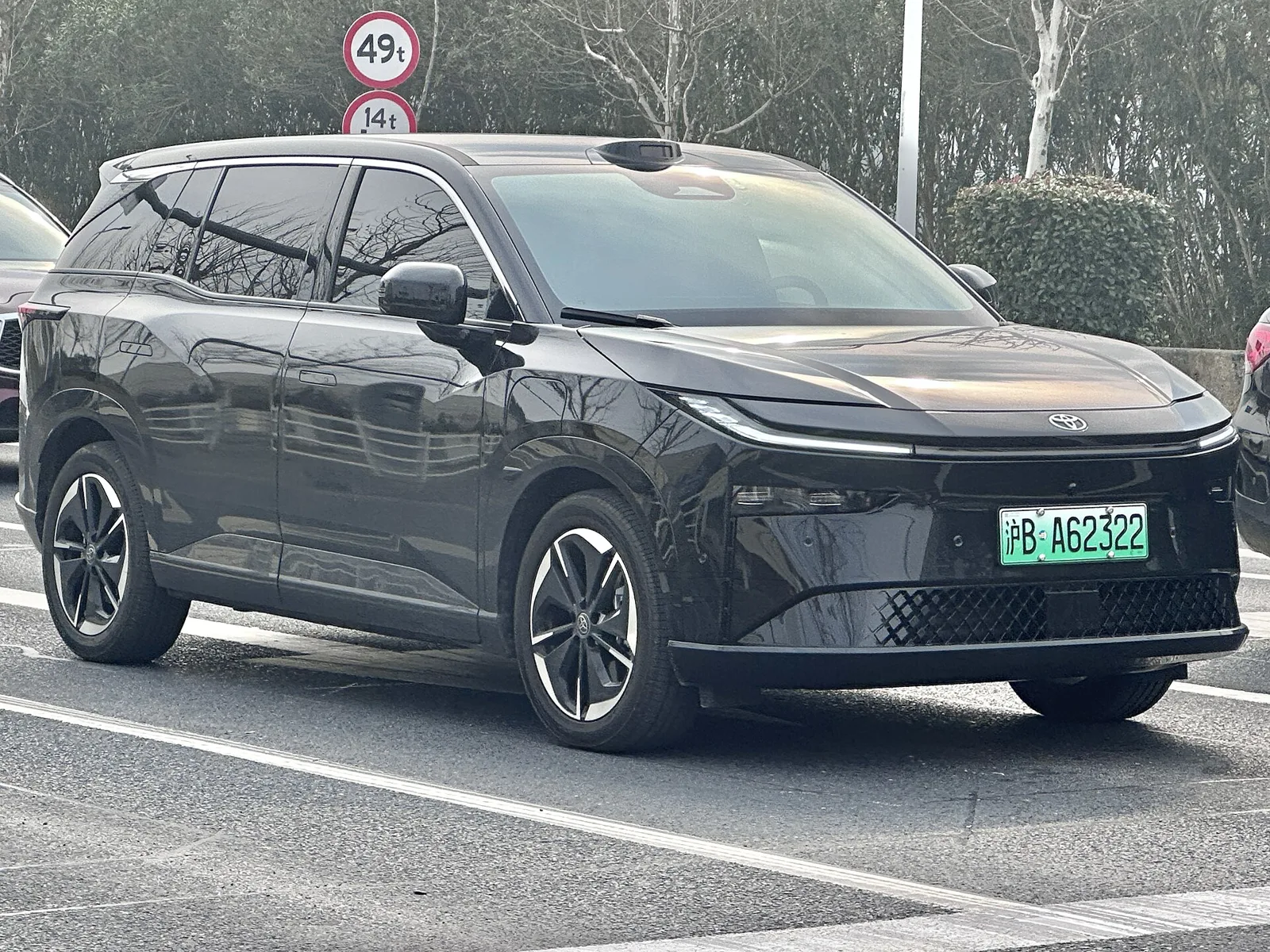
GAC Toyota delivered more than 10,000 bZ3X cars a month in October and November 2025, counting every version (CnEVPost). The bZ7 sedan, launched in March 2026, offers Momenta’s system for highway and city driving on its two lidar versions (ifanr).
May Mobility
May Mobility calls Toyota its “primary OEM partner,” supplying the Sienna and the e-Palette (May Mobility). Toyota led May Mobility’s $50 million funding round in 2019 (Pulse 2.0).
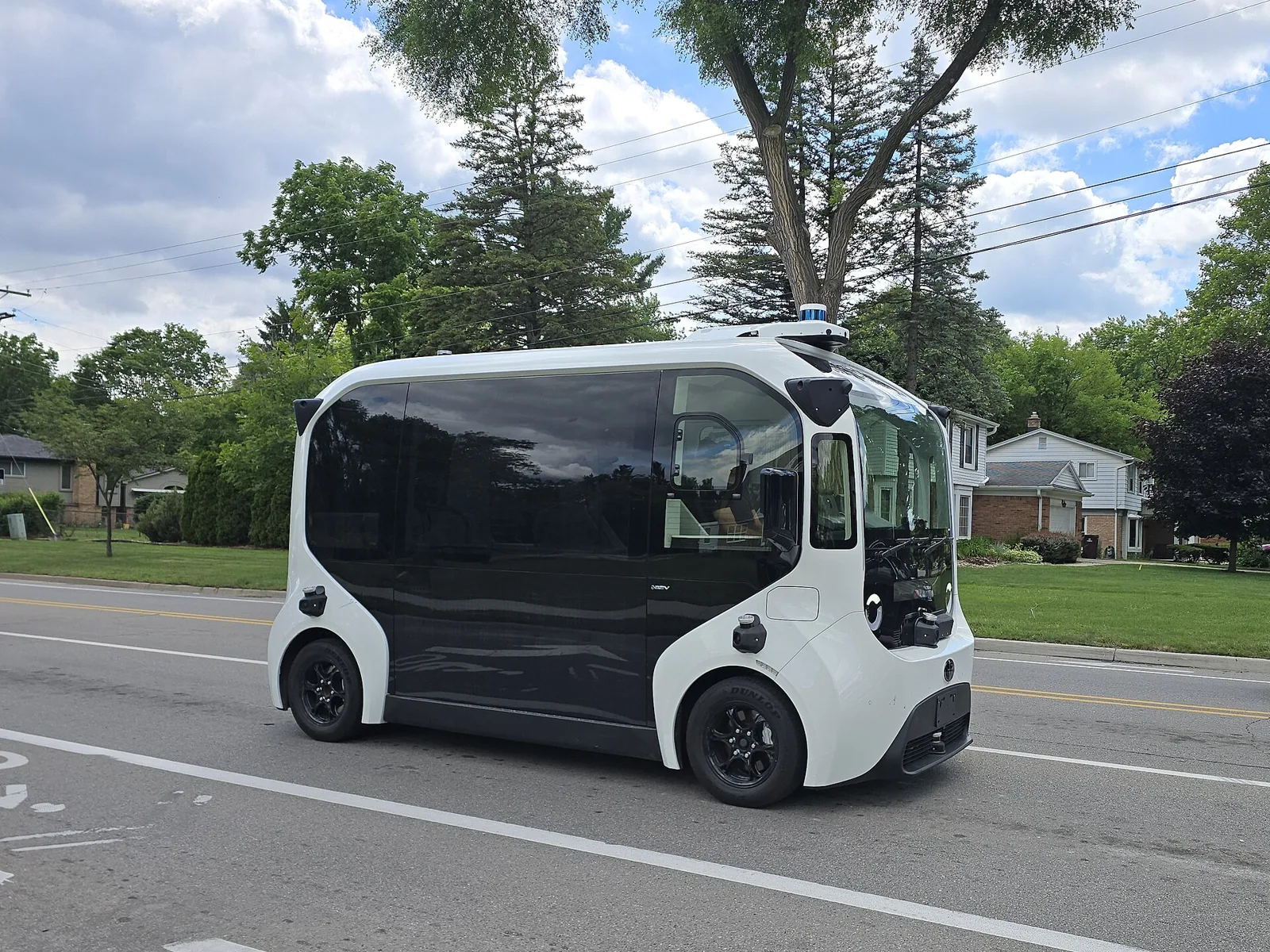
In September 2026, May Mobility listed commercial service with Lyft in Atlanta and in two Minnesota towns, plus a pilot with NTT Mobility in Nagoya (May Mobility). The Lyft service in Atlanta has a safety operator in the front seat (TechCrunch). A route in Peachtree Corners, Georgia, began running with no safety operator in February 2025 (TechCrunch).
In September 2026, May Mobility agreed to go public by merging with a listed acquisition company. The deal has not closed (May Mobility).
Aurora
In 2021, Aurora announced work with Toyota and Denso on self-driving Sienna vans. Aurora booked all $150 million of Toyota’s payments as revenue by the end of 2022, and booked none in 2023 (Aurora 2022, Aurora 2023). Aurora’s 2022 filing said the teams “are jointly developing and testing” the vans. Its filing for 2025 says they “jointly developed and tested” them, and still lists Toyota as a partner (Aurora 2025).
Aurora now focuses on trucks. Toyota still held about 47 million Aurora shares in October 2024. Aurora had issued more stock, so that was 3.5%, down from 6.4% in 2023 (SEC filing). Neither company has said the Sienna program ended.
Toyota’s record so far
Toyota’s past self-driving dates have mostly held, with one delay and one crash.
- Highway driving. In 2015, Toyota showed a highway system and said it aimed to launch related products “by around 2020” (Toyota UK). The Lexus LS went on sale in November 2020 without it, and Toyota blamed test delays during COVID-19. Advanced Drive reached the LS and the Mirai in Japan in April 2021. It is a Level 2 system for expressways. The driver can take their hands off the wheel but must watch the road at all times (Toyota, MONOist).
- e-Palette at the Paralympics. In August 2021, an e-Palette shuttle hit a visually impaired athlete in the Paralympic Village. Toyota said it was moving at about 1 to 2 km/h. Toyota stopped all e-Palette service, then restarted it on August 31 with more guides and onboard staff (Car Watch, Car Watch).
- Arene. Woven by Toyota said in 2023 that Arene would reach cars from 2025 (Woven by Toyota). In May 2025, Woven said Arene was used to build the software for the new RAV4’s screen, voice assistant and Toyota Safety Sense (Woven by Toyota). Toyota’s driving AI will run on it from 2028.
Toyota Safety Sense, its standard collision-avoidance package, spread fast. It reached 10 million vehicles in three and a half years after its 2015 launch (Toyota).
How Toyota compares in Japan
Nissan and Honda also plan AI driving systems. Each works with a startup.
- Nissan plans its next ProPILOT, with AI from the UK company Wayve, in Japan within fiscal 2027 (Nissan).
- Honda said in 2025 it would launch its next driver-assist system around 2027, developed with Helm.ai (Honda). In May 2026, Honda said the launch is planned for 2028, starting with the new Vezel in Japan (Honda).
- Tesla has tested its driver-assist system on Japanese roads since August 2025, but Japan has not approved it (Car Watch).
Of Japan’s three largest carmakers, Toyota is the one that says it builds its own end-to-end driving AI.
What is still unknown
- Which model gets Level 2++ first, in which markets, and at what price
- Which sensors the 2028 system uses
- What data trains the AI
- Whether Waymo’s technology will ever go into a car people buy
- How many Toyota-built robotaxis Waymo will run