Lean, applied to your world
Practical, step-by-step how-to guides for putting Lean and continuous improvement to work in real settings — not generic theory.
Interactive explainers
23A3 Problem Solving: Watch an A3 Get Built
One A3, six weeks, five versions. Watch a real problem get written down wrong, questioned by a coach, erased, rebuilt from facts, and carried around the plant until everyone holds the pen — an interactive guide to A3 thinking, problem statements, and socialization.
Read the guideAnatomy of a Work Cycle: Elements, Value-Add & Waste
A visual guide to breaking a manufacturing job into work elements, then x-raying each one into value-add, necessary non-value-add, and waste — shown on one real assembly cycle, with the live Time Observation Sheet to run your own study.
Read the guideBalance the Line: How Work Gets Shared to Takt
An interactive guide to line balancing. Build a Yamazumi from a station’s work elements, drag work off the bottleneck until every bar sits under takt, watch the cars stop piling up, and see why some stations need a redesign, not another rebalance.
Read the guideBatch vs. Flow: One Piece at a Time
A visual explainer on batch vs. one-piece flow — race two identical lines, watch a hidden defect spread, and see how flow cuts lead time, scrap, and floor space.
Read the guideBuild a Standardized Work Combination Table
An interactive guide to the SWCT — watch one operator work a four-machine cell while the chart of manual, machine, and walking time draws itself against takt, then step through it moment by moment in Manual mode.
Read the guideChina’s Car Industry Goes Global: 129 Brands, Record Exports, a New Transplant Wave
A data-driven visual story: the 129-brand domestic tournament, the neijuan price war, 18-month development cycles, exports past Japan’s 1985 record — and Chinese factories filling Ford, Mercedes, GM and Nissan plants abroad, mapped plant by plant.
Read the guideCycle Time vs Takt Time vs Lead Time
The three Lean clocks everyone confuses, made interactive. Feel takt as a demand drumbeat, watch cycle time fill a stopwatch, follow one order’s mostly-waiting lead time, then drag a five-station line into balance against takt.
Read the guideDefect Classification: Where You Catch It Sets the Cost
A defect has no fixed cost — it is set by where you catch it. A visual guide to classifying defects (in-process, internal, external, market), the quality-information flow, and how the four classes become a control panel for quality.
Read the guideHeijunka: Level the Mix
A visual explainer on production leveling — watch a lumpy batch schedule (AAA BBB CCC) reshuffle into a level mix (ABC ABC ABC) and see peak inventory and customer wait collapse, at the cost of more changeovers.
Read the guideHow a Toyota Assembly Plant Works
A visual journey through final assembly: takt time, standardized work element by element, andon and the team leader, kanban, the parts supermarket, and milk-run tugger routes — one system, one heartbeat.
Read the guideHow Kanban Actually Works: A Pull System You Can Run
A living pull-system simulation. Watch production kanban circulate through a three-stage line, flip it to push mode and watch WIP pile up, then run the experiments — card counts, demand rates, breakdowns — and size a loop with the kanban formula.
Read the guideHow to 5S a Workstation
A visual, step-by-step guide to 5S — Sort, Set in Order, Shine, Standardize, Sustain — shown on one real assembly bench. See what each step changes, who owns it, and how 5S makes problems visible.
Read the guideHow to Build a Yamazumi Chart
A visual, interactive guide to the operator balance chart — observe cycles, take the lowest repeatable time, stack work by zone against takt, then rebalance. Build your own in the embedded tool.
Read the guideOEE, Explained by Carving Up a Shift
Overall Equipment Effectiveness made physical: take one 480-minute shift and carve out breakdowns, changeovers, minor stops, speed loss, and defects with live sliders while Availability × Performance × Quality multiplies down to OEE in a live waterfall — plus the six big losses, OEE vs TEEP, and the classic traps.
Read the guideParts Per Billion: Inside CATL’s Extreme Manufacturing
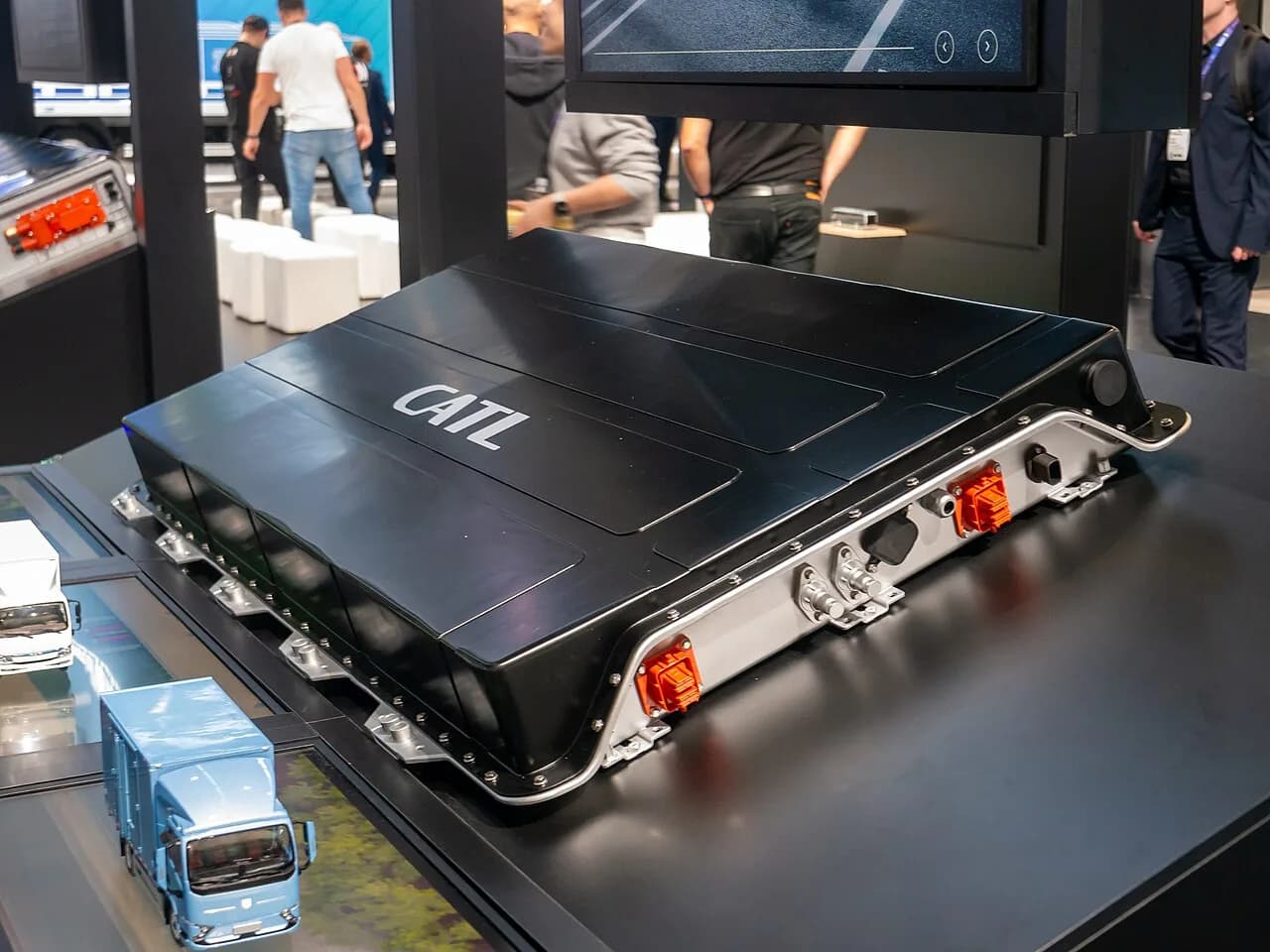
An interactive guide to CATL’s 极限制造: the claimed PPM→PPB defect-rate shift, a manipulable 3D battery cell and its micron tolerances, 6,800 quality checkpoints, 200 kaizens a week, the battery learning curve — and Northvolt as its control group. Sourced in English, Chinese and Japanese.
Read the guideSMED: Quick Changeover Explained
A visual explainer on SMED / quick changeover — watch one machine changeover shrink from 35 minutes to 8 by separating internal from external setup, converting it, and streamlining the rest.
Read the guideThe 18-Month Car: How Chinese Automakers Halved Vehicle Development
A visual guide to the 18–24-month development cycle: simulation-first validation, OTA iteration, vertical integration and 121,600-engineer R&D machines — plus the human and supplier bill, and the 1980s Clark–Fujimoto mirror. Sourced in English, Chinese and Japanese.
Read the guideThe Five Whys: Run the Root Cause Investigation Yourself
Learn the Five Whys by running one. Walk Ohno’s canonical machine-overload chain, then take the marker: a packaging line has stopped, and at every level you choose the next “why” — while a coach catches the blame, solution-jumping, and abstractions that derail real investigations, and a fishbone assembles beside your chain.
Read the guideThe Gemba Walk in Healthcare: Walk a Hospital Unit Yourself
A first-person interactive guide to the gemba walk. Walk a med-surg unit as the leader: observe the work, choose what to say, earn or lose the staff’s trust, and leave with follow-ups — go-see, ask-why, show-respect, lived instead of listed.
Read the guideThe Hour-by-Hour Board: Run a Shift, Then Solve the Loss
An interactive guide to the hour-by-hour board (production analysis board). Run a real shift, watch the cumulative pace line open up the moment a problem hits, tag each miss as a quick fix or a contained loss, then follow the loss Pareto into a 5-Whys countermeasure and a daily management cadence.
Read the guideThe Mind on the Line: Why Assembly Is a Thinking Job
Assembly work is mental, not just physical. An interactive guide to the cognitive load of the line — reading, remembering, and combining work — and how simple, rhythmic, people-first process design takes that load back off.
Read the guideValue Stream Mapping, Explained by Drawing One
An interactive guide to value stream mapping. Watch a current-state map of a machining plant assemble itself as you scroll — takt from demand, data boxes, inventory triangles, the push information flow that creates them, and the timeline ladder — then watch the future state collapse lead time from 16 days to 4.6.
Read the guideValue-Stream Mapping a Patient Journey: Seven Hours for One Hour of Care
An interactive guide to value-stream mapping in healthcare. Follow one patient through an emergency department, build the current-state map with a cross-functional team, see why information is right only 17% of the time, and redesign the journey from seven hours to two.
Read the guideManufacturing
10How to Apply Poka-Yoke (Mistake-Proofing) in Manufacturing
A practical, example-driven guide to poka-yoke on a real production line — the three device types, where to place them, a worked station example, and the mistakes that quietly let defects through.
Read the guideHow to Calculate and Use OEE in Manufacturing
A practical guide to making OEE actually drive improvement on a production line — defining honest planned time, splitting Availability, Performance, and Quality, and the mistakes that turn it into a vanity number.
Read the guideHow to Create Standardized Work in Manufacturing
A practical guide to building standardized work on a real production line — takt time, work sequence, and standard WIP — written with operators, as the current best-known way and the baseline for kaizen.
Read the guideHow to Do a Gemba Walk in Manufacturing
A practical guide to walking the floor like a leader, not an auditor — where to go, what to look for, the questions to ask, and what to do after, so the walk actually changes the work.
Read the guideHow to Do a Time Study in Manufacturing
A practical, gemba-tested guide to running a time study on a real production line — breaking the job into elements, timing a steady operator across cycles, and using the lowest repeatable time to set a standard you can balance against.
Read the guideHow to Run a SMED Changeover on a Production Line
A practical guide to cutting changeover time with SMED — separating internal from external setup, converting work off the stopped machine, and the mistakes that keep changeovers long.
Read the guideHow to Use a Fishbone Diagram in Manufacturing
A practical, manufacturing-specific guide to the 6 Ms fishbone — sorting causes of a recurring defect or downtime, then drilling with 5 Whys to a root you can design out, not an operator to blame.
Read the guideHow to Use Kanban in Manufacturing
A practical guide to running real kanban on a production floor — production vs. withdrawal cards, the supermarket, capping WIP by card count, and sizing cards from demand and lead time.
Read the guideHow to Use Takt Time in Manufacturing
A practical guide to putting takt time to work on a real production line — setting honest available time, balancing stations, and the mistakes that quietly break the pace.
Read the guideVisual Management in Manufacturing
A practical guide to visual management on the plant floor — the display/control/system hierarchy, the 31-second test, tiered huddles, a worked audit, and the traps to avoid.
Read the guideHealthcare
4How to Do 5S in Healthcare
A practical, healthcare-specific guide to running 5S in supply rooms, med rooms, and on crash carts — with a sample audit, a worked example, and the mistakes that quietly sink most programs.
Read the guideHow to Run a Fishbone Analysis in Healthcare
A practical guide to using a fishbone (Ishikawa) diagram in healthcare — choosing care-fit categories, finding system causes instead of blame, and the mistakes that stall most analyses.
Read the guideHow to Run a Value Stream Map in Healthcare
A practical guide to value stream mapping a patient journey — tracing one path from arrival to discharge, finding where the hours actually hide, and designing a future state that takes the waiting out.
Read the guideHow to Use A3 Problem Solving in Healthcare
A practical guide to running an A3 in a hospital — writing a problem statement that holds up, grasping the current state at the bedside, finding true root cause, and proving countermeasures before you scale.
Read the guideWarehousing Distribution
2How to Do 5S in a Warehouse
A practical, warehouse-specific guide to running 5S across receiving, put-away, picking, packing, and shipping — with a sample audit, a worked example, and the mistakes that quietly sink most programs.
Read the guideHow to Run a Kanban Replenishment System in a Warehouse
A practical guide to pull-based pick-face replenishment with kanban — sizing two-bin signals, replenishing on a milk-run, and the mistakes that turn pull back into push.
Read the guide