
The announcement
On October 30, 2026, Toyota and Waymo said Toyota will build a robotaxi version of its bZ4X electric SUV at the Takaoka plant in Toyota City, Japan. Waymo’s self-driving hardware will go into the car at the same plant. A test fleet is due to start running in Japan in 2027. The UK and other Waymo markets are planned to follow in later years (Waymo, TechCrunch).
The deal changes how Waymo gets its cars. Today, Waymo buys finished cars from carmakers, ships them to a plant in Arizona, and fits the sensors there (Forbes Australia). At Takaoka, Toyota does both jobs in one plant.
Waymo’s announcement says: “The entire process will take place under one roof, from assembling the base vehicle to integrating Waymo’s AV hardware” (Waymo). Toyota’s Japanese release, as reported by Car Watch, says the same (Car Watch). Neither says whether the robotaxis share the main assembly line with the regular bZ4X or get their own area.
The robotaxi version adds extra rear legroom, automatic doors, a power liftgate, and ambient lighting (Waymo). The Japanese trade site MONOist expects the car to carry Waymo’s sixth-generation hardware (MONOist). Waymo’s announcement doesn’t name a hardware generation, and neither company has published a sensor list.
Toyota and Waymo did not give production volumes, prices, or financial terms, or say where in Japan the bZ4X will run. Toyota CTO Hiroki Nakajima said the first operations would use a small number of vehicles (Reuters). The two companies described 2027 as testing and validation, and gave no date for paid rides in the bZ4X (WhichEV).
This is the first vehicle to come from a preliminary agreement the two companies announced in April 2025. That agreement also covered self-driving technology for cars that people own. Waymo says the two companies “will continue to explore” that part. No product or date has been announced (WardsAuto, Waymo).
Waymo co-CEO Dmitri Dolgov said: “We chose Toyota because of our respect for the legendary safety, reliability, and quality of their vehicles” (Waymo).
How Waymo builds its cars today
Waymo doesn’t make the base cars. It buys them and adds its own hardware.
Most of its US fleet is the Jaguar I-Pace (Electrek). Magna built the I-Pace for Jaguar in Graz, Austria. The cars then went to a plant in Mesa, Arizona, that Waymo runs with Magna, where the sensors and computers go in (Forbes Australia). Jaguar has stopped making the I-Pace (Electrek).
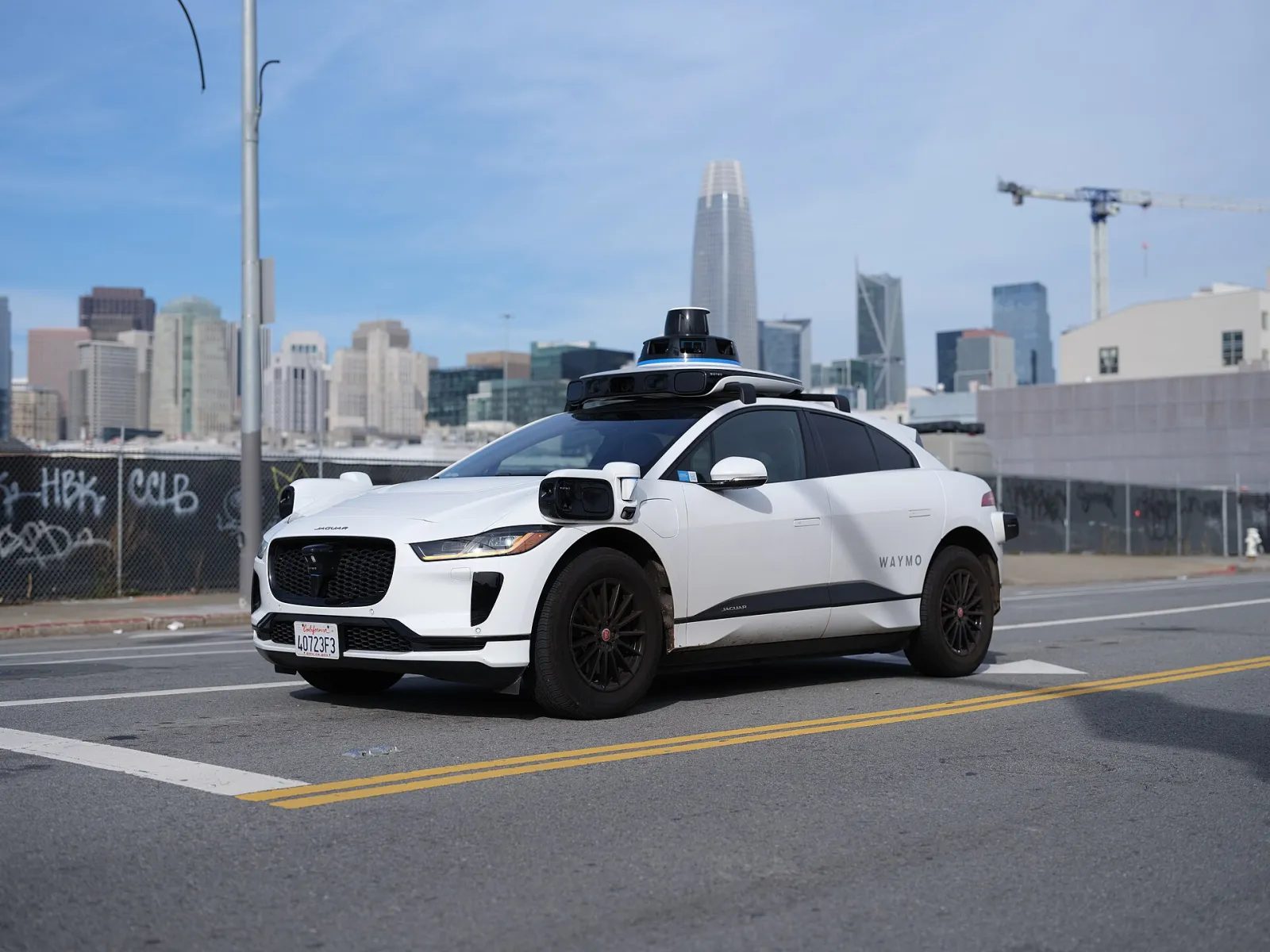
The work at Mesa starts by taking the finished car partly apart. Workers remove covers, bumpers, and other exterior parts. They then install a wiring harness, computers, sensors at each corner, and the roof unit. Calibration takes 20 minutes to an hour, followed by short test drives (Forbes Australia).
In 2025, Mesa’s targets were far below what Waymo says the plant can reach. One day in April 2025, the target was six finished cars in a single shift (Forbes Australia). One shift a day at that rate, on 250 working days, gives about 1,500 cars a year (Kaizumi arithmetic: 6 cars a shift × 250 working days = 1,500). Waymo’s plan at the time was “over 2,000 more” I-Pace cars by the end of 2026. Over about 20 months, that is roughly 1,200 a year. Waymo also says the 239,000-square-foot plant can build “tens of thousands” of vehicles a year at full capacity, and that it will add an automated assembly line over time (Waymo). The higher figure is a goal for the plant, not its current output.
Waymo’s newer car follows the same route. Zeekr builds the Ojai van in China and ships it to Mesa, where Magna fits it with the sixth-generation Waymo Driver (Electrek).
Waymo doesn’t publish how many cars wait at Mesa. A member of the r/waymo community on Reddit, who posts as jjricks_, counts them each month from aerial photos. In early June 2026, the count was about 500 Ojai vans. By August, it had nearly doubled (Electrek). The count isn’t official data, and a car on the lot is not a car in service.
Source: Electrek, August 12, 2026, reporting a count by an r/waymo community member. Not official Waymo data.
The count shows how the two-plant model works. A finished car is built in one country, shipped across an ocean, parked, and then fitted in a second plant.
Waymo has a reason to move faster. It gives more than 500,000 paid rides a week across 15 US metro areas (Electrek). Waymo co-CEO Tekedra Mawakana has said weekly rides will pass 1 million by the end of 2026. When Electrek reported that in February 2026, the fleet was about 2,500 cars (Electrek).
What changes at Takaoka
Takaoka opened in 1966 to build the first Corolla (Wikipedia). Today it builds the RAV4, Harrier, bZ4X, and C-HR+ (Toyota).
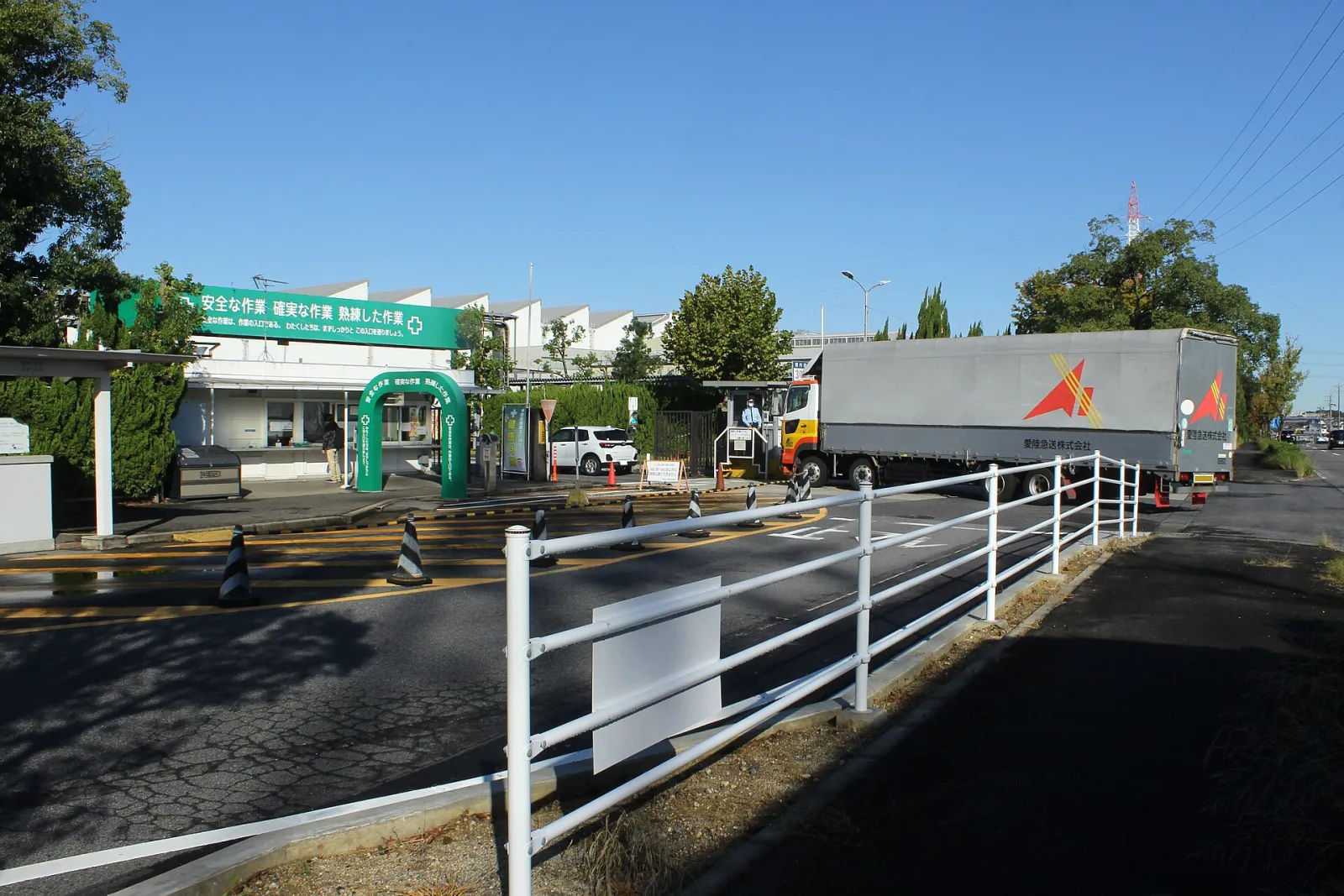
Waymo says the whole process, “from assembling the base vehicle to integrating Waymo’s AV hardware,” happens in one plant (Waymo). The Japanese car magazine Best Car reads this as building the robotaxi on the production line, rather than adding equipment to a finished car afterward (Best Car: 「従来の量産車に後から自動運転機器を取り付けるのではなく、自動運転タクシーそのものを量産ラインで生み出すわけだ」, “Rather than fitting self-driving equipment to an existing production car afterward, the robotaxi itself is made on the production line.” Kaizumi translation).
Toyota already runs a dedicated robotaxi line in China. GAC Toyota and Pony.ai built it together for the bZ4X robotaxi. The line uses the Toyota Production System and has its own production management, quality control, and safety systems. The first car came off it on February 9, 2026 (Eastmoney). Best Car expects that experience to carry over to Takaoka.
Best Car reads the announcement as fitting the hardware during assembly. The China line shows Toyota can build robotaxis on a line set up for them. Toyota and Waymo haven’t said when the hardware goes in. Built during assembly, the robotaxi skips three steps of the Mesa method:
- Shipping a finished car to a second plant
- Storing it while it waits for a fitting slot
- Removing bumpers and exterior parts to add the wiring and sensors, then putting them back
Calibration and test drives remain. At Mesa, calibration alone takes 20 minutes to an hour per car (Forbes Australia).
Toyota and Waymo haven’t published the line layout. The robotaxi work could run on the main line alongside the regular bZ4X, or in a dedicated section for robotaxi-specific steps. They also haven’t said how many cars Takaoka will build, or at what rate.
Right-hand drive
Japan and the UK drive on the left, so their cars are right-hand drive. TechCrunch reports that “the intent is to deploy these vehicles in other right-hand driving countries such as the U.K.” (TechCrunch).
Waymo is testing the I-Pace in Tokyo and London. In Tokyo, it planned 25 I-Pace cars, first driven by Nihon Kotsu drivers to map the streets. Testing has run on public roads in seven wards since 2025, and by September 2026 the cars were driving themselves with Nihon Kotsu crew on board (Engadget, GO). In London, Waymo has tested the I-Pace for months and plans to launch once it has permits (TechCrunch).
The I-Pace is out of production. Waymo’s other current models are the Zeekr Ojai and the Hyundai Ioniq 5 (Electrek). No right-hand-drive version of either has been announced for Waymo. The bZ4X is the first new model Waymo has named for these markets. Dolgov said: “We’ll start with the right-hand drive markets in Japan and the UK” (Reuters).
The I-Pace stays in use for now. Dolgov said Waymo still plans a pilot with the I-Pace in Japan in 2027 (Reuters). Neither company has said when the bZ4X will join or replace it in Tokyo or London.
Toyota’s ties to the Tokyo partners
Waymo’s Tokyo plan has two Japanese partners. Nihon Kotsu, a large Tokyo taxi company, will manage operations and run the depots. GO, a taxi app, will sell rides through its app alongside the Waymo app. They aim for a fully driverless paid service in 2027 and plan to grow it to about 100 cars (GO).
Both partners have long ties to Toyota.
Nihon Kotsu runs about 4,000 cars, a 2018 company figure (Wikipedia). In 2021 it had the largest share of Tokyo’s taxi fleet of any operator (Statista). It was the first major customer for the Toyota JPN Taxi (Wikipedia), the purpose-built taxi Toyota launched in 2017 (Wikipedia).
GO started in 1977 as a computer systems company of Nihon Kotsu and was renamed JapanTaxi in 2015. In April 2020 it merged with DeNA’s taxi-app business and became Mobility Technologies. It became GO Inc. in April 2023 (GO listing document). The Mirai Creation Fund, backed by Toyota, invested ¥500 million in JapanTaxi in 2017 (Global Venturing). Toyota invested ¥7.5 billion in February 2018 (Toyota, Bloomberg).
GO listed on the Tokyo Stock Exchange on June 16, 2026 (ipo-navi). Before the listing, Toyota held 5,000,000 shares. GO’s listing document puts that at 5.8%, against 23.2% each for Nihon Kotsu Holdings and DeNA and 16.5% for NTT Docomo (GO listing document). Those percentages include stock options. Measured against issued shares, Toyota’s stake was about 6.4% (Kaizumi arithmetic: 5,000,000 ÷ 77,679,600).
GO’s filings name Toyota as one of three sellers, with DeNA and NTT Docomo, in the listing’s overseas offering, which was priced on June 8 (EDINET, May 14, EDINET, June 8). The filings don’t say how many shares Toyota sold. Toyota agreed to a 180-day lock-up on its remaining shares, which suggests it kept some (ipo-navi).
Toyota will build Waymo’s new car for Japan. It also holds part of the app that will sell Waymo’s Tokyo rides, and it has built taxis for the operator that will run them.
Tokyo’s earlier robotaxi plan
Tokyo had an earlier plan for driverless taxis. In October 2023, Honda, GM, and Cruise said they would start a driverless service in central Tokyo in early 2026. Chevrolet Bolts would run first, followed by dozens of Cruise Origin vehicles and a fleet of 500 (CNBC).
The plan was built around the Origin, a purpose-built vehicle with no steering wheel. GM paused Origin production in November 2023 and put the vehicle on hold indefinitely in July 2024 (BusinessDay). In December 2024, GM said it would stop funding Cruise’s robotaxi work (Gizmodo). Nikkei Asia then reported that Honda would end the tie-up (Nikkei Asia).
- Oct 2023Honda, GM and Cruise plan driverless taxis in central Tokyo for early 2026.
- Jul 2024GM puts the Cruise Origin on hold indefinitely.
- Dec 2024GM stops funding Cruise’s robotaxi work, and Honda ends the tie-up. Waymo says it will test in Tokyo with Nihon Kotsu and GO.
- Apr 2025Waymo starts driving its Jaguar I-Pace cars on Tokyo streets. Toyota and Waymo announce a preliminary agreement.
- Jun 2026GO lists on the Tokyo Stock Exchange.
- Sep 2026GO, Waymo and Nihon Kotsu aim for a fully driverless paid taxi service in Tokyo in 2027.
- Oct 2026Toyota and Waymo say Toyota will build a bZ4X robotaxi at Takaoka.
Sources: CNBC, BusinessDay, Gizmodo, Nikkei Asia, Engadget, Waymo, GO, ipo-navi, Reuters.
The Waymo plan differs in two ways that are on the record. Waymo’s driving system already runs paid, driverless rides in the US (Electrek). And its new car for Japan, the bZ4X, is a model Toyota already builds in volume at Takaoka (Toyota). Waymo hasn’t said whether the bZ4X will be used in Tokyo.
The permits Tokyo needs
Japan’s revised Road Traffic Act, in force since April 2023, created a permit for Level 4 operation, called tokutei jido unko (特定自動運行), or “specified automated operation.” The prefectural public safety commission grants it (National Police Agency).
By May 2026, Japan had granted 12 of these permits in total, including bus services (Digital Agency, ridejob). The first Level 4 service on public roads in the Tokyo area began on January 13, 2026, on some runs of a shuttle bus route in Kashiwa-no-ha, Chiba (University of Tokyo).
A taxi needs a second license. To carry passengers for a fare, the operator also needs a taxi business license under the Road Transport Act (ridejob). GO, Waymo, and Nihon Kotsu say they will set the launch date only after they have the permits required under both laws (GO).
GO, Waymo, and Nihon Kotsu say the main reason is a shortage of drivers. Nihon Kotsu says the service is meant to make up for future shortages of drivers and to run alongside its human-driven taxis (GO).
Toyota’s other robotaxi partners
Toyota builds vehicles for several self-driving companies. It has not launched a Level 4 driving system of its own. Its e-Palette shuttle, on sale since September 2025, is built to carry driving systems from other companies (Toyota).
| Partner | Vehicle | Where | Status |
|---|---|---|---|
| Waymo | bZ4X robotaxi | Takaoka, Japan | Test fleet in Japan from 2027 (Electrek) |
| Pony.ai | bZ4X robotaxi | GAC Toyota plant, China | In mass production since February 2026; plan to build more than 1,000 this year (Pony.ai) |
| May Mobility, with NTT Mobility | e-Palette shuttle | Japan | Public rides announced September 2026 (May Mobility) |
| Aurora, with Denso | Sienna minivan | United States | Deal signed in 2021 (TechCrunch); small test fleet in Dallas–Fort Worth from 2022 (TechCrunch); no ride-hailing launch date announced |
The bZ4X carries Pony.ai’s driving system in China and will carry Waymo’s in Japan. Pony.ai says the parts cost of its seventh-generation kit is 70% lower than the generation before (Pony.ai). Electrek reports that Waymo puts its sixth-generation sensor set at under $20,000 per car (Electrek).
Hiroki Nakajima, a Toyota board member and executive vice president, said: “No single company can achieve the goal of zero traffic accidents alone, but with partners like Waymo, we will get there one step at a time.” He also said Toyota “will continue to explore how integrating vehicles with traffic infrastructure can make those roads safer still” (Waymo). Toyota and NTT plan to invest ¥500 billion together by 2030 in a platform that links people, vehicles, and road infrastructure (Toyota).
What is still unknown
- How many robotaxis Takaoka will build, and how fast
- How the robotaxi steps are laid out at Takaoka
- Where in Japan the bZ4X fleet will run
- When paid driverless rides start in Tokyo, and how long the two permits take
- When the bZ4X reaches London, and whether it replaces the I-Pace there
- Whether Toyota and Waymo will offer self-driving technology in cars that people own