
What Toyota announced
In September 2026, Toyota's chief technology officer, Nakajima Hiroki, presented the plan to investors at Toyota Motor Europe. From 2028, Toyota expects to spend about ¥1 trillion a year to rebuild and update its 60 plants worldwide and the robots inside them.
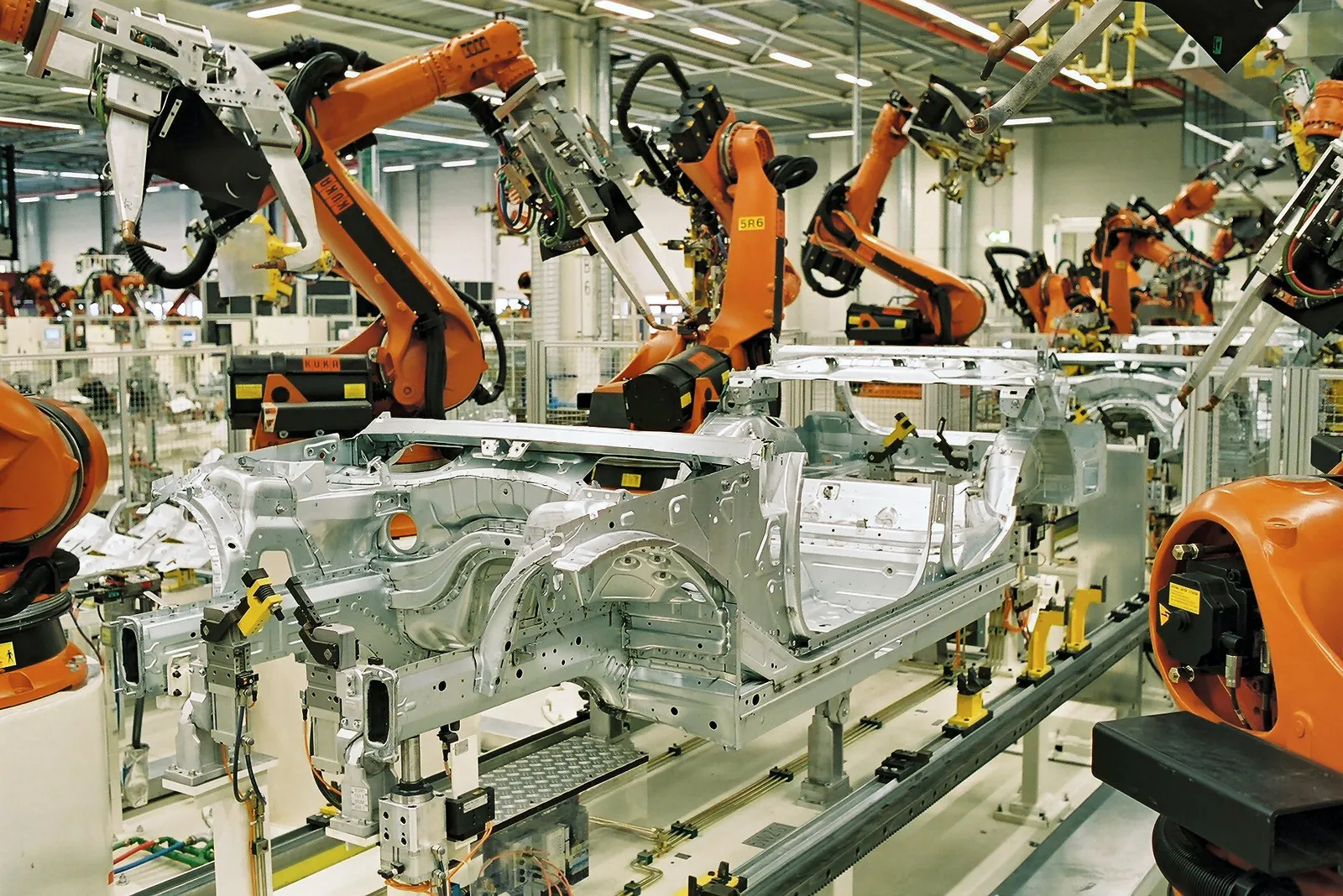
The 400,000 figure is the size of the robot fleet that Toyota, its group companies, and its suppliers already run. About 150,000 work in Toyota and group plants, and about 250,000 at suppliers. Toyota plans to update them over time.
Some early reports called them 400,000 humanoid robots. Toyota didn't describe them that way. A Japanese trade paper that covered the briefing expects most to be welding robots, automated carts, and similar machines.
The figure is an estimate. Toyota hasn't committed the money or said when the spending would end.
Sources: Car Watch, 18 September 2026; Reuters, 18 September 2026
Why the scale is surprising
Toyota uses new technology, but carefully. It studies a problem until it understands it, and only then asks whether a machine is the right answer. Many companies start from the other end. They find a technology they like and look for a use for it, whether or not that use matters. Or they face a problem they can't work out how to solve, and buy technology in the hope that it helps.
That's why the size of this plan stands out. Toyota rarely commits at this scale. It has seen something change: perhaps a workforce Japan can no longer supply, perhaps AI that can learn a master's skill. Toyota's own explanation, below, points to both.
A robot that learns by watching
The new part is the software. Large Behavior Models from the Toyota Research Institute let a robot learn a task by watching a person do it, so no one has to program it move by move.
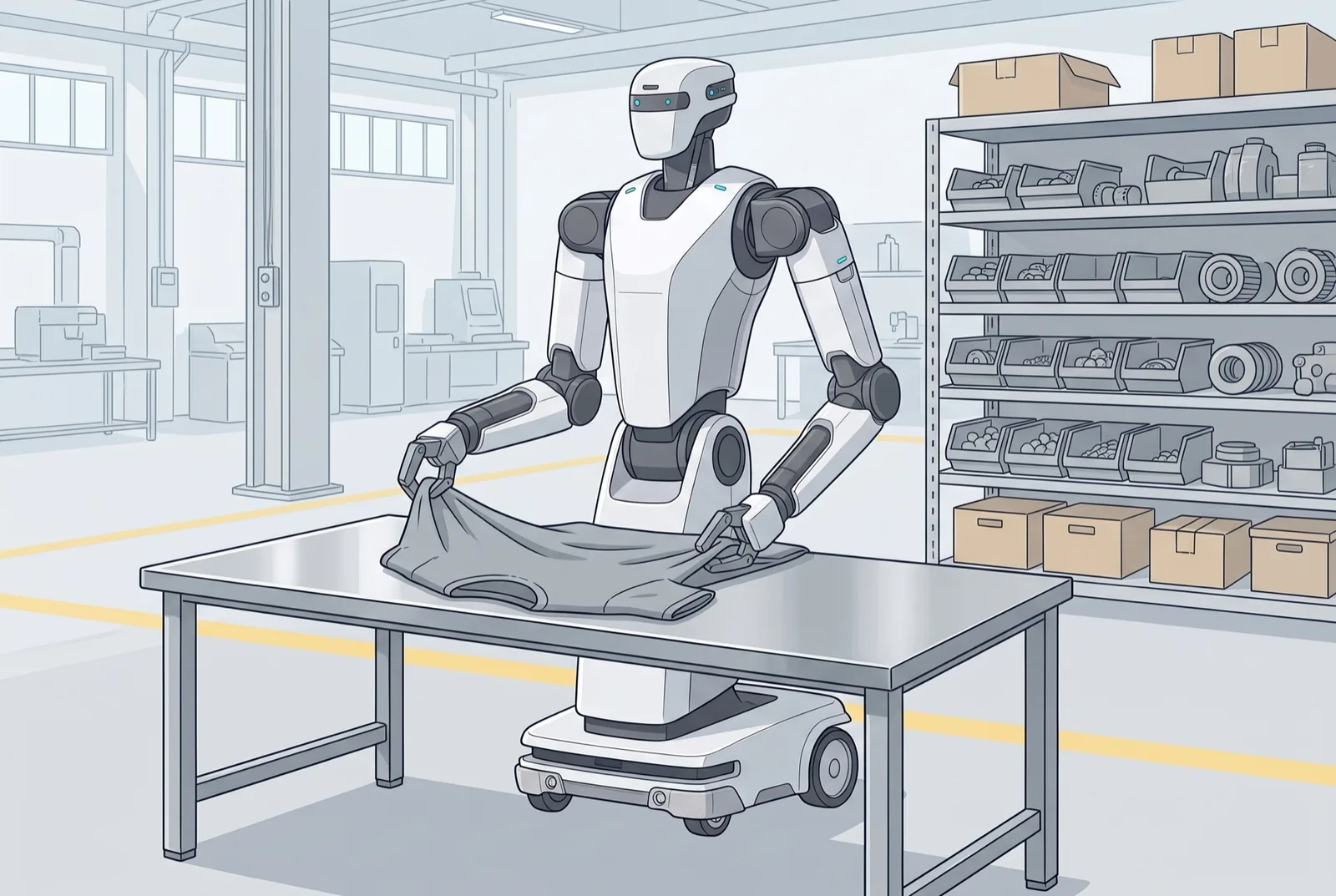
Toyota's demonstration robot is called ELEY. It weighs about 50 kg, has two arms with two-finger hands, and runs on wheels, not legs. At the briefing it folded a T-shirt, a task it learned from people. Cloth is hard to program because it changes shape with every move, so folding it shows a robot that learns by watching can handle work that fixed instructions can't. Toyota first showed ELEY in March 2026.
Toyota's researchers name three problems they still need to solve: running reliably over long shifts, placing a part in exactly the same spot every time, and building the data systems the robots learn from.
Why now
Toyota gives two reasons: too few workers, and the risk of losing its masters' skill as they retire.
Japan's working-age population is shrinking. In August 2026, there were 118 job openings for every 100 job seekers. In July, Toyota's new chief executive, Kon Kenta, said that in its new plants “the value of what only people can do will rise.”
No Japanese source we found ties the plan to competition from China.
1991: the last big push
This isn't Toyota's first big move into robots. In 1990, Japan's bubble economy left Toyota short of workers. In Aichi, where most of its plants are, there were 2.47 job openings for every applicant.
Toyota answered with Tahara No. 4, a highly automated assembly line for luxury cars that opened in October 1991. That year Toyota spent close to ¥600 billion on plant and equipment, about as much as Nissan, Honda, Mitsubishi, and Mazda combined.
The robots made the line rigid. They needed long runs of the same model to pay for themselves, and changing them over was slow and costly. Then demand for luxury cars fell. By May 1992, the plant had cut its working hours.
Eiji Toyoda, Toyota's honorary chairman, later said that engineers want to automate as far as they can. Tahara, he said, showed Toyota where automation doesn't work.
The next plant took the other path. Toyota Motor Kyushu's Miyata plant opened in December 1992. It split the line into teams of about 20 and used automation to take strain off people, not to replace them. Defects fell by nearly 80%, and productivity rose about 10%.
- 1991Tahara No. 4 opens as a highly automated line.
- 1992Kyushu's Miyata plant puts people and machines on one line.
- 2008Kamigo tries robots on a piston line, then returns to manual work.
- 2017Kawai Mitsuru becomes executive vice president, the first from the shop floor.
- 2025The Kamigo piston line goes from three workers to none.
- 2028The ¥1 trillion-a-year plan is set to begin.
Sources: Toyota, 75 Years of Toyota; Satake Hiroaki, Ohara Institute journal, 2009; Toyota Times, 2025; Toyota executive biography
By hand first
The lesson became a rule. It's best known through Kawai Mitsuru, a forging worker who joined Toyota in 1966 and rose to executive vice president.
His rule: do the work by hand until anyone can do it the same way, and only then automate. In a 2017 lecture at the University of Tokyo, he said good automation is simple, slim, and flexible. The best methods, he said, came from turning a master's work into numbers. The machines didn't invent them. Toyota's own description of its production system says the same: master the task by hand, then build that knowledge into the machine.
The rule still shapes Toyota's plants. At the Kamigo engine plant, Toyota tried robots on a piston line in 2008. It went back to manual work because its overseas plants lacked the skill to maintain them. The line went fully automated in January 2025.
At the Takaoka plant, 160 autonomous carts now move parts, and a sorting system cut a line worker's daily walk from about 15 km to 2.7 km. A senior skilled worker there says that moving skill into a robot needs an even more skilled master.
Smooth the flow, then automate
Nakajima described the same order at the September briefing. First, smooth the flow of work (整流化, seiryūka). Then automate. Then keep improving, so the equipment gets smaller over time. On a visit to an overseas plant, he said, he saw heavy automated equipment that often wasn't doing work that added value.
Large Behavior Models apply Kawai's rule in a new way. A master does the job, and the robot learns it by watching. The skill still has to exist first.
The order works in any operation. Make the process stable and standard by hand. Remove the waste. Then automate what's left, as simply as you can. Toyota's karakuri devices, which move parts using gravity and springs, are the low-cost end of the same idea. So is jidōka (自働化), building in the ability to stop when something goes wrong.
Where Japan stands
Japan installed 36,219 industrial robots in 2025, 19% fewer than the year before. China installed 354,000, nearly ten times as many and 59% of the world's total.
Source: International Federation of Robotics, World Robotics 2026
Japan's plants still have more robots per worker than China's. By the federation's 2024 count, Japan had 446 robots for every 10,000 manufacturing workers, China 166, and South Korea 1,220.
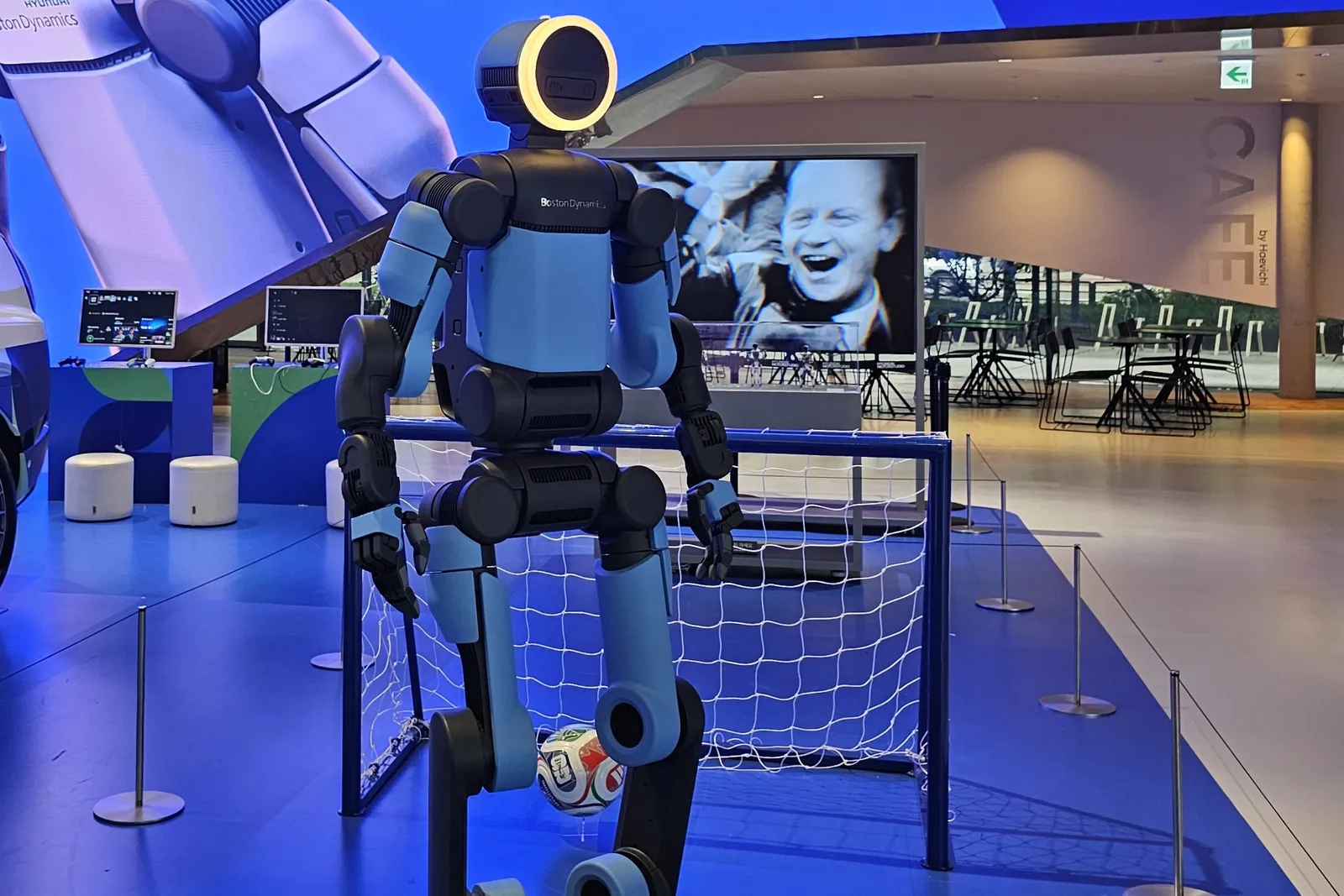
Other carmakers plan walking humanoids. Hyundai plans to put Boston Dynamics' Atlas robots in its Georgia plant from 2028. Tesla says it can build a million Optimus robots a year at Fremont, a claim it hasn't yet shown. BMW says the humanoids it has tested are still slower than people. Toyota chose wheels and two-finger grippers.
What isn't settled
- The ¥1 trillion is an estimate, not a budget.
- Toyota hasn't said who pays for the 250,000 robots at suppliers.
- Toyota hasn't named the plants that go first.
- Toyota's union hasn't commented on the plan in public.
- Toyota's own researchers say the robots aren't yet reliable or precise enough for long production runs.