The world’s biggest car industry is leaving home.
129 brands. A price war with a government name. Development cycles the West can’t match, exports no country has ever matched — and now, factories. Some of them are the same buildings Japan’s wave filled forty years ago.
Britain’s biggest car plant is half asleep.
Nissan Sunderland can build 600,000 cars a year. It was Europe’s most productive car plant for seven straight years — the factory that taught Britain lean manufacturing. Today it runs at less than half of its installed capacity. Every dark cell on this grid is a line slot, a supplier order, a shift that isn’t happening.
Capacity and utilization per Nissan and trade reporting on the June 2026 announcement.The empty half just found a tenant.
On June 3, 2026, Nissan signed a memorandum of understanding with Chery — China’s biggest vehicle exporter. From fiscal 2027, Nissan’s own workforce would build Chery’s cars on Line 1. It’s non-binding, and the commercial terms aren’t agreed. But consider the direction of travel: in April 2026, Chery’s Omoda and Jaecoo brands outsold Nissan itself in the UK — 6.7% of the market to Nissan’s 2.7%. How did a company most British drivers hadn’t heard of three years ago end up here? That story starts 8,000 kilometers away.
First, count the brands.
Each dot is one of the 129 NEV brands that actually sold vehicles in China in 2024. At the peak, around 500 companies were registered to build or sell electric vehicles; roughly 400 EV makers have ceased operations since 2018. Of China’s 169 carmakers, 93 hold less than 0.1% of the market. This is not an industry. It’s a tournament.
Counts differ by definition — brands selling (AlixPartners), carmakers (JATO), registered companies (Bloomberg). Each figure states its own.The tournament has eliminations.
WM Motor — bankrupt, October 2023. HiPhi — production halted, February 2024. Jiyue, a Geely–Baidu joint venture — collapsed in a week, December 2024. Neta — court-supervised bankruptcy, June 2025. AlixPartners forecasts that of these 129 brands, only about 15 will be financially viable by 2030. Xpeng’s CEO calls 2025–2027 “the elimination round.” Every brand on this chart knows it.
Survival weapon #1: the clock.
A legacy global automaker takes 40–50+ months to move a car from concept to launch. Chinese EV makers do it in about 24 — some in 18. Not by magic: virtual validation, soft tooling for test parts, software that ships at start-of-production and improves over-the-air, and vertical integration that keeps decisions in one building. In 2025, China’s top 19 automakers revealed 87 all-new models. Japan’s majors managed 34, Europe’s 28, America’s 12.
Cycle times per McKinsey and AlixPartners; model counts per AlixPartners. Full links in Sources.A phone company built a car in 33 months.
March 2021: Xiaomi — a smartphone maker — announces it will build EVs. December 2023: the SU7 is unveiled. Within 24 hours of launch it takes 88,898 firm orders. Its second model, the YU7, takes ~200,000 pre-orders in three minutes. Twenty-two months after the first delivery, Xiaomi has built 600,000 cars. Ford’s CEO Jim Farley had one flown to Chicago, drove it for six months, and told an audience at Aspen: “It’s the most humbling thing I’ve ever seen.”
Order figures include refundable deposits except where locked; the 240,000 YU7 orders locked within 18 hours were non-refundable.The Chinese have a word for what happened next.
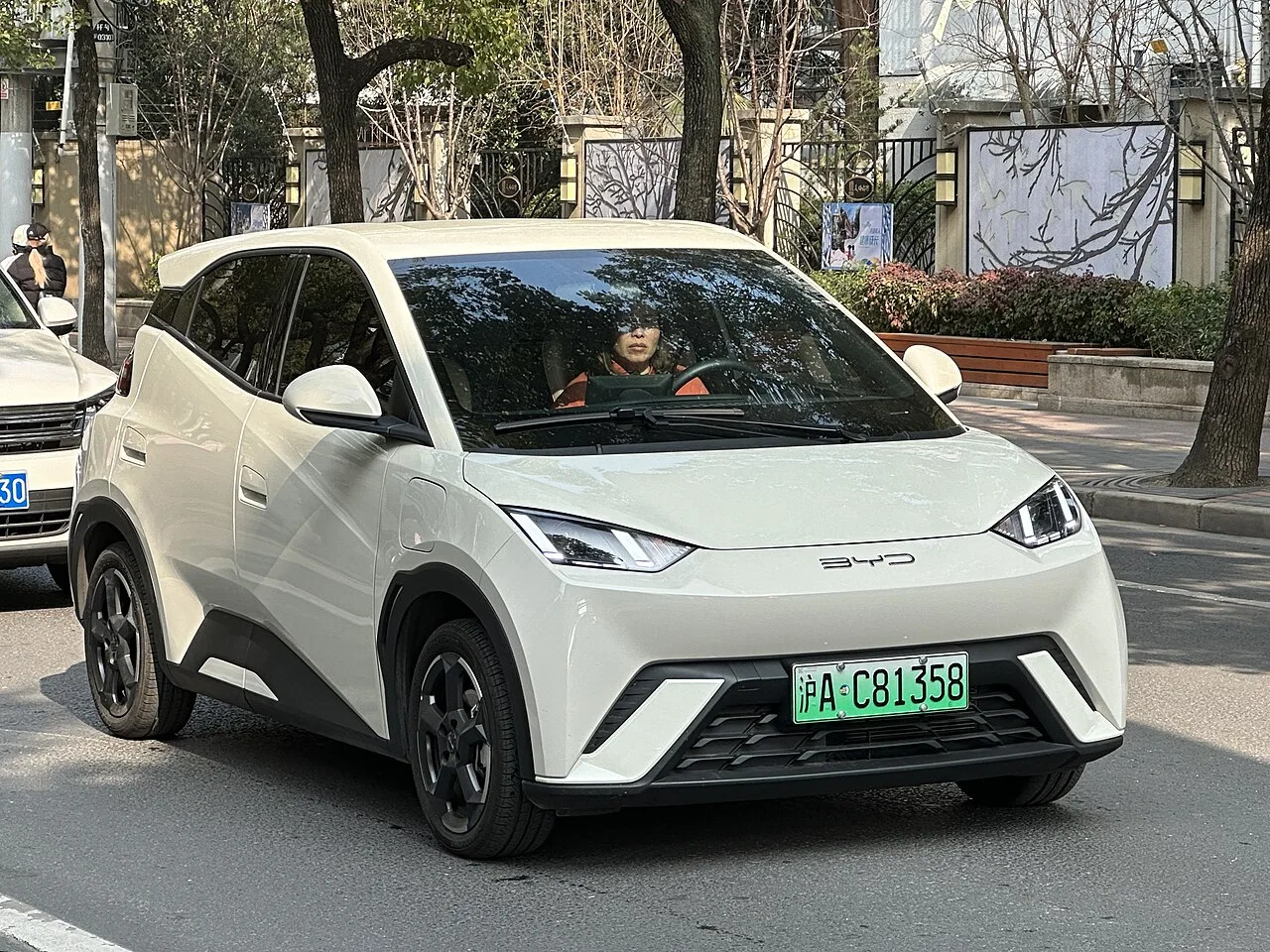
内卷 — neijuan, “involution”: competition so fierce that more effort produces less return for everyone. Tesla fired the starting gun with China price cuts in January 2023; 227 models cut prices in 2024 alone; by May 2025 BYD was discounting up to 34%, selling the Seagull for ¥55,800 — about $7,800. Industry profit margin fell to 4.1%, a record low. 56% of dealers lost money in 2025. The Politburo itself now warns against “vicious involutionary competition” — and has summoned automaker bosses to Beijing twice.
The stress went down the supply chain.
Cash-strapped automakers paid suppliers slower and slower — analysts reading BYD’s 2023 filings put its average at ~275 days. In June 2025, under government pressure, 17 automakers publicly pledged 60-day payment terms. A CAAM survey says they now average ~54 — though suppliers report clock-start games that quietly stretch it. Great Wall’s chairman put the industry’s fear plainly: “There’s already an ‘Evergrande’ in the auto industry — it just hasn’t exploded yet.” When home is like this, there is exactly one release valve.
Payables figure is analysts’ reading of filings as reported by Bloomberg/Fortune, not a company disclosure.Exports are not a strategy. They’re an exit.
In 2020, China exported under a million vehicles — less than half of Korea’s total. Then: 2.0M in 2021, past South Korea. 3.1M in 2022, past Germany. 4.9M in 2023 — past Japan, to world #1. With 49.5% domestic capacity utilization, every unsold Chinese car has to go somewhere, priced to move. Watch the blue line. Nothing in the history of this industry has ever climbed like that.
CAAM basis throughout; hollow points are approximate values from secondary sources. Customs counts run higher.Japan’s 1985 record just fell.
The high-water mark of the first export wave was Japan, 1985: 6.73 million vehicles — the number that triggered a decade of trade war. In 2025 China shipped 7.1 million on the same accounting basis (8.3 million per customs, worth $142B) — and in June 2026 it exported over a million vehicles in a single month, the first country ever to do so. The response has been the same as 1981: walls. A 100% US tariff. EU duties up to 35.3%. Russia — briefly a fifth of all Chinese exports — cut its intake in half with one fee change. When exports hit walls, there’s a next move. Japan wrote the playbook.
Britain’s best-seller list has a new accent.
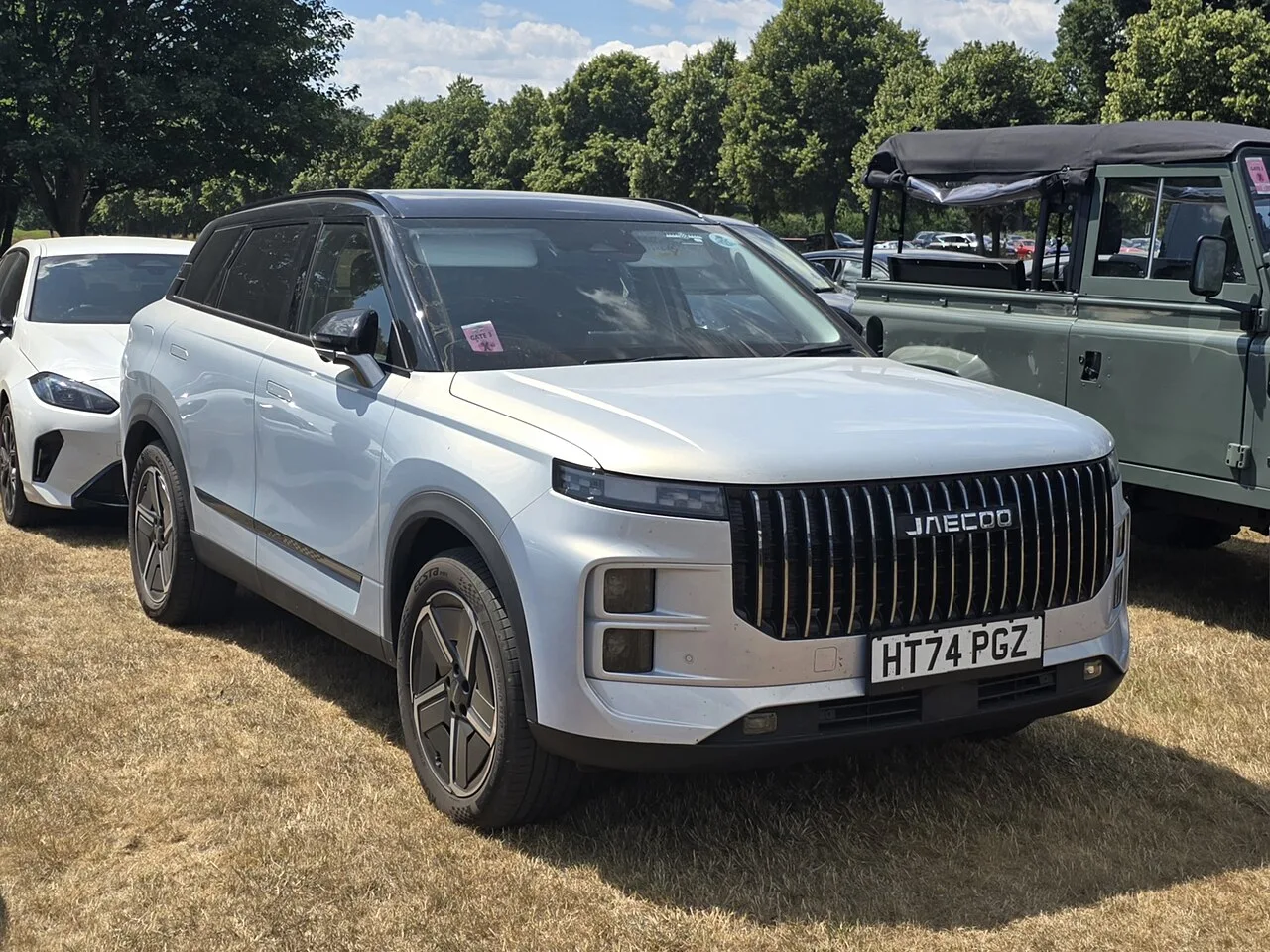
Volume needs buyers — and the buyers showed up. In January 2025, a brand almost nobody in Britain had heard of started delivering an SUV that looks like a Range Rover Evoque and starts at £29,435. The press nicknamed it “the Temu Range Rover.” Buyers shrugged: 26,048 sold in year one made the Jaecoo 7 the UK’s #4 retail car, and in March 2026 it was Britain’s best-selling car outright — about fourteen months from first delivery to the top of the chart, in one of the world’s most brand-conscious markets. It isn’t just Britain: BYD out-registered Tesla across Europe in early 2026. Tariffs argue with prices. They don’t argue with product.
Jaecoo is a Chery brand. UK figures per SMMT-based reporting (Which?, AM Online, Omoda & Jaecoo UK); Europe registrations per JATO Dynamics.The factories follow the ships.
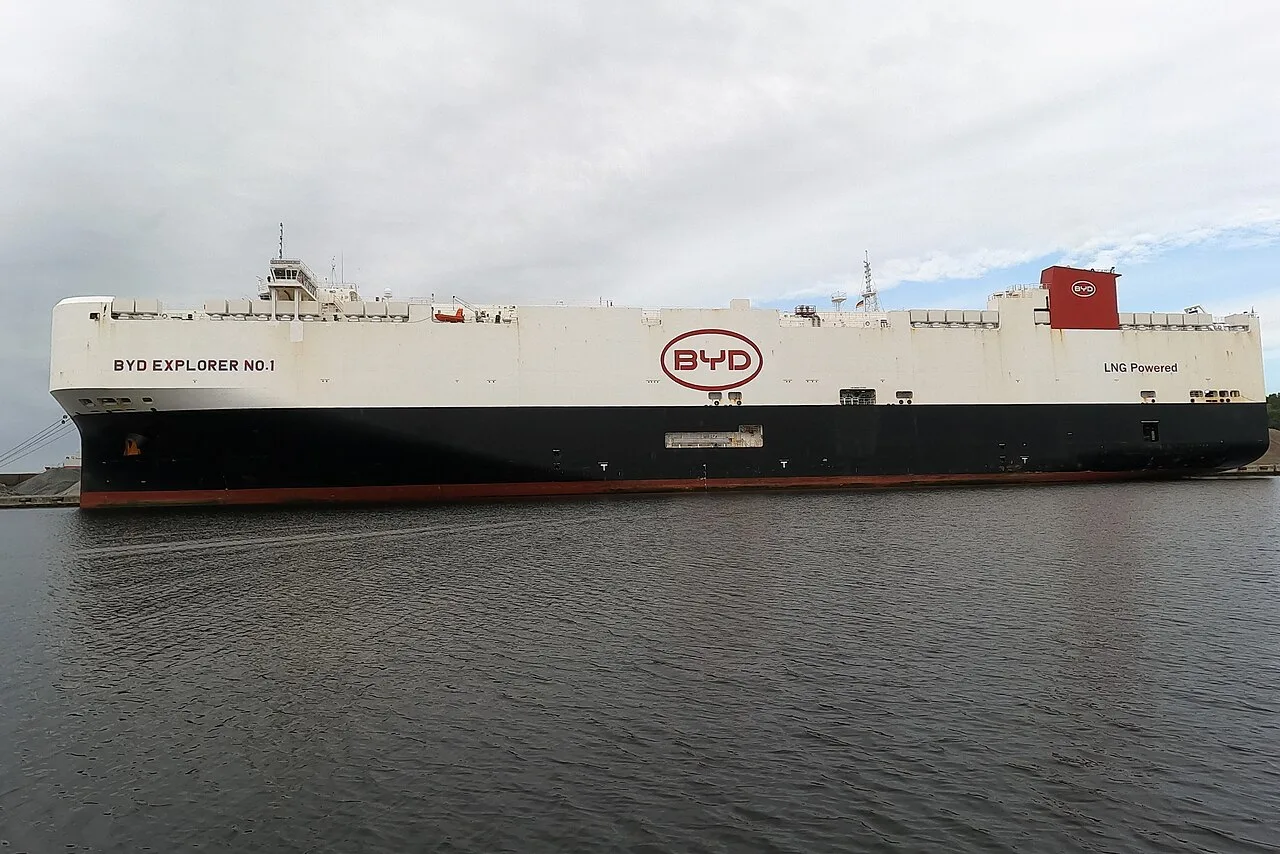
Each marker is a Chinese-brand assembly plant outside China — dropping in the order they arrived. A trickle through the 2010s (Russia, Belarus, Thailand, Mexico), then the flood: Thailand, Uzbekistan, Brazil, Hungary, Kazakhstan, Spain, Cambodia, Pakistan, Vietnam. S&P Global counts 19 overseas plants for the top five exporters alone — about 1.1 million vehicles were built abroad in 2025, heading for ~1.6M in 2026.
It is not a straight line — and that’s the honest map.
Green plants are running. Amber are under construction — several delayed, like BYD’s €4B Hungarian flagship, which slipped a year. Red are stopped: BYD’s Turkey plant is suspended, Leapmotor’s Polish kit line ran nine months and halted, Neta’s Thai operation died with its parent. Building cars abroad is the hardest thing in this industry. The first wave learned that too — and kept coming.
Look whose plants they’re moving into.
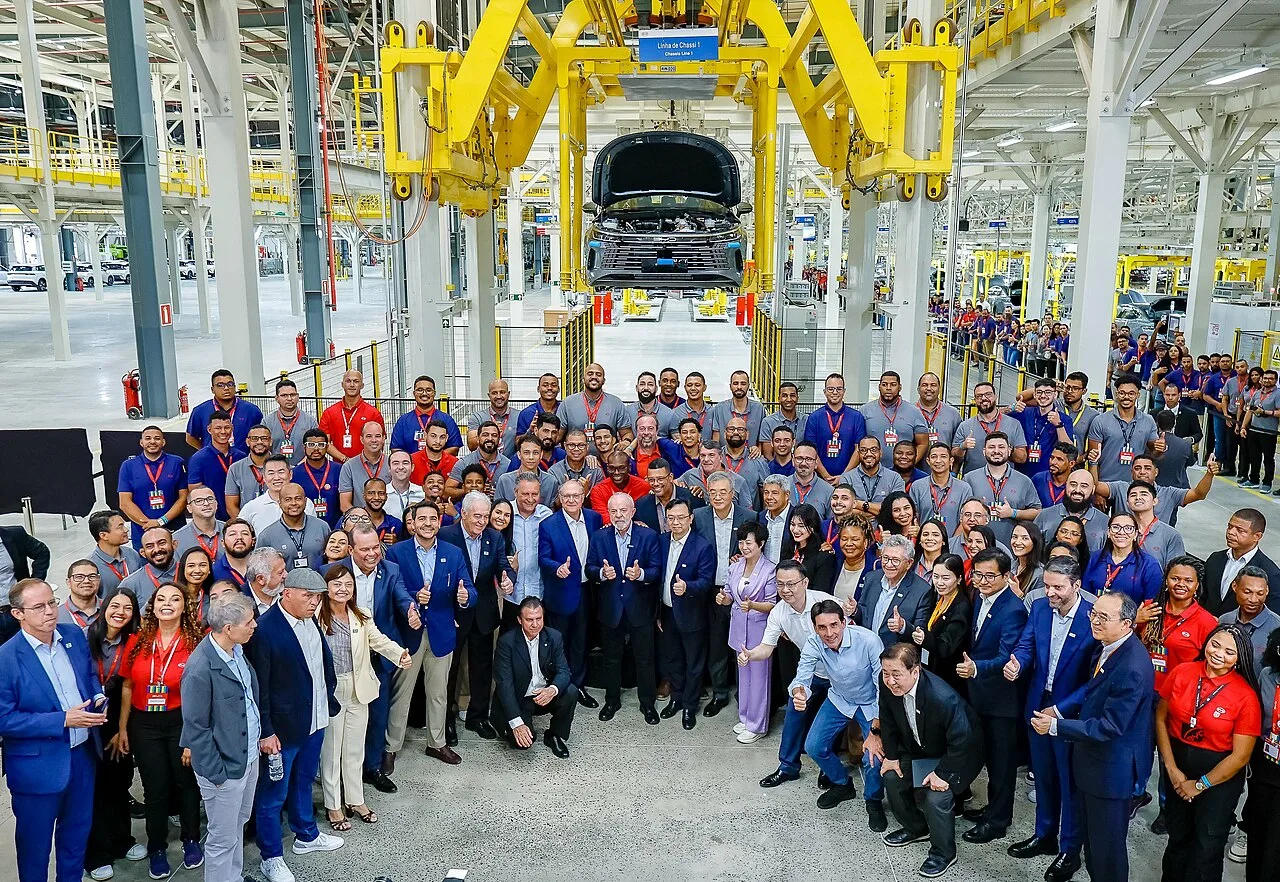
Now dim everything except the brownfields. BYD builds in Ford’s old Brazilian plant. Great Wall builds in Mercedes-Benz’s old Brazilian plant — and GM’s old Thai one. Chery builds in Nissan’s old Barcelona plant, and Chery-based cars roll out of Volkswagen’s old Kaluga lines. MG builds in GM’s old Indian plant. Leapmotor runs on Stellantis lines. And at Sunderland, Nissan itself would build Chery’s cars. The second wave isn’t just building factories. It’s refilling the first wave’s empties.
You have seen this movie. It was set in the 1980s.
Export surge → trade walls → transplants. Japan ran exactly this sequence: exports peak in 1985, the US caps imports in 1981, and the transplants arrive — Honda Marysville ’82, NUMMI ’84, Sunderland ’86. Transplant output went from 1,500 cars in 1982 to ~2 million by 1991. The West’s reward for paying attention was learning the Toyota Production System — at NUMMI, Toyota took GM’s worst plant, rehired the same workforce, and made it GM’s best.
Same movie. Triple speed.
Japan took roughly nine years from its export surge to its first Western transplant. China took about three — the 2021 surge to the first Chinese-brand car built in Europe, November 2024, in Barcelona. The EU’s duties took effect October 31, 2024; the first tariff-sheltered Chinese car rolled out 23 days later. Every phase of the 1980s script — the quotas, the local-content politics, the joint ventures — is compressing from a decade into a couple of years.
Last time, the winners were the ones who studied.
In 1990, MIT’s five-year study of the Japanese system became The Machine That Changed the World, and “lean production” entered the language. The operations people who went to see NUMMI and Georgetown for themselves — instead of explaining them away — built the next thirty years of Western manufacturing. The syllabus is being written again: 18-month development cycles, vertical integration from cell to car, software-defined iteration, factories stood up in sixteen months. You don’t have to like the price war to study what it forged. Go see.
Nissan 2.7%
on Line 1 from FY2027
non-binding · terms not agreed
→ ~1.6M forecast in 2026

Study the wave. Don’t just watch it.
The 1980s rewarded the operations people who went to see for themselves. Whatever happens to tariffs and MOUs, the methods on display — compressed development cycles, vertical integration, relentless takt — are worth understanding on their own terms.
How a Toyota plant works
The system the first wave taught the West — takt, andon, kanban, milk runs.
kaizumi.com/guides/toyota-assemblyBatch vs. flow
Why speed comes from flow, not hustle — the physics behind fast factories.
kaizumi.com/guides/batch-vs-flowAll field guides
Practical lean methods, written for real floors.
kaizumi.com/guidesTrain your team
AI-built lean training for your industry, your roles, your reality.
kaizumi.comDon’t take the chart’s word for it
The statistics only land once you see the products. A $6,500 city car, seats that rotate into a lounge, a phone company’s sedan — filmed by people who drove them. Videos load only when you press play.
Chinese-brand assembly plants outside China
Every plant from the map, in the order they arrived — including the ones that stalled. The last column is the quiet headline: whose factory it used to be. Data as of 2026-07-10.
| Since | Company | Location | Capacity | Status | The plant before |
|---|---|---|---|---|---|
| 2017 | Geely (BelGee JV) | Barysaw, Belarus | 60,000→80,000/yr | Operational | greenfield / partner |
| 2017 | SAIC-GM-Wuling | Cikarang, Indonesia | ~120,000/yr | Operational | greenfield / partner |
| 2017 | JAC (Giant Motors JV) | Ciudad Sahagún, Mexico | 60,000+/yr | Operational | greenfield / partner |
| 2017 | SAIC (MG, JV) | Chonburi, Thailand | ~100,000/yr | Operational | greenfield / partner |
| 2019 | GWM (Haval) | Tula, Russia | 150,000/yr | Operational | greenfield / partner |
| 2019 | SAIC / JSW (MG) | Halol, Gujarat, India | 80,000→120,000/yr | Operational | General Motors |
| 2021 | GWM (Haval) | Rayong, Thailand | 80,000/yr | Operational | General Motors |
| 2022 | Chery (contract) | Bekasi, Indonesia | ~10,000/yr | Operational | greenfield / partner |
| 2022 | GWM (via Sazgar) | Lahore, Pakistan | ~24,000/yr | Operational | greenfield / partner |
| 2023 | Chery (Inokom + own) | Shah Alam / Kulim, Malaysia | ~30,000/yr | Operational | greenfield / partner |
| 2024 | Neta (Hozon) | Bangkok, Thailand | ~20,000/yr | Halted | greenfield / partner |
| 2024 | BYD | Jizzakh, Uzbekistan | 50,000/yr (500,000 planned) | Operational | greenfield / partner |
| 2024 | BYD | Rayong, Thailand | 150,000/yr | Operational | greenfield / partner |
| 2024 | GAC Aion | Rayong (Amata), Thailand | 50,000→100,000/yr | Operational | greenfield / partner |
| 2024 | Leapmotor (via Stellantis) | Tychy, Poland | kit line | Halted | Stellantis (ex-Fiat) |
| 2024 | Chery (Ebro JV) | Barcelona, Spain | 50,000 by 2027 (150,000 by 2029) | Operational | Nissan |
| 2024 | BYD | Manisa, Turkey | 150,000/yr planned | Suspended | greenfield / partner |
| 2025 | Changan | Rayong, Thailand | 100,000→200,000/yr | Operational | greenfield / partner |
| 2025 | BYD | Camaçari, Bahia, Brazil | 150,000/yr (600,000 target) | Operational | Ford |
| 2025 | GWM | Iracemápolis, SP, Brazil | 50,000/yr | Operational | Mercedes-Benz |
| 2025 | Chery (via AGR, "Tenet") | Kaluga, Russia | ~100,000/yr | Operational | Volkswagen |
| 2025 | Chery + Changan + GWM | Almaty, Kazakhstan | 90,000–120,000/yr | Operational | greenfield / partner |
| 2025 | BYD | Sihanoukville, Cambodia | 10,000–20,000/yr | Operational | greenfield / partner |
| 2025 | GAC Aion (contract) | Cikampek, Indonesia | 30,000/yr | Operational | greenfield / partner |
| 2026 | BYD | Szeged, Hungary | 150,000→300,000/yr | Under construction | greenfield / partner |
| 2026 | BYD | Subang, West Java, Indonesia | 150,000/yr | Under construction | greenfield / partner |
| 2026 | BYD (JV) | near Karachi, Pakistan | 25,000/yr | Under construction | greenfield / partner |
| 2026 | Chery (Omoda & Jaecoo JV) | Thai Binh, Vietnam | 200,000/yr planned | Under construction | greenfield / partner |
| 2026 | Geely (JV) | Thai Binh, Vietnam | 75,000/yr initial | Under construction | greenfield / partner |
| 2026 | Leapmotor (via Stellantis) | Zaragoza, Spain | 40,000/yr initial | Under construction | Stellantis (ex-Opel/GM) |
| 2026 | Chery | Sunderland, United Kingdom | Line 1 of a 600,000/yr plant | MOU | Nissan (still Nissan-owned and staffed) |
| 2026 | GWM | Barra do Riacho, ES, Brazil | 200,000/yr planned | Announced | greenfield / partner |
Compiled from company announcements and trade press (full links in Sources below). Statuses move fast — several projects listed here slipped or stopped during 2025–26. Excludes uncertain single-source projects (BYD Malaysia, Chery Turkey, GAC Mexico, Dongfeng–Stellantis talks) and bus/truck plants.
Frequently asked
- How many car brands does China have?
- It depends what you count. AlixPartners counted 129 NEV brands actually selling vehicles in China in 2024; JATO Dynamics counts 169 carmakers in total, 93 of which hold under 0.1% of the market. At the ~2019 peak, roughly 500 companies were registered to make or sell electric vehicles, and about 400 EV makers have ceased operations since 2018. AlixPartners forecasts only about 15 brands will be financially viable by 2030.
- What does "involution" (neijuan) mean in China’s car industry?
- Neijuan (内卷) describes competition so intense that extra effort yields shrinking returns for everyone. In autos it means a price war — 227 models cut prices in 2024 — that pushed industry profit margins to a record-low 4.1% in 2025 and left 56% of dealers losing money. The term is now official: the Politburo warned against "involutionary competition" in July 2024, and regulators have twice summoned automaker executives over below-cost pricing.
- How many cars does China export?
- China exported 7.1 million vehicles in 2025 on the CAAM industry basis (8.3 million per customs data, worth about $142B) — its third straight year as the world’s largest vehicle exporter. It passed South Korea in 2021, Germany in 2022, and Japan in 2023. Japan’s 1985 record of 6.73 million, the previous all-time high, fell in 2025. In June 2026 China became the first country to export over one million vehicles in a single month.
- Is Chery really going to build cars at Nissan’s Sunderland plant?
- A non-binding memorandum of understanding was signed on June 3, 2026: Nissan would manufacture Chery-brand vehicles on Line 1 at Sunderland — Britain’s biggest car plant, currently running below half of its 600,000-vehicle capacity — from fiscal 2027. The plant stays Nissan-owned and Nissan-staffed. Commercial terms were not yet agreed as of mid-2026.
- Which Chinese automakers build cars outside China?
- BYD builds in Thailand, Brazil, Uzbekistan, Cambodia and Hungary (ramping), with projects in Indonesia and Pakistan and a suspended plant in Turkey. Chery assembles in Spain, Russia, Indonesia, Malaysia and Kazakhstan, with Vietnam under construction and the UK under MOU. Great Wall builds in Thailand, Russia and Brazil; MG (SAIC) in Thailand and India; Geely in Belarus; Leapmotor on Stellantis lines in Spain. Several occupy former Western plants — Ford’s in Brazil, GM’s in Thailand and India, Mercedes’ in Brazil, Nissan’s in Barcelona, VW’s in Kaluga.
- What is the "Temu Range Rover"?
- The nickname the British press gave the Jaecoo 7, a mid-size SUV from Chery’s Jaecoo brand that resembles a Range Rover Evoque at a fraction of the price (from £29,435). The joke aged fast: UK deliveries began in January 2025, it was Britain’s #4 retail car in its first year with 26,048 sold, and by March 2026 it was the UK’s best-selling car outright — roughly fourteen months from launch to the top of the chart.
- How fast do Chinese automakers develop new cars?
- Roughly twice the traditional pace: about 24 months from concept to launch (McKinsey), with some programs near 18, versus 40–50+ months at legacy global automakers. The tools are virtual validation, soft tooling, software-defined vehicles that improve over-the-air after launch, and deep vertical integration. Xiaomi went from announcing its car business to customer deliveries in about three years.
Related
Founder of Kaizumi, an AI-powered Lean training platform. More about Matthew →
Updated July 10, 2026 · Drafted with AI assistance and reviewed by Matthew Savas for accuracy. Every statistic is dated and sourced (data as of 2026-07-10); where official series disagree — CAAM vs. customs export counts, brand tallies that depend on definitions — the guide says so rather than picking a flattering number.
References
Every statistic in this guide traces to one of the sources below · data as of 2026-07-10. The Sunderland capacity grid is an illustrative rendering of reported figures, not a plant layout.
The Sunderland deal
The domestic market, brands and the price war
- AlixPartners — 2025 Global Automotive Outlook, China (129 brands; ~15 viable by 2030)
- CNN — China’s EV price wars (JATO: 93 of 169 carmakers under 0.1% share) (Sep 2025)
- Bloomberg graphics — How BYD’s price cuts ripple through the EV world (2025)
- CNBC — Tesla slashes Model 3/Y prices in China (Jan 2023)
- CnEVPost — 227 models cut prices in 2024 (CPCA)
- Fortune — BYD cuts up to 34% on 22 models (May 2025)
- CarNewsChina — 2025 industry profit margin 4.1%, a record low (Jan 2026)
- Bloomberg — 49.5% capacity utilization threatens to prolong the price war (Jun 2025)
- SCMP — Dealers face bleak 2025 after $24B of losses (Jan 2025)
- Yicai — Over half of Chinese car dealers posted losses in 2025
- Carnegie Endowment — What’s new about involution (Aug 2025)
- Gov.cn — Government Work Report pledges steps against involution-style competition (Mar 2025)
- SCMP — Xi targets “disorderly low-price competition” (Jul 2025)
- CnEVPost — Regulators summon automakers again over irrational competition (Jun 2026)
- Fortune — BYD’s ~275-day supplier payment terms under scrutiny (Jun 2025)
- CnEVPost — 17 automakers pledge 60-day supplier payment terms (Jun 2025)
- China Daily — CAAM survey: pledging automakers average ~54 days (Feb 2026)
Product-development speed and Xiaomi
- McKinsey — Automotive product development: accelerating to new horizons
- AlixPartners — 2025 Global Automotive Outlook (20 vs 40 months; 87 all-new models)
- CnEVPost — Xiaomi SU7 takes 88,898 firm orders in 24 hours (Mar 2024)
- CarNewsChina — Xiaomi YU7 locks 240,000 orders in 18 hours (Jun 2025)
- CarNewsChina — Xiaomi hits 600,000 deliveries in 22 months (Feb 2026)
- InsideEVs — Jim Farley: China’s EV industry “the most humbling thing I’ve ever seen” (Jun 2025)
Exports and the line race
- SCIO / Xinhua — CAAM: 2025 exports 7.098M, NEV 2.615M (Jan 2026)
- Gasgoo — Customs basis: 8.324M vehicles, $142.5B (Jan 2026)
- SCMP — China passes Germany after 54% surge (Jan 2023)
- CNBC — China overtakes Japan as world’s largest car exporter (Jan 2024)
- CEIC — Germany passenger-car exports (VDA series)
- CEIC — Japan vehicle exports (JAMA; 1985 peak 6,730,472)
- CarNewsChina — 2025 destination ranking: Mexico, Russia, UAE (Jan 2026)
- Rhodium Group — Collision course: Chinese carmakers in Russia
- CarNewsChina — First month ever above 1M vehicles exported (Jul 2026)
- CnEVPost — Export licenses required for pure-electric cars from 2026
The demand side
- Which? — What is the Jaecoo 7 and why is it so popular? (2026)
- AM Online — Omoda & Jaecoo retail sales drove 2025 growth (26,048 Jaecoo 7s)
- Omoda & Jaecoo UK — Record March 2026: 17,951 registrations
- JATO Dynamics — BYD outsells Tesla in Europe for the first time (Apr 2025)
- AM Online — BYD surpasses Tesla across Europe (2026)
- Gasgoo — BYD’s top export markets: Brazil leads with 52,000 units in Jan–Feb 2026
Plants abroad
- S&P Global Mobility — Chinese OEMs advance overseas vehicle manufacturing (Nov 2025)
- electrive — BYD opens its first Southeast Asian plant in Thailand (Jul 2024)
- China Daily — BYD’s Camaçari (ex-Ford) complex officially opens (Oct 2025)
- electrive — BYD begins trial production in Hungary (Feb 2026)
- electrive — BYD puts Turkey plant on hold (Jun 2026)
- CarNewsChina — Chery JV builds first cars in former Nissan Barcelona plant (Nov 2024)
- Izvestia — Chery-based Tenet production at ex-VW Kaluga (2025–26)
- CnEVPost — GWM’s Brazil plant (ex-Mercedes) begins production (Aug 2025)
- ChinaPEV — GWM acquires GM’s Thai plant (2020)
- Business Today — JSW MG to triple capacity at ex-GM Halol plant (Feb 2026)
- electrive — Stellantis halts Leapmotor production in Poland (Apr 2025)
- electrive — Leapmotor delays Spanish production to Q3 2026 (Aug 2025)
- Bangkok Post — Neta’s fall from grace in Thailand (2025)
- Izvestia — Chery/Changan/Haval multi-brand plant opens in Kazakhstan (Sep 2025)
- Interfax — BYD Uzbekistan JV production (Jun 2024)
- CnEVPost — BYD breaks ground in Cambodia (Apr 2025)
- Dawn — BYD assembly plant near Karachi (2026)
- CnEVPost — Changan’s Thailand plant goes into operation (May 2025)
- CnEVPost — GAC Aion opens Thailand plant (Jul 2024)
- Saigon Times — $800M Omoda & Jaecoo plant in Vietnam
- VnExpress — Geely to build Vietnam plant
- CarNewsChina — GWM announces 200k/yr second Brazil plant (Feb 2026)
- Autocosmos — JAC: the only Chinese brand with a Mexican assembly plant (Apr 2026)
- Automotive Logistics — BelGee: Geely JV opens Belarus plant
- paultan.org — Chery CKD production in Malaysia (Jul 2025)
- Jakarta Globe — Chery commits $330M+ to Indonesia
- MarkLines — GWM’s Haval H6 PHEV assembled by Sazgar in Pakistan (Aug 2025)
The 1980s transplant wave
- Honda Global — Marysville: 25 years since the first US-built Accord (Nov 1982)
- PERC — Voluntary export restraints on automobiles (the 1981 VER)
- Tennessee Encyclopedia — Nissan Smyrna (1983)
- Lean Enterprise Institute — How NUMMI changed its culture (John Shook)
- Toyota USA — Georgetown, Kentucky: the first Camry (May 1988)
- Nissan Global — Sunderland: Europe’s most productive plant, seventh year running (2003)
- Economic Policy Institute — Japanese transplant production, 1982–1991 (Howes, 1991)
- BLS Monthly Labor Review — The VER and its effects (Feb 2007)