Lean, made visible · Field notes

The 18-month car.

A new car took five years. Chinese automakers now do it in 18–24 months — measured by Harvard-lineage researchers, Japanese benchmark engineers, and the gate charts Chinese firms publish themselves. This is the story of where the months went, what the speed costs, and why the 1980s already taught us how it ends.

Scope: vehicle development, 1980s–2026Sources: English · 中文 · 日本語, cited throughoutReading time: ~10 min, scrolling
Scroll to begin
Act I · The book

Japan’s top tech publisher sells a book for $6,000.

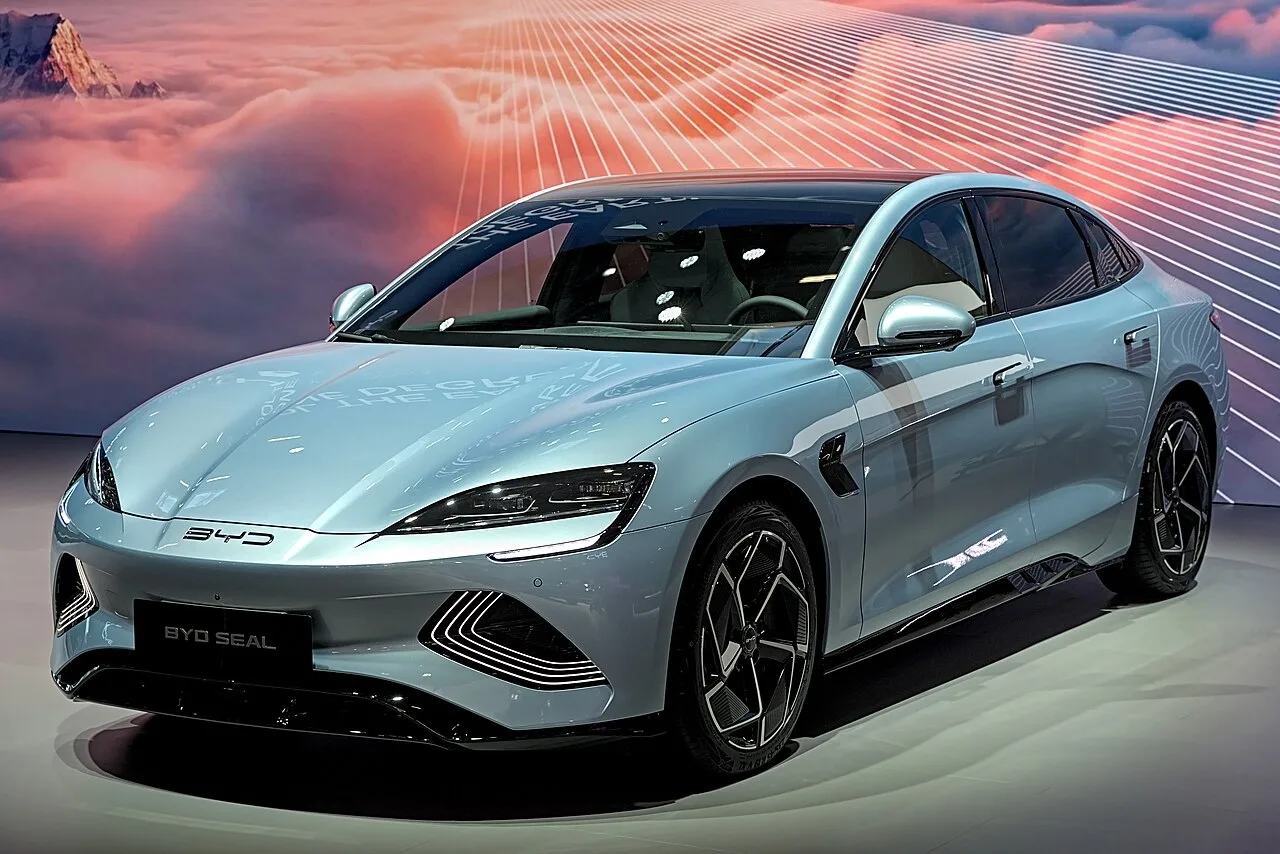
It is not a rare manuscript. It’s a teardown: 494 pages and 522 photographs of a BYD Seal — a Chinese electric sedan — taken apart bolt by bolt, with a DVD of the disassembly. Nikkei BP prices it at ¥880,000 and Japanese automakers and suppliers buy it, because studying this car is cheaper than being surprised by it. Forty years ago, the direction of study was reversed: the world bought books about Japanese factories.

『中国BYD「SEAL」徹底分解』, Nikkei BP, September 2023. ¥1,320,000 with the searchable online edition.
Act I · The book

Inside, the buyers found decisions — not tricks.

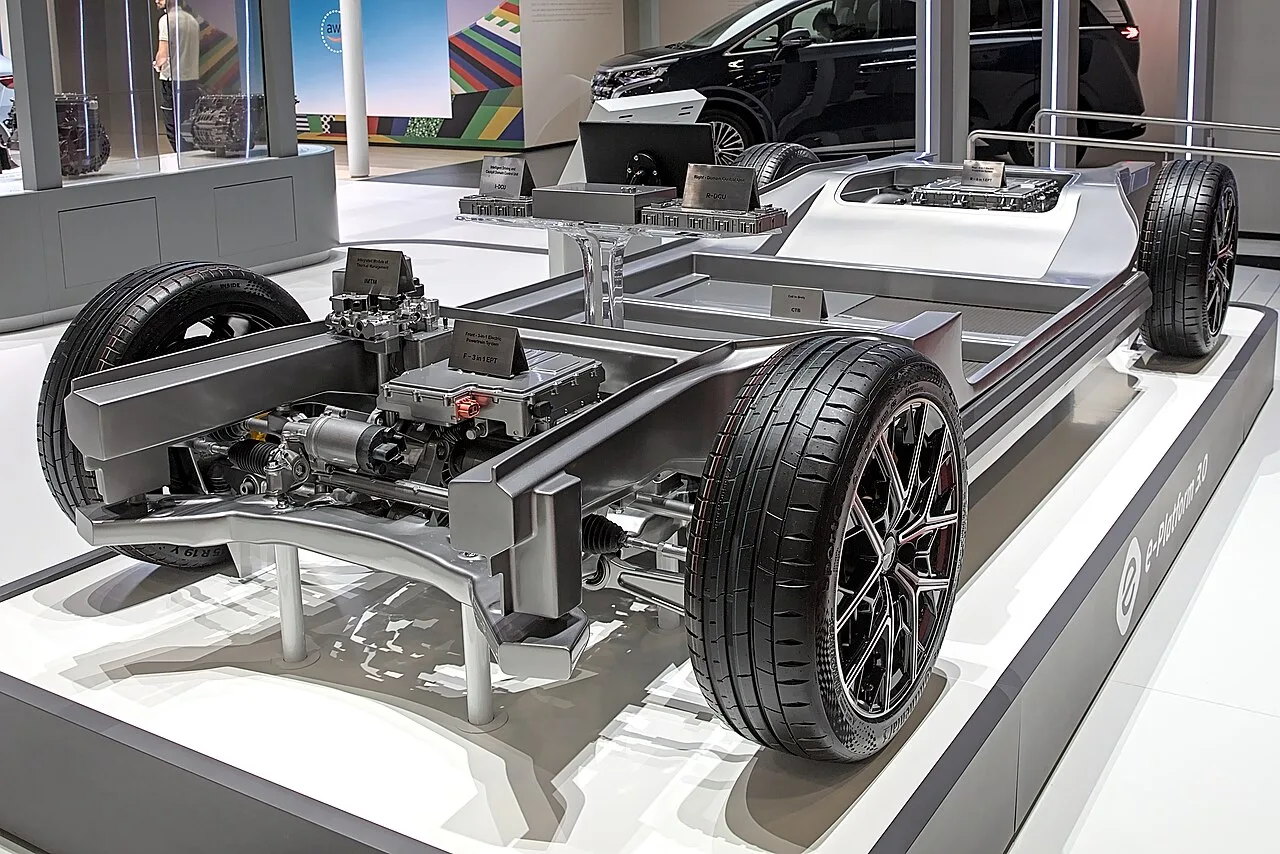
The teardown’s recurring note is consolidation. An “8-in-1” power unit where Western cars have separate boxes and suppliers for each function. A blade battery that is the floor structure — no module layer at all. And so few electronic control units that the reviewing engineer’s headline was 「たったこれだけ?」 — “what, that’s all?” Every merged box is a supplier negotiation, an interface freeze, and a validation loop that no longer exists. Integration isn’t just a cost story. It’s a clock story — and the clock is the subject of this guide.

Findings from the Nikkei xTECH SEAL teardown series, 2023 — links in Sources.
Act II · The clock

A new car takes five years. Took.

For decades, concept-to-launch on a volume car ran four to five-plus years, and the industry treated that as physics. Then the benchmark firm AVL measured today’s field: Japan 35–40 months, Europe 36–52 — and China’s EV makers, 19. Science put the leaders at 18 months, “nearly half that of typical incumbents.” Four independent estimates land within a few months of each other. The five-year car and the 18-month car are being built at the same time, right now, on the same planet.

AVL Japan via Nikkei xTECH (Feb 2025); Helveston, Science (Oct 2025); cross-checks from McKinsey, AlixPartners, Bain, Reuters — all in Sources.
Act II · The clock

You can see the clock in the showroom.

The average Chinese EV on sale is 1.6 years old; the average foreign-brand model in China is 5.4. In 2025, China’s major automakers revealed 87 all-new models — Japan’s managed 34, Europe’s 28, America’s 12. In the twelve months to October 2025, BYD got 38 new models approved; Tesla got 3. Against a lineup refreshed every 1.3 years, a five-year-old design isn’t “proven.” It’s just old.

Model age per Reuters (2025); 2025 reveals per AlixPartners; approvals per JATO via Rest of World; refresh cadence per ITIF.
Act II · The clock

Inside China, the ladder keeps compressing.

The 18-month car did not appear in one leap, and nobody in China calls it magic — the gate charts are published. Chery’s classic V-model ran ~35 months with named quality gates. GAC took 26 months into its Huawei-style IPD reform and came out at 18–21, with R&D cost down 10%. The industry press calls ~24 the new normal — 速度成了新护城河, “speed became the new moat.” BYD runs 18, and delivers the car 13 hours after the launch event, because launch and mass production are the same gate.

Chery P0–P9 per 汽车测试网; GAC IPD results per 新浪财经/搜狐; ladder synthesis per 腾讯新闻 (Aug 2025).
Act III · The method

Where do 21 months go?

McKinsey’s stage split makes the anatomy visible. A mass-market global OEM: 28 months of design and validation, 7 of engineering and tooling, 10 of industrialization — 45 total. A Chinese EV-native OEM: 10 + 5 + 9 = 24. Look at where the compression lives: not in the factory-facing stages, which barely move, but in design and validation — 28 months collapsing to 10. That’s not working faster. That’s a different way of deciding when something is proven. Four levers do most of it.

McKinsey, “Automotive product development: Accelerating to new horizons” (2025).
Act III · The method

Lever 1: simulate first, prototype less.

Chinese EV firms run ~65% of testing virtually, against 40–50% at Western OEMs, and build roughly half the physical prototypes — versus the legacy norm of ~6 prototype generations and tens of thousands of test miles. Zeekr validates a turn signal digitally in 30 minutes and brakes in days, hardware-in-the-loop. Lean readers will recognize the idea: Thomke and Fujimoto named it front-loading in 2000, studying Toyota — find 80% of problems before the prototype exists. This is Toyota’s own concept, run at the limit by someone else.

Simulation shares per Chinese industry analyses (新浪财经); Zeekr per Reuters (Jul 2025); Thomke & Fujimoto, JPIM 2000.
Act III · The method

Lever 2: ship at start-of-production, improve over the air.

Software is decoupled from hardware — 软硬件解耦 — so the launch spec is a starting point, not a frozen promise. BYD ships on the order of 200 OTA updates a year; Toyota ships 8. Japanese analysts have a phrase for the strategy: 市場を実験場にする — “make the market the proving ground.” It cuts both ways, and Act V will present the bill. But it explains the part Toyota found hardest to watch: during joint development of the bZ3, Toyota engineers were reportedly “flabbergasted” by how willingly BYD made major design changes late — heresy under frozen-spec discipline, routine when your car is software.

OTA cadence per Chinese industry analyses; AlixPartners puts the gap at “up to 20×”; Toyota anecdote per Reuters/InsideEVs (Jul 2025).
Act III · The method

Lever 3: own the parts, reuse the parts.

BYD makes ~75% of components in-house (Tesla ~46%, VW ~35%). Remember the teardown’s 8-in-1 box: when the battery, motor and power electronics are your own divisions, there is no sourcing negotiation, no interface freeze, no waiting. A supplier design change that takes 3–4 years in the West takes 2–3 months in China. And before designing a new part at all, Zeekr’s engineers query an AI search over 20 years of Geely design history for one that already exists. Rhodium’s cost autopsy of BYD-vs-Tesla found vertical integration worth ~$2,400 a car — and direct subsidies just ~$292, about 6% of the gap.

Integration shares per UBS teardown / AlixPartners / Rhodium; supplier-loop speed per ITIF; Zeekr parts reuse per Reuters.
Act III · The method

Lever 4: more engineers, working more.

The least transferable lever. BYD employs 121,600 R&D staff — 3.5× the combined engineering force of NIO, XPeng, Li Auto, Leapmotor and Seres, at an average total pay near $21,400. Its 2024 R&D spend, ¥54.2B, exceeded its own net profit. The norm in Chinese EV engineering is six days a week, ~12 hours a day; Nikkei reports 70–100 overtime hours a month at the startups. Zeekr adds geography: work handed from Shanghai to Gothenburg at day’s end — ~20 productive hours per day. Speed you can buy with method travels. Speed bought with hours may not.

BYD figures from its 2024 annual report (via 中国汽车报/新浪财经); pay comparison via Rhodium-adjacent reporting; hours per Reuters and Nikkei.
Act IV · The mirror

This exact story has run before — with Japan in the fast lane.

In the 1980s, Harvard’s Kim Clark and Takahiro Fujimoto measured 29 development projects at 20 automakers. Japan: 44.6 months and 1.7 million engineering hours per car. America: 60.9 months and 3.4 million hours. Detroit’s first explanation was culture — docile unions, national character, unfair yen. The study said otherwise: it was method. A heavyweight product manager (Toyota’s 主査) with real authority. Overlapping problem-solving instead of sequential handoffs. Suppliers engineering their own parts, off the critical path. Sound familiar? It should — it’s Act III with a 1985 calendar.

Clark & Fujimoto, Product Development Performance (1991); adjusted IMVP figures via the 1996 US OTP report.
Act IV · The mirror

And the gap closed — because it was method.

Culture can’t be copied. Method can. Through the 1990s, US automakers adopted heavyweight program teams, supplier co-design and CAD — and by mid-decade the IMVP update measured the US at 51.6 months against Japan’s 54.5. Lead-time parity, inside a decade. Chrysler developed the Neon — platform, two assembly plants, new stamping — in 31 months. The lesson the mirror teaches: a measured speed advantage survives only until competitors take it seriously enough to study it.

Ellison, Clark, Fujimoto & Hyun, “Product Development Performance in the Auto Industry: 1990s Update” (1995).
Act IV · The mirror

Now read the mirror the other way.

Today Japan develops in 35–40 months — roughly where Detroit stood when Japan was the challenger — and China runs 19, twice the lead Japan ever held. The vocabulary has flipped with the numbers. Nissan’s Dongfeng-led N7 went planning-to-launch in 24 months instead of its usual 50–60, and Nikkei describes Nissan bringing the method home as 逆輸入 — “reverse import” — the same word once used for lean manufacturing arriving in America. A Nissan engineer’s summary: 「国内で開発していては間に合わない」 — “if we develop it in Japan, we can’t keep up.”

Nikkei xTECH (Nov 2025). Fujimoto’s architecture theory reads the shift as integral (摺り合わせ) giving way to modular ground — where interface-speed wins.
Act V · The bill

Now the honest page: the human bill.

The 18-month car is partly bought with methods — and partly with people. Engineers at Chinese EV firms log 70–100 overtime hours a month; the 12-hour, 6-day schedule is a norm, not an exception. In 2021 a 35-year-old BYD worker died suddenly after punch records showed 26 near-12-hour days in a single month. In 2025 the industry shed roughly 100,000 jobs even as winners hired. A lean practitioner should name this plainly: sustained overburden is muri, and a system that needs it is carrying a cost it hasn’t engineered away yet.

Nikkei on overtime; RFA on the 2021 death and 2024 Wuxi strike; layoff wave per 腾讯新闻 (2025).
Act V · The bill

The supplier bill, and the quality bill.

Chinese parts-sector margins fell from 9% to 3.8% in a decade. Under government pressure, 17 automakers pledged 60-day supplier payment terms in June 2025 — a year later, investigators found real cycles averaging ~217 days, with BYD’s IOU-style commercial paper up 728%. Quality strain is visible too: BYD recalled 115,000 vehicles over battery defects; regulators banned “smart driving” marketing after fatal crashes and now require OTA updates to be filed, not just shipped. And yet — the teardowns keep failing to find the shoddiness the price implies. Caresoft’s verdict on the $12,000 Seagull: “no corners cut.” The honest reading: the risk is variance and unknown long-term failure modes, not visible junk.

Margins and payment terms per 新浪科技/腾讯新闻 (2026); recalls per electrive; regulation per 中国政府网; teardown per CNBC.
Act VI · The students

The serious competitors are already in class.

Every response worth watching is an admission that the clock is real. Toyota handed development authority to Chinese chief engineers — rebuilding its own 主査 system locally — and its bZ3X rides a GAC platform with ~90% local parts. Nissan’s N7 halved its cycle and the method is being reverse-imported to Japan. Honda stopped going it alone. VW bought Xpeng’s clock and calls the result >30% faster. Ford put 100 people in a deliberately un-Detroit building. Stellantis simply sells Leapmotor’s cars — the 1980s joint-venture model, running in reverse.

Details and sources per card — Toyota/Electrek, Nikkei xTECH, VW Group, CNBC, Stellantis PR.
Act VI · The students

Last time, the winners were the ones who studied.

In 1990, a five-year MIT study of Japan’s methods became The Machine That Changed the World, and “lean” entered the language. The people who benefited weren’t the ones who argued the numbers were unfair — they were the ones who went to see. The syllabus is being written again: this time it’s a ¥880,000 teardown book, published gate charts, and consultancy benchmarks anyone can read. You don’t have to admire the price war, the hours, or the payment terms to study what the survivors built. Go see.

For where the cars themselves are going — exports, tariffs, transplants — read the companion guide: China’s car industry goes global.
Exhibit A · the teardown bookNikkei BP, Sep 2023
Nikkei BP
中国BYD「SEAL」徹底分解
China BYD "SEAL" Complete Teardown
494 pages522 photos39-min disassembly DVD
¥880,000
≈ $6,000 per copy · sold to OEMs & suppliers
Who studies whom
Japanese automakers pay six figures — in yen, per copy — to see inside a Chinese car.
ECU count「たったこれだけ?」
"What, that's all?" — body functions consolidated into ~3 integrated controllers, an "astonishingly small" ECU count
8-in-1 power unit8 in 1 パワーユニット
Motor, reducer, inverter, vehicle controller, BMS, DC-DC, charger and junction box in one integrated unit
Cell-to-BodyCTB・モジュールレス
Blade battery built into the vehicle structure — the pack is the floor, with no module layer at all
In-house parts内製志向
Teardown found few Japanese-supplied parts: BYD makes ~75% in-house, from dies to power electronics
Keep scrolling to open it ↓
Concept → launch, monthsAVL Japan via Nikkei xTECH, 2025 · Helveston, Science, 2025
United States
~60
trad. baseline; some programs 5–10 yrs
Europe
36–52
AVL Japan, 2025
Japan
AVL Japan, 2025
China (NEV makers)
19
AVL Japan, 2025 — Helveston (Science): 18
01224364860
McKinsey (2025)~24 vs up to 45 months
AlixPartners (2024)20 (Chinese EV startups) vs 40 (Chinese legacy)
Bain (2025)24–30 (insurgents) vs 48–54 (traditional)
Reuters special report (2025)"as little as 18 months" vs ~5 years
1.6 yrs
average age of a Chinese EV model on sale
5.4 yrs
average age of a foreign-brand model in China
38 vs 3
new models approved, year to Oct 2025: BYD vs Tesla
China
87
Japan
Europe
28
United States
12
S. Korea
9
all-new vehicles revealed in 2025 by each region’s major OEMs (AlixPartners)
Ranges reflect differing program-start definitions; each figure names its source.
The compression ladder, inside Chinapublished gate charts & reform results
Chinese legacy OEMs, traditional flowthe pre-EV baseline
40–50 mo
Chery V-model (P0–P9), published gatesplatform development, quality gates 质量阀
~35 mo
GAC, before its IPD reform
26 mo
Industry "new normal"速度成了新护城河 — "speed became the new moat"
~24 mo
GAC, after adopting Huawei-style IPDR&D cost also down >10%
18–21 mo
BYDplus "launch = mass production": Seal 06GT delivered 13 hours after launch
18 mo
Sources: Chery V-model P0–P9 (汽车测试网), GAC IPD reform (新浪财经), industry baseline (腾讯新闻, Aug 2025).
Where the months liveMcKinsey, "Automotive product development: Accelerating to new horizons" (2025)
Mass-market global OEM45 months
28
7
10
Chinese EV-native OEM24 months
10
5
9
Design & validationEngineering & toolingIndustrialization
The factory-facing stages barely move — industrialization only goes 10 → 9. The collapse is in design & validation: 28 months → 10. The 18-month car is, above all, a different answer to “when is it proven?”
The four leverssaved months per McKinsey lever estimates
Simulate first, prototype less 虚拟验证3–10 months
65% of testing runs virtual (vs 40–50% in the West); physical prototypes cut roughly in half
Ship at SOP, improve over the air 软硬件解耦3–10 months
Software decoupled from hardware; the launch spec is a starting point, not a frozen promise
Own the parts, reuse the parts 垂直整合months per loop
In-house components remove supplier negotiation and interface freezes from the critical path
More engineers, more hours 奋斗者文化brute force
The least transferable lever — engineering headcount and working schedules the West won’t match

No single trick produces an 18-month car. The levers stack — and each one removes a wait, not a step. Scroll to walk through them.

China: virtual testing
65%
Western OEMs
40–50%

Zeekr validates a turn signal digitally in ~30 minutes, brakes and suspension in days — hardware-in-the-loop instead of weeks of physical testing (Reuters)

The lean lineage: Thomke & Fujimoto named this "front-loading" in 2000 — Toyota was finding ~80% of problems by end of detail design. Chinese EV firms run the same idea at the limit.

BYD
200
Tesla (China)
16
Toyota
VW
5

OTA updates shipped per model per year — Chinese industry analyses, 2025; AlixPartners puts the gap at "up to 20×"

BYD
75%
Leapmotor
65%
Tesla
46%
VW
35%

In-house / self-made share of components. A supplier design change takes 2–3 months in China vs 3–4 years in the West (ITIF). Rhodium’s BYD-vs-Tesla cost decomposition: vertical integration ≈ $2,369 of the ~$4,700 per-car gap. Direct subsidies: ≈ $292 — about 6%.

121,600
BYD R&D staff, 2024 — 3.5× all “new forces” combined
11% vs 8.8%
R&D share of workforce, BYD vs VW
~$21,400
average BYD total pay — ~5–6× below US EV startups

engineering norm: 6-day weeks, ~12-hour days; Nikkei reports 70–100 overtime hours/month at EV startups. Zeekr hands work from Shanghai to Gothenburg at end of day — ~20 productive engineering hours per day (Reuters).

BYD 2024 R&D spend: ¥54.2B — more than its net profit, and more than Geely + NIO + Li Auto + XPeng combined.

Lead time, months — three eras, one axisIMVP via US OTP (1996) · AVL Japan (2025)
The 1980s — measured by Clark & Fujimoto
United States
60.9 · 3.37M eng. hours
Europe
59.2 · 2.92M
Japan
Lead time (months), 29 projects at 20 automakers. Japan: two-thirds the time, half the engineering hours.
The 1990s — the gap closes
United States
51.6 · 2.30M
Europe
56.1 · 2.78M
Japan
IMVP 1990s update: the US closed the lead-time gap completely within a decade. Chrysler’s Neon: 31 months.
The 2020s — the mirror inverts
Europe
36–52
Japan
China
19
AVL Japan, 2025. Japan now sits where Detroit sat; China sits where Japan sat — twice as far ahead.
1980s/1990s: adjusted lead time, Ellison–Clark–Fujimoto–Hyun dataset. 2020s: AVL Japan development periods — measured differently, so compare shapes, not decimals.
The billlabor · suppliers · quality
Hours
70–100 h
overtime per month at Chinese EV startups (Nikkei); 6-day, ~12-hour weeks are the engineering norm
A death
26 days
of ~12-hour shifts in one month, on the punch card of a 35-year-old BYD worker who died suddenly in 2021 (RFA)
Churn
~100,000
Chinese auto-industry layoffs in 2025, while winning firms hired aggressively — speed has a survivor bias
Suppliers
9% → 3.8%
parts-sector margins, 2015 → Q1 2025; the 60-day payment pledge is gamed — real cycles average ~217 days, BYD’s commercial paper +728%
Recalls
115,000
vehicles recalled by BYD in Oct 2025 (battery defects); regulators banned “smart driving” marketing and now require OTA filings
Survival
15 / 129
NEV brands forecast financially viable by 2030 (AlixPartners); model lifespans collapsing from 7–10 years toward 2–5
The complication: The teardowns complicate the "cheap junk" story: Caresoft found "no corners cut" in the $12,000 Seagull; Euro NCAP ratings run high. The risk is variance and unknown long-term failure modes, not obvious shoddiness.
The studentsWestern & Japanese responses, 2023–2026
ToyotaRCE — Chinese chief engineers
All four Regional Chief Engineers are Chinese nationals; the bZ3X rides on GAC’s platform with ~90% local parts — 10,000 orders in its first hour. Rebuilding the 主査 system, in China, because HQ process couldn’t deliver it.
NissanN7: 24 months, then 逆輸入
The Dongfeng-led N7 went planning-to-launch in 24 months vs the conventional 50–60. Nikkei’s verb for applying the method back home is "reverse import" — the word once used for lean coming to Detroit. 「国内で開発していては間に合わない」— "developing in Japan can’t keep up."
HondaGave up going it alone
After the in-house 烨 (Ye) series flopped and China sales fell ~60% from peak, Honda announced it will use local partner platforms to halve development cycles.
VolkswagenBought a Chinese clock
VW paid ~$700M for 4.99% of Xpeng; their first joint car hit series maturity in 24 months — VW’s own claim: >30% faster than its 36–48-month norm. Its biggest R&D center outside Germany is now in Hefei.
FordA 100-person skunkworks
Jim Farley — who daily-drove a Xiaomi SU7 and called China’s EVs "the most humbling thing I’ve ever seen" — put a deliberately un-Detroit team in Long Beach to build a ~$30k EV platform.
StellantisThe reverse joint venture
Paid €1.5B for ~21% of Leapmotor and sells its cars outside China — the 1980s China-JV model, inverted: now the Western partner licenses the technology.
GM · MercedesSaying it out loud
GM’s Mark Reuss: "We can learn a lot from the speed… we can’t go and copy." Mercedes’ Källenius: 「中国のスピードが業界のリズムになった」 — "China’s speed has become the industry’s rhythm."
「中国のスピードが業界のリズムになった」
“China’s speed has become the industry’s rhythm.”
Ola Källenius · CEO, Mercedes-Benz
Now it’s your move

The syllabus is public. Study it.

Clark and Fujimoto proved forty years ago that development speed is method, not national character — and that measured methods get copied by whoever studies them hardest. The 18-month car is this generation’s NUMMI: uncomfortable, instructive, and open to visitors.

Good to know

Frequently asked

How fast do Chinese automakers really develop a new car?
The estimates converge tightly: AVL Japan measures China at 19 months versus Japan’s 35–40 and Europe’s 36–52; a 2025 Science article puts leaders at 18 months, "nearly half that of typical incumbents"; McKinsey says ~24 versus up to 45; AlixPartners says 20 for Chinese EV startups versus 40 for Chinese legacy brands; Bain says 24–30 versus 48–54 for traditional OEMs. Differences come from where each analyst starts and stops the clock, but every source agrees on roughly 2×.
What methods make the 18-month car possible?
Four levers do most of the work: simulation-first validation (about 65% of testing runs virtually versus 40–50% in the West, with roughly half the physical prototypes); software decoupled from hardware so cars ship at start-of-production and improve over-the-air (BYD ships on the order of 200 OTA updates a year versus Toyota’s 8); vertical integration and component reuse (BYD makes ~75% of parts in-house, and a supplier design change takes 2–3 months versus 3–4 years in the West); and sheer engineering scale — BYD employs about 121,600 R&D staff working six-day weeks.
Isn’t it just subsidies?
Not for speed, and mostly not for cost either. Rhodium Group decomposed the ~$4,700 per-vehicle cost gap between a BYD Seal and a Tesla Model 3 and attributed about $2,369 to vertical integration and only about $292 — roughly 6% — to direct government subsidies. Subsidies shaped the market’s early years (documented in the academic literature), but the development-speed advantage is method: how validation, sourcing and iteration are organized.
Is the speed paid for with quality?
The record is genuinely mixed and the guide presents both sides. BYD recalled about 115,000 vehicles in October 2025 over battery defects, regulators banned "smart driving" marketing language after fatal crashes, and model lifespans are collapsing toward 2–5 years. Yet teardown evidence keeps failing to find corner-cutting: Caresoft’s engineers found "no corners cut" in the $12,000 Seagull, and Chinese models routinely score top Euro NCAP ratings. The honest risk assessment is variance and unknown long-term failure modes, not visible shoddiness.
What did Clark and Fujimoto measure in the 1980s, and why does it matter here?
Their Harvard study of 29 projects at 20 automakers measured Japan at 44.6 months and 1.7 million engineering hours per new car versus America’s 60.9 months and 3.4 million hours. The causes were method — heavyweight product managers, overlapping problem-solving, supplier co-design — not culture. By the mid-1990s the US had closed the lead-time gap completely. It is the direct precedent for today: a measured development-speed advantage that lasts only until competitors study it seriously.
What is IPD, and why do Chinese automakers use it?
Integrated Product Development (集成产品开发) is Huawei’s stage-gate development framework, itself descended from IBM’s. After Huawei’s auto business showed it working on cars, 20+ Chinese OEMs launched IPD transformations. GAC is the best-documented result: development cycle cut from 26 months to 18–21 with R&D cost down over 10%. Chinese industry press is also openly skeptical of the boom — Geely’s slogan is "learn from Huawei, but don’t copy blindly," and Li Auto partially retreated from Huawei-style performance management in 2025.
How are Western and Japanese automakers responding?
By enrolling. Toyota created Regional Chief Engineer positions held by Chinese engineers and builds the bZ3X on GAC’s platform with ~90% local parts. Nissan’s Dongfeng-led N7 went planning-to-launch in 24 months versus its usual 50–60, and Nikkei reports Nissan "reverse-importing" the method to Japan. Honda abandoned solo development in China. VW co-develops with Xpeng and claims >30% faster cycles. Ford runs a 100-person skunkworks in Long Beach. Stellantis sells Leapmotor’s cars outside China in the first "reverse joint venture."
What is the ¥880,000 book in the guide?
Nikkei BP’s teardown volume 『中国BYD「SEAL」徹底分解』 — 494 pages and 522 photographs documenting the complete disassembly of a BYD Seal, sold to Japanese automakers and suppliers for ¥880,000 (about $6,000; ¥1,320,000 with the searchable online edition). Its findings — an 8-in-1 power unit, cell-to-body construction, remarkably few ECUs — explain much of the development-speed story, and its existence captures the role reversal: the world once bought books to study Japanese factories.
MS
Matthew Savas

Founder of Kaizumi, an AI-powered Lean training platform. More about Matthew →

Updated July 11, 2026 · Drafted with AI assistance and reviewed by Matthew Savas for accuracy. Every statistic is dated and sourced (data as of 2026-07-11), including Chinese- and Japanese-language sources cited in the original. Cycle-time estimates differ by where analysts start the clock — the guide shows the range rather than picking the most dramatic number.

References

Every statistic in this guide traces to one of the sources below · data as of 2026-07-11. Chinese and Japanese titles are given as published; the hero and mirror charts compare figures measured by different methodologies and say so.