Parts per billion.
One company makes 39% of the world’s EV batteries and claims a defect rate a thousand times beyond the industry’s — one bad cell per billion, at 1.7 seconds per cell. Inside CATL’s extreme manufacturing: the tolerances, the 6,800 checkpoints, the 500-person red team, the learning curve it bought — and the bill.
One bad cell can cost two billion dollars.
In 2021, General Motors recalled every Chevy Bolt ever built. The root cause, after months of forensics: a torn anode tab and a folded separator — two microscopic manufacturing defects that had to occur in the same cell to start a fire. Total bill: ~$2.0 billion, of which LG reimbursed $1.9B. A battery cell is the only mass-produced component where a micron-scale slip becomes a nine-figure recall — and every EV carries a hundred-plus of them.
Recall economics per CNBC/GM investor relations (Oct 2021); other cases per Automotive Logistics, KED Global, SAMR annual recall report.CATL’s answer is a number that sounds like a typo.
The battery industry measures escaped defects in PPM — parts per million. CATL’s 极限制造 ("extreme manufacturing") program claims PPB — parts per billion: one bad cell per billion, made at 1.7 seconds per cell. It’s a company claim — but it’s the rare one carrying WEF Global Lighthouse endorsement, three times over: all three battery factories in the world’s Lighthouse network are CATL’s. And founder Zeng Yuqun volunteers the industry’s dirty secret: most "PPM" claims, he says, are really one-in-a-thousand to one-in-ten-thousand.
WEF citation: "defect rate per billion count at the speed of 1.7s per cell." Company-reported, WEF-reviewed, not independently audited — the guide treats it as a claim throughout.Meet the object. Go ahead — grab it.
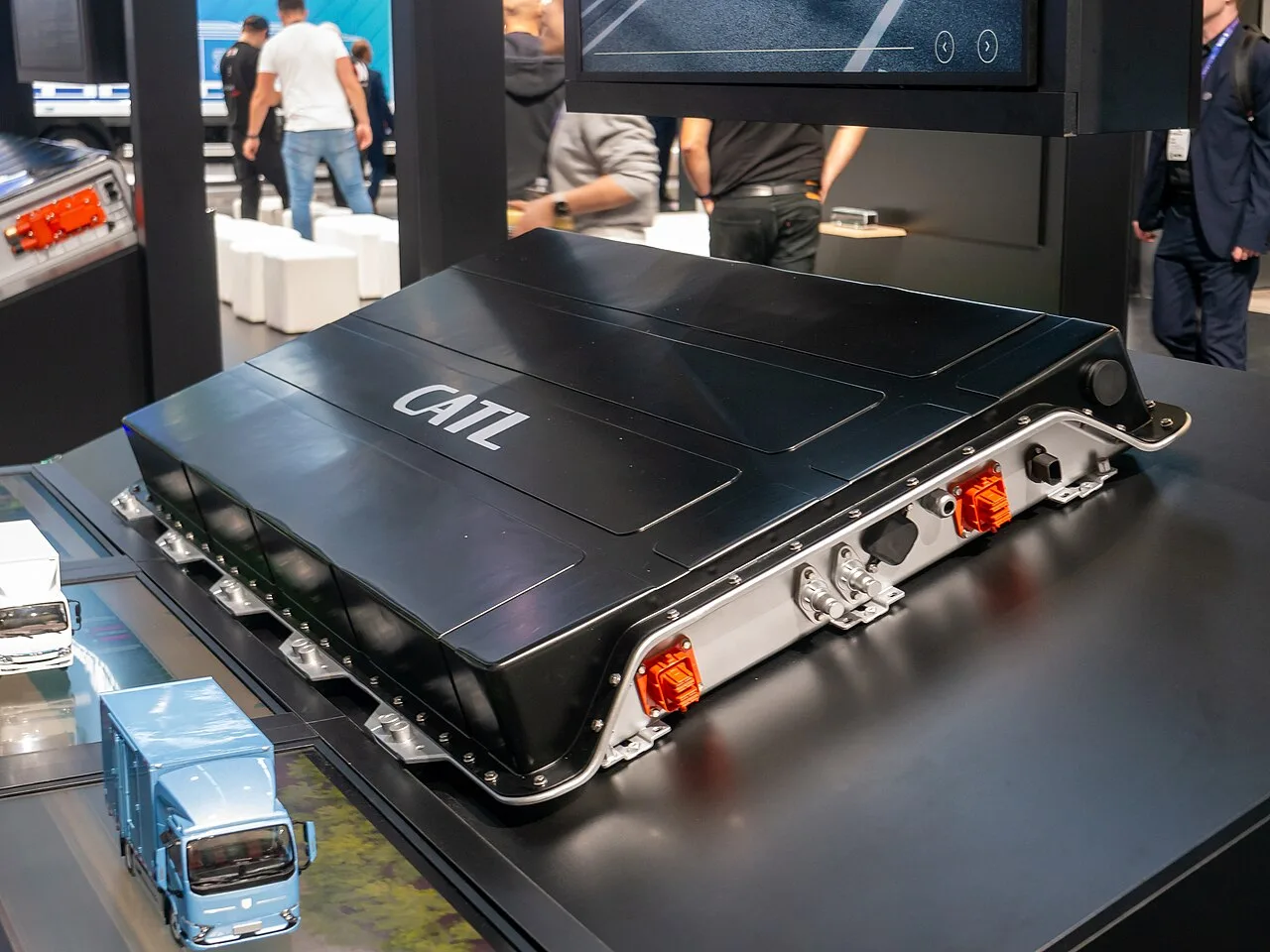
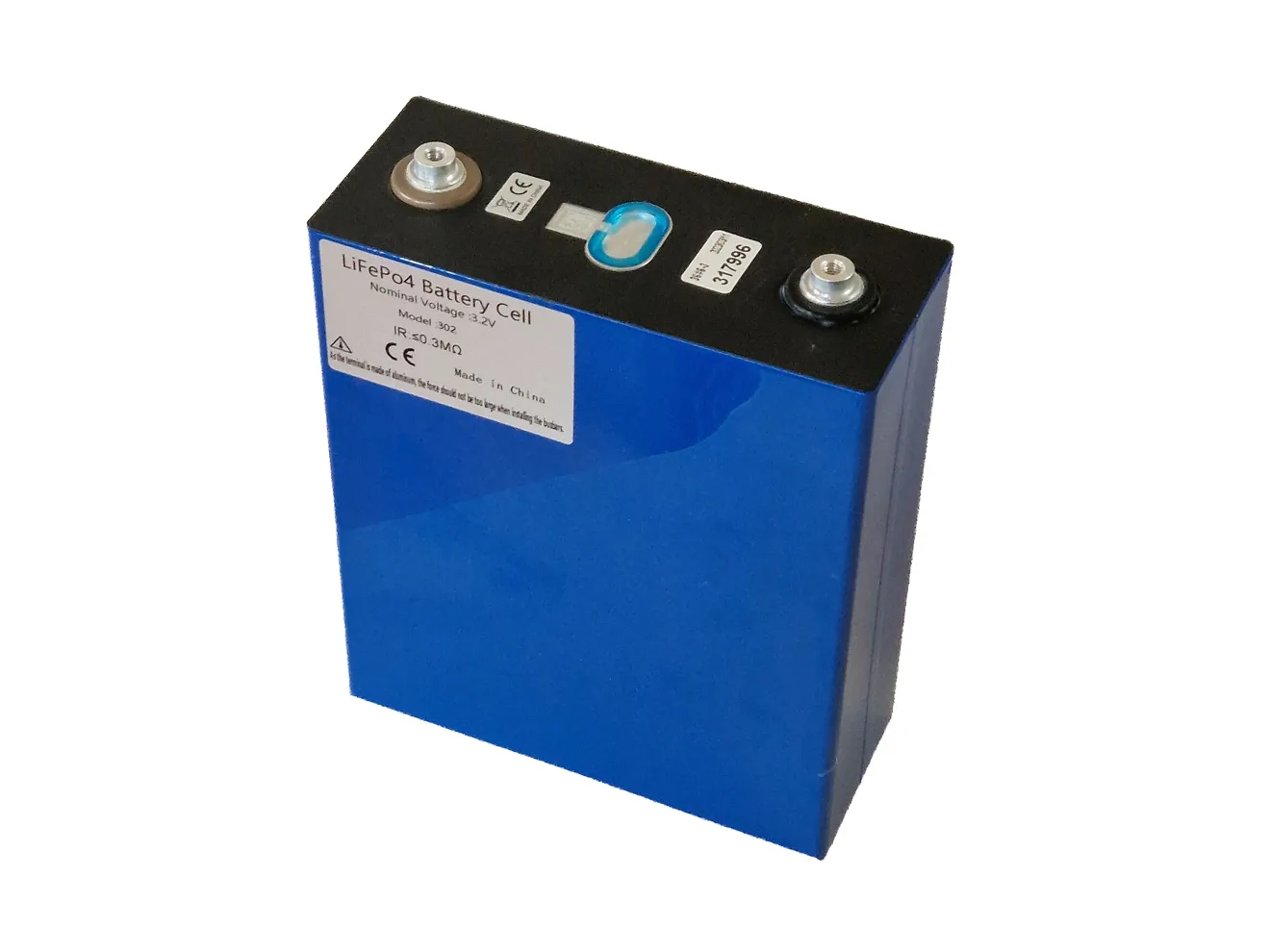
This is a prismatic EV cell: an aluminum brick, about the size of a shoebox lid, worth roughly a hundred dollars, expected to survive 15 years of vibration, heat and charging without one internal micron going wrong. Drag it to turn it. CATL makes one of these every 1.7 seconds — about 200 million cells a year were flowing by 2022. Everything in this guide is about what has to be true inside this box for a billion of them to contain one mistake.
Takt per the WEF Ningde citation; volumes per 晚点Auto. The model is illustrative, not to scale.Open it up. Every layer is a way to fail.
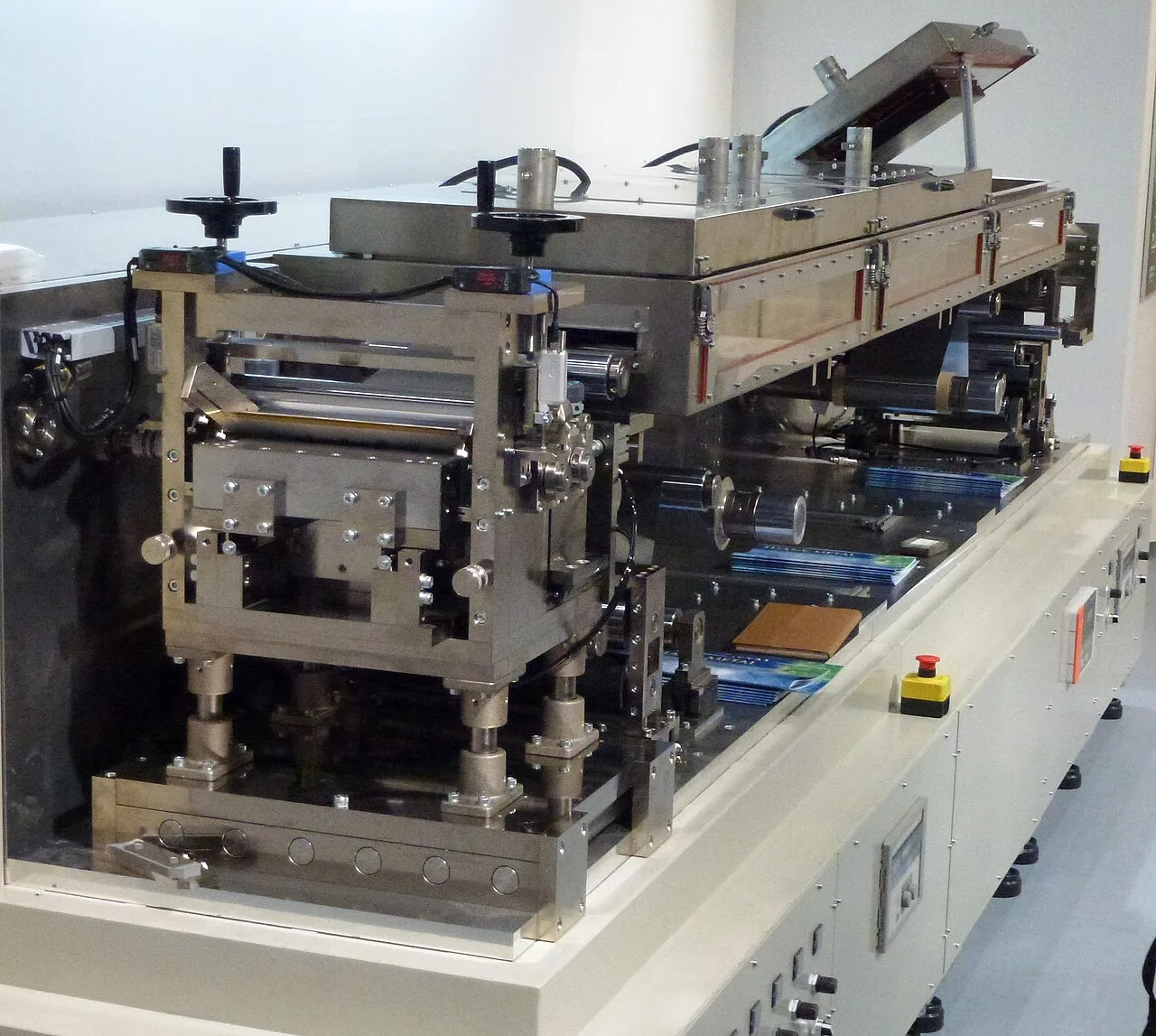
Inside the casing sits a wound "jelly roll": cathode foil, separator, anode foil — kilometers of material wound to ±0.2 mm over a 10-meter length. CATL coats electrodes at 100 m/min while holding thickness to ±0.5 µm — a human hair is 70× thicker — and the line stops itself the moment it drifts. The anode runs on 4.5 µm copper foil where the industry standard is 6: thinner means more energy per gram, and a foil that tears like wet paper. Remember the Bolt: one torn tab, one folded separator. These layers are exactly where $2B hides.
Tolerances per Zeng’s 2026 speech (新浪财经) and 晚点Auto’s independent reporting; layer stakes per the NHTSA/GM root cause.The room the object is born in.
Battery cells are assembled in air drier than Antarctica: dry rooms below 1% relative humidity, dew points of −40°C heading toward −80°C at electrolyte fill, because lithium reacts with moisture. The air is fully changed 25 times an hour — surgical-suite cleanliness at a thousand times the area. And the slowest, most expensive step isn’t making anything: formation and aging — electrically waking the cell, then watching it for up to two weeks — consumes up to 30% of cell cost and a quarter of the floor. In battery making, quality assurance isn’t a department. It’s the building.
Dry-room specs per industry engineering sources; formation cost share per Wood et al., Joule (2019); coating risk per Fraunhofer via Nature Communications (2025).Now the system that watches the object.
A CATL line carries 6,800+ data and quality collection points — the best-known global rival runs about 3,900 — generating 340,000 records a second, a trillion and counting, with every cell traceable for 20 years. AI vision inspects at 400+ frames a second with a target of zero missed defects; behind the line sit focused-ion-beam microscopes, X-ray imaging and industrial CT. The independent yield numbers this buys, per 晚点Auto: 93.5% overall vs an industry 87–89%. Six points of yield, at this scale, is a business model.
Data-point comparison, yields per 晚点Auto "制造宁德时代" (Mar 2023) — independent reporting; AI stack per Intel case study.The improvement engine runs at 200 kaizens a week.
On the winding process alone, CATL rolls out 200+ optimizations a week — a named competitor manages ~60. The library behind it: ~1,000 documented process tricks (工艺诀窍), 150+ each for winding and welding. It compounds: a new CATL factory reaches target yield in 45 days against an industry norm of 6–9 months. And the math is explicit — at 2022 revenue, every 0.01% of yield was worth ¥30M. One fixture moved 0.8 mm earned 0.02%. Manufacturing co-president Ni Jun’s summary: "Friends can take away equipment models, but not the entire system."
All figures 晚点Auto (Mar 2023). Ni Jun is a former University of Michigan mechanical-engineering professor.And a red team paid to break it.
Inside CATL sits the 对抗组 — an adversarial group of 500+ researchers whose KPI is finding failure modes, not proving products good. Zeng Yuqun: "They are the most unpopular people in the company — but I am their most direct leader." A lean reader will recognize the whole architecture: a line that stops itself at a 0.5 µm deviation is jidoka; 6,800 sensors wired to stop authority is an andon system; an institutional red team is hansei with a budget. None of this is new thinking. What’s new is the dose.
Red team per Zeng’s April 2026 remarks (新浪财经). The jidoka reading is ours — the mechanisms are Toyota vocabulary at semiconductor tolerances.Quality is how you buy the curve.
The battery learning curve is the most famous in modern industry: packs cost $1,474/kWh in 2010 and $108 in 2025 — down 93%; cells are down ~97% since Sony shipped the first one in 1991. MIT’s Ziegler and Trancik measured the learning rate at ~20% per doubling of cumulative production — and found more than half the decline came from R&D, mostly chemistry. So far, so lab-driven. But watch what happens to the curve when it leaves the lab.
BloombergNEF annual price surveys; Ziegler & Trancik, Energy & Environmental Science (2021), and the 2021 determinants follow-up.Same chemistry. Different factories. 50% apart.
In 2025 the same lithium-ion pack averaged $84/kWh made in China, +44% in North America, +56% in Europe (BNEF). Building the plant costs ~$90M per GWh in the US vs ~$60M in China. The chemistry is public; the papers are published; the equipment is purchasable. What diverged is yield and process mastery: a ramping gigafactory scraps 15–30% of everything it makes for years, and each point of scrap burns ~€30,000 a day. The frontier of the learning curve moved from the laboratory to the factory floor — which is exactly where CATL chose to compete.
Regional prices BNEF 2025; capex Columbia CGEP; scrap economics Fraunhofer FFB / PEM RWTH Aachen.The control group is named Northvolt.
Europe ran the experiment for us: $15 billion raised, the continent’s flagship cell venture, and a yield curve that never bent — ~70% after four years, against a Chinese executive’s taunt that "we can raise a factory’s yield to 96% in four months." At one point 80% of output was scrap and production continued anyway. BMW walked away from a €2B order; bankruptcy followed. Fourteen Western battery ventures failed in sixteen months despite $20B+ raised. Even Tesla’s 4680 ran 30–50% scrap for months. The lesson isn’t that the West can’t do chemistry. It’s that PPB-grade process discipline is the product.
KrAsia Northvolt postmortem; Electrek (BMW); Christopher Chico’s failure tracking; CleanTechnica (4680). The 96%-in-4-months quote is a single attributed source — treat as claim.This capability has a birth certificate.
CATL didn’t learn quality on EVs. Zeng’s first company, ATL, made phone batteries — founded 1999 on a Bell Labs license, hardened by a decade as an Apple supplier, where a bad batch means losing the account. When BMW needed EV cells in 2010, it picked ATL because of that pedigree — then kept its own engineers resident inside the program, effectively teaching automotive-grade process to the team that became CATL. Add a CTO hired from GM’s EV1 battery program, a protected home market (the 2016–19 Battery Whitelist), and a decade of volume — and the flywheel closed.
Whitfield & Wuttke, Progress in Economic Geography (2026, open access) — the definitive academic account.Japan invented this industry. Look at it now.
Yoshino built the prototype in 1985; Sony commercialized the lithium-ion battery in 1991; Japan held ~90% of world production; the invention won a Nobel. Then Sony sold its battery business. Panasonic — Tesla’s sole supplier for years — declined to build at Giga Shanghai in 2020; Tesla went to CATL and LG. Panasonic’s world share in 2024: 3.9%. Economist Marukawa Tomoo’s postmortem for solar, EVs and now batteries: Japanese firms "hit the brakes at the crucial moment." Korea’s three battery giants dismissed LFP for a decade — and are now building LFP plants while their combined share slides. Inventing the product bought precisely nothing without owning the process.
Marukawa, Newsweek Japan (2022); SNE Research shares; METI’s June 2026 strategy revision slipped its own 2030 target to the mid-2030s.Now audit the bill.
The system has costs the lighthouse write-ups omit. In 2024 CATL asked salaried staff to "strive for 100 days" on an 896 schedule — 8am to 9pm, six days a week; the company denied it, employees confirmed it. Line operators earn ¥2,600–2,900 base a month. China’s planned cell capacity is ~4× demand and prices fell ~65% in two years — PPB quality partly exists because in this market, a quality reputation is the last moat left. And in September 2024 a fire broke out at CATL’s own flagship lighthouse complex. Zeng’s response to media: 问题不大 — "not a big problem." The strictest safety standard in history, GB 38031, took effect this month. Claims are about to meet physics.
896 per 36氪/界面 (Jun 2024); pay per annual-report digests; overcapacity per 36氪; the fire per 新浪财经 (Sept 2024); GB 38031-2025 per 新华网.What a lean practitioner should take home.
Strip away the scale and every mechanism in this guide is legible TPS: jidoka at half a micron, andon wired to 6,800 sensors, standard work as a thousand documented tricks, 200 kaizens a week, a red team institutionalizing hansei. CATL’s moat isn’t a machine you can buy — Ni Jun said so himself. It’s an improvement system running at a dose most factories have never attempted, with a human bill that deserves to be counted honestly. Study the system. Audit the bill. Go see.
Companion guides: The 18-Month Car · Defect classification.behind PPB: focused-ion-beam microscopy, X-ray microscopy of electrodes, industrial CT for voids and cracks — 100+ inspections per cell before shipment (第一电动网).
~1,000 documented process "tricks" (工艺诀窍), ~200 added in one year; 150+ each for winding and welding. during a Tesla audit, a technician who solved a problem in 10 minutes was promoted from Level-3 technician to Level-8 engineer — 3× salary — on the spot.
"Friends can take away equipment models, but not the entire system." — Ni Jun, co-president of manufacturing (ex-University of Michigan professor)
The lean rhyme is exact: a line that stops itself at a 0.5 µm coating deviation is jidoka; a red team paid to attack the product is poka-yoke culture pointed at itself.
Pack price for the same chemistry, 2025. BNEF 2025 regional pack averages: same chemistry, +44% in North America and +56% in Europe vs China. Capex: ~$90M/GWh in the US vs ~$60M in China (Columbia CGEP). The frontier moved from the lab to the factory floor.
a new gigafactory typically scraps 15–30% of output for its first years — still ~10% after five (Fraunhofer FFB / PEM RWTH Aachen); each percentage point of scrap ≈ €30,000/day ≈ ~€10M/yr at gigafactory scale. PEM projects global production scrap (~900,000 t by 2030) will exceed the mass of spent batteries — recycling feedstock is factory waste, not old cars.

The moat is a system. Systems can be studied.
Every mechanism in this guide has a Toyota name — jidoka, andon, kaizen, hansei. What CATL changed is the dose, the data density, and the tolerance. That makes it the most instructive quality system on Earth right now — and the bill that comes with it is part of the lesson.
The 18-Month Car
The companion guide: how Chinese automakers halved vehicle development.
kaizumi.com/guides/the-18-month-carDefect classification
Where you catch a defect sets its cost — the framework behind the $2B cell.
kaizumi.com/guides/defect-classificationAll field guides
Practical lean methods, written for real floors.
kaizumi.com/guidesTrain your team
AI-built lean training for your industry, your roles, your reality.
kaizumi.comFrequently asked
- What is CATL’s "extreme manufacturing" (极限制造)?
- CATL’s program to push battery cell defect rates from the industry’s parts-per-million (PPM) level to parts-per-billion (PPB) — one defective cell per billion — while producing a cell every 1.7 seconds. The system combines AI visual inspection at 400+ frames per second, 6,800+ quality collection points per line, closed-loop process control that stops the line at a 0.5-micrometer coating deviation, and full 20-year traceability per cell. The PPB figure is company-reported but repeated in the World Economic Forum’s Global Lighthouse citations; it is not independently audited.
- Is the parts-per-billion claim real?
- It is a company claim with unusual third-party weight: all three battery factories in the WEF Global Lighthouse Network are CATL plants, and the WEF citation for Ningde explicitly describes "a defect rate per billion count at the speed of 1.7s per cell." Independent verification at that rate is inherently difficult. Notably, founder Zeng Yuqun has said most rivals claiming PPM-level safety are actually at one-in-a-thousand to one-in-ten-thousand — an admission of how loose the industry’s own numbers are. Independent reporting (晚点Auto) documents measurably superior yields: 93.5% overall versus an industry 87–89%.
- Why is battery manufacturing so hard on quality?
- Because the tolerances are semiconductor-like and the product stores energy. Electrode coatings must hold micron-level uniformity across coating lines tens of meters long running at 100 m/min; CATL runs 4.5 µm copper foil (industry standard 6 µm); assembly happens in dry rooms under 1% relative humidity because lithium reacts with moisture; and the slowest, most expensive step — formation and aging, up to ~30% of cell cost — exists purely to detect latent defects. A single escaped defect can cost billions: GM’s Bolt recall (~$2.0B) traced to a torn anode tab plus a folded separator in the same cell.
- How big is CATL?
- CATL has been the world’s largest EV battery maker for nine consecutive years (SNE Research). In 2025 it installed 464.7 GWh — 39.2% of the world market; CATL plus BYD together supplied 55.6%. Full-year 2025 revenue was RMB 423.7B with ~$10B net profit, ~23,000 R&D staff and 54,538 patents, with plants across China plus Germany, Hungary and a Stellantis joint venture in Spain.
- What happened to Northvolt, and why does it matter here?
- Northvolt was Europe’s flagship battery venture — roughly $15B raised — and it failed in large part on yield: about 70% after four years, versus a Chinese executive’s claim of reaching 96% in four months. At one point ~80% of output was scrap while production continued; BMW cancelled a €2B order in June 2024, and bankruptcy followed. Fourteen Western battery ventures failed between January 2025 and April 2026 despite raising over $20B combined. Northvolt is the control group proving that battery chemistry is public knowledge but PPB-grade process discipline is the actual product.
- Where did CATL’s manufacturing capability come from?
- From consumer electronics, mostly. Founder Zeng Yuqun’s first company ATL (1999) made phone batteries on a Bell Labs license and spent a decade as an Apple supplier. BMW chose ATL for its EV program in 2010 because of that reputation, then kept resident engineers inside the program, teaching automotive-grade quality; Zeng spun out CATL in 2011 and hired the battery chief of GM’s EV1 as CTO. China’s 2016–2019 Battery Whitelist then provided protected volume to run down the learning curve. This lineage is documented in Whitfield & Wuttke’s open-access study in Progress in Economic Geography (2026).
- What does this have to do with lean manufacturing?
- The mechanisms are Toyota vocabulary at higher dose: a line that stops itself at a 0.5 µm coating deviation is jidoka; 6,800 sensors wired to stop authority is an andon system; ~1,000 documented process tricks are standard work; 200+ improvement rollouts a week on a single process is kaizen at industrial cadence; a 500-person internal red team whose KPI is finding failure modes is institutionalized hansei. The guide also counts the costs the lighthouse write-ups omit: 896 overtime controversies, low operator base pay, and brutal overcapacity economics.
- What is GB 38031-2025?
- China’s new mandatory battery safety standard — widely called the strictest in the world — in force from July 2026. It upgrades the thermal-propagation requirement from "5 minutes of warning before fire" to no fire and no explosion for 2 hours after thermal runaway, and adds bottom-impact and post-fast-charge-cycling tests. It effectively turns PPB-grade manufacturing rhetoric into a regulatory floor: in a 2025 industry survey, 78% of firms said they already had the technology to comply.
Founder of Kaizumi, an AI-powered Lean training platform. More about Matthew →
Updated July 11, 2026 · Drafted with AI assistance and reviewed by Matthew Savas for accuracy. Every statistic is dated and sourced (data as of 2026-07-11). CATL’s own claims — including the parts-per-billion figure — are labeled as company-reported throughout; independent numbers cite their outlets. The 3D cell is illustrative, and its surface textures are AI-generated.
References
Every statistic in this guide traces to one of the sources below · data as of 2026-07-11. Chinese and Japanese titles are given as published.
Scale & market data
- SNE Research via CnEVPost — global EV battery market share, full-year 2025 (CATL 39.2%, 9th straight year #1)
- CATL 2025 annual results — RMB 423.7B revenue, ~$10B net profit, 661 GWh sold, 772 GWh capacity
- IEA, Global EV Outlook — China ~80%+ of global cell production; Western production costs up to ~50% higher
Extreme manufacturing & the PPB claim
- CATL: Ningde plant named WEF Global Lighthouse (Sept 2021) — "defect rate per billion count at the speed of 1.7s per cell"
- WEF press release, Global Lighthouse Network cohort incl. CATL Ningde (2021)
- CATL: Yibin Lighthouse + first zero-carbon battery plant (2022)
- CATL: Liyang Lighthouse (2023) — output +320%, cost −33%, failure rate per-million → per-billion
- 晚点Auto via 36氪, "制造宁德时代" (Manufacturing CATL, Mar 2023) — the independent deep-dive: yields, 6,800 checkpoints, 45-day ramps, kaizen cadence
- 新浪财经: Zeng Yuqun on the 500-person 对抗组 red team and the 0.5 µm auto-stop (Apr 2026)
- 21世纪经济报道: Zeng at the 2024 World Power Battery Conference — most "PPM" claims are really 1-in-1,000 to 1-in-10,000
- 第一电动网: the instruments behind PPB — FIB microscopy, X-ray, industrial CT, 100+ inspections per cell
- Intel China case study: CATL cloud-edge-device AI inspection, zero-missed-defect target at 400+ FPS
- CnEVPost: CATL Guizhou base — one cell per second (2023)
What one defective cell costs
The learning curve & yield economics
- BloombergNEF 2025 battery price survey — packs $108/kWh; China $84 vs NA +44% / EU +56%
- Ziegler & Trancik, Energy & Environmental Science (2021) — 97% cell-price decline since 1991; ~20% learning rate
- Ziegler, Song & Trancik (2021) — determinants: >50% of the decline from R&D, mostly chemistry & materials
- Fraunhofer FFB / PEM RWTH Aachen — gigafactory ramp scrap 15–30%; each 1% of scrap ≈ €30k/day
- Wood et al., Joule (2019) — formation & aging up to ~30% of cell manufacturing cost
- Nature Communications (2025) — challenges of high-quality battery production at scale; coating as highest-risk step
- KrAsia — Northvolt postmortem: 96%-in-4-months vs 70%-after-4-years quote; hubris chronology
- Electrek: BMW cancels €2B Northvolt order (Jun 2024)
- CleanTechnica: Tesla 4680 "production hell" — 30–50% scrap on new lines (2023)
The lineage (academic & history)
- Whitfield & Wuttke, Progress in Economic Geography (2026, open access) — the ATL→BMW→CATL capability lineage, whitelist, CTP
- 腾讯新闻: how Ningde, once Fujian’s poorest city, produced the world battery champion
- Marukawa Tomoo, Newsweek Japan (2022) — "firms that hit the brakes at the crucial moment"
- METI 蓄電池・電源産業戦略 revision (Jun 2026) — 150 GWh domestic target slipped to mid-2030s
- Rest of World — China charges ahead as South Korea’s battery giants lose their spark (2025)
- Korea JoongAng Daily — the K-trio’s LFP pivot at InterBattery
The bill
- 36氪: "比996更狠的896来了" — the 896 / strive-100-days controversy (Jun 2024)
- 腾讯新闻: workforce 185,839 at end-2025; per-capita pay −10%; operator base pay reality
- 36氪未来汽车日报: battery overcapacity alarm — ~4,800 GWh planned vs ~1,200 GWh demand
- 新浪财经: fire at CATL’s Ningde Z-base lighthouse complex (Sept 2024); Zeng: "问题不大"
- Journal of Business Chemistry (2026) — CATL kept margins stable through a ~60% cell-price fall while Korean rivals’ deteriorated